




World Time Watch Explained: How a World Timer Actually Works (and How to Use One)
You bought a watch with an extra ring of tiny city names circling the dial, and you have no idea what it actually does. Maybe you spun the bezel a few times, glanced at it, shrugged, and went back to checking your phone for the time in London or Dubai. Here is the truth. A world time watch is one of the most genuinely useful complications ever put on a wrist, but almost nobody explains it properly at the point of sale. The salesperson says "it shows world time" and moves on. You are left with a beautiful, expensive piece that you are using as a plain three-hand watch.
That ends today. This guide breaks down exactly what a world time watch is, how the mechanism inside it actually functions, how it differs from the GMT watch it constantly gets confused with, and how to set yours correctly in under a minute once you know the trick.
What Is a World Time Watch, Exactly?
A world time watch is a timepiece designed to show the current hour in roughly 24 major cities simultaneously, using a rotating 24-hour ring paired with a fixed or rotating disc of city names, so you can read multiple time zones at a glance instead of calculating them. It does not need a data connection, an app, or mental arithmetic. You look down, find the city you care about, and read off the hour sitting next to it.
The complication traces back to 1931, when Geneva watchmaker Louis Cottier developed the "heures universelles" (universal hours) system for Patek Philippe. Cottier's idea was simple but clever: instead of adding a single extra hand for a single extra time zone, why not put every zone on the dial at once? Nearly a century later, the same basic logic still runs the watch on your wrist, whether it cost you thirty thousand naira or thirty thousand dollars.
How a World Timer Actually Works: The City Ring and the 24-Hour Track
A world timer works by linking two rotating rings, a fixed disc of world cities and a moving 24-hour scale, so that once you align your home city with the correct hour, every other city on the disc automatically lines up with its own correct local hour. That is the entire mechanism. There is no per-city calculation happening. It is pure geometry, built once by the watchmaker and locked into the gear train.
The Two Parts You Need to Recognise
Every world time dial, mechanical or quartz, is built from two elements working together:
- The city ring - a printed track naming major cities, one roughly per time zone (London, Lagos, Dubai, Tokyo, New York, and so on). On most watches this ring stays fixed, though some designs let you rotate it.
- The 24-hour ring - a separate rotating scale numbered 0 to 23, sitting just inside or outside the city ring. This is the part you actually turn, usually via the crown or a dedicated pusher.
Turn the 24-hour ring so that the number matching the current hour in your home city sits directly next to your home city's name. The moment you do that, every other city on the ring is now sitting next to its own correct hour. No further adjustment is needed until you either travel or the clocks change somewhere.
Where the Day and Night Shading Comes In
Look closely at the 24-hour ring and you will usually see it shaded, half light and half dark. The lighter half marks the 12 daylight hours and the darker half marks night. This is not decoration. It tells you at a glance whether a city you are about to call is in the middle of its working day or fast asleep, which matters more than the exact hour if you are timing a call to a supplier in Guangzhou or a client in New York.
World Time Watch vs GMT Watch: Which One Do You Actually Need
A world time watch and a GMT watch both solve the "what time is it over there" problem, but a GMT uses one extra hand to track a single second zone while a world timer shows all major zones at once, which makes the GMT faster to read and the world timer more comprehensive. Neither one is objectively "better." They are built for different habits.
A GMT watch adds a fourth hand that circles the dial once every 24 hours instead of twice, usually pointed at a fixed or rotating 24-hour bezel. On a true "traveller's GMT," you can jump the local hour hand forward or backward in one-hour clicks without touching the minute hand, seconds, or your home-time GMT hand. That makes it brilliant for someone who flies between two or three specific places, say Lagos and London, and wants a quick, confident read with no ambiguity.
A world timer trades that speed for breadth. Instead of tracking one reference zone, it puts almost every zone on the planet in front of you at once. That makes it the better tool for people who deal with a genuinely global spread of contacts, and the worse tool for someone who just wants a fast, no-fuss second time zone.
| Feature | World Time Watch | GMT Watch | Dual Time Watch |
|---|---|---|---|
| Zones shown at once | Roughly 24 cities simultaneously | 2 zones (local + reference) | 2 zones (local + home) |
| How it's read | Match home city to 24-hr ring, read others off the disc | Read 24-hour hand against a bezel or scale | Small sub-dial shows second zone directly |
| Speed to read | Slower, more cities to scan | Fastest, one glance | Fast, one glance |
| Best for | Frequent international dealings, multiple regular contacts | Two fixed routes (e.g. Lagos to London) | Casual travellers, simple second zone |
| Typical setting method | Rotate city or 24-hr ring via crown | Independent-jumping hour hand via crown | Separate crown or pusher for second hand |
| Complexity to master | Moderate, takes one read-through | Low, intuitive within minutes | Low |
If you deal with people across three or more regions regularly, banking contacts in London, family in Houston, a supplier in Guangzhou, the world timer earns its keep. If your world really only has two poles, a GMT will serve you faster and usually costs less to boot.
Browse our watch collection here to compare both styles side by side before you decide which habit actually fits your life.
How to Set a World Time Watch Step by Step
Setting a world time watch correctly takes under a minute once you understand which ring moves and which one stays put, and getting it right the first time means you will not need to touch it again except when you cross into a genuinely new zone. Follow this order and do not skip the sequence, because setting the hands before the ring, or the ring before the hands, is the single most common reason people give up and call the complication "confusing."
- Pull the crown out to the time-setting position. On most world timers this is the second click.
- Set your main hour and minute hands to the correct local time first. Get this exactly right before touching anything else.
- Push the crown in, or use the dedicated corrector, to rotate the 24-hour ring. Turn it until the current hour on that ring sits directly beside your home city's name on the city disc.
- Check the day and night shading. Confirm your home city is sitting in the correct half, light for daytime, dark for night. If it is not, you have likely set the 12-hour hands to the wrong AM or PM.
- Push the crown fully home. You are done. Every other city on the ring will now show its correct local hour.
That is genuinely the whole process. The confusion most owners feel comes from trying to set the city ring and the hour hands as one combined motion. They are two separate steps done in a fixed order, and once you have done it correctly once, your hands will remember it.
How to Read the Time in Any City Once It's Set
Once your world timer is correctly set, reading any other zone is simply a matter of finding that city's name on the ring and looking at the number sitting directly next to it on the 24-hour scale, no calculation required. Want to know what time it is in Dubai before you call a supplier there? Find "Dubai" (or the nearest listed city in that zone, often represented by a Gulf hub) on the printed ring and read off the number beside it. That number, combined with the light or dark shading, tells you the hour and whether it is day or night there.
This is exactly why business travellers and people who manage international relationships gravitate toward this complication. You are not doing mental arithmetic under pressure before dialling a call. You glance down, and the answer for every major region is already sitting there.
The One Flaw Every World Timer Has: Daylight Saving Time
The honest downside of a world time watch is that most models cannot automatically adjust for Daylight Saving Time, so for roughly half the year, several of the cities printed on the ring will be showing an hour that is off by exactly sixty minutes. This is not a manufacturing defect. It is a genuine limitation of the mechanism, and reputable brands will tell you this if you ask directly, rather than pretend the watch is flawless.
Here is why it happens. The city ring is fixed at manufacture. It cannot know that London springs forward in March and falls back in October, or that New York does the same on a different date, while cities like Lagos, Dubai, and most of West Africa never observe Daylight Saving at all. So a watch set correctly in January might show London an hour behind reality by July.
To fix this in daily use, simply remember which of your regular contacts sit in a Daylight Saving zone and mentally add or subtract the hour during their summer months, or nudge the 24-hour ring by one click when the shift happens and back again when it reverses. It is a small manual habit, not a dealbreaker, and it is one every world timer owner eventually adopts without thinking about it.
Why a World Time Watch Makes Practical Sense in Nigeria
Nigeria sits on West Africa Time, a fixed UTC+1 offset that never shifts for Daylight Saving, which makes it an unusually stable anchor point for reading every other zone off a world time dial correctly, year round, without the seasonal correction other regions need. If your home city is the one fixed reference on the ring, half the usual DST headache simply disappears for you, even if the cities you are checking, London, New York, or Toronto, still shift twice a year.
That stability matters if your work touches diaspora family calls, import and export timing with Asian or European suppliers, freelance clients abroad, or simply keeping track of major football kickoffs and international news cycles. A world timer turns "what time is it for them right now" from a phone-out moment into a wrist-down glance, and it does it with a level of engineering pedigree, Cottier's original 1931 concept, still intact nearly a hundred years later.
Shop world time and GMT watches for men and women here and look for a model with a clean, legible city print, since some budget pieces cram in so many names the ring becomes hard to read at a glance.
Buying a World Time Watch: What to Check Before You Pay
Before you commit to a world timer, run through the practical checks below so the watch you choose is one you will actually use daily rather than admire and ignore.
- Movement type. Quartz world timers, popular from brands like Casio, are affordable, low-maintenance, and often display more cities (some digital models list 29 to 48). Mechanical world timers cost significantly more but carry genuine watchmaking heritage and a more premium feel on the wrist.
- City ring legibility. Some dials pack in so many tiny city names that you need reading glasses to use the feature at all. Check the print size and contrast against the dial colour before buying, ideally in person or from clear close-up photos.
- Correction method. Confirm whether the city ring adjusts via the crown, a separate pusher, or requires opening the case back. A crown or pusher correction is far more practical for everyday use.
- Water resistance. Anyone wearing a watch daily in Nigeria's heat and humidity should look for at least 50 metres of water resistance as a comfortable minimum, more if you swim or work outdoors.
- Case size versus wrist size. World time dials are naturally busier and often sit in larger cases, typically 40mm and above, to keep the city print readable. Make sure that size still suits your wrist before buying.
- Strap material. A steel bracelet or a quality leather strap both work well, but if you sweat through your commute, consider a strap that handles moisture better day to day.
Frequently Asked Questions
Is a world time watch the same as a GMT watch?
No. A GMT watch uses one extra hand to show a single second time zone, while a world time watch uses a rotating city and hour ring to show roughly 24 zones simultaneously. They solve a similar problem with very different mechanisms and different everyday reading speeds.
Do I need to reset my world time watch every time I travel?
Only your home time reference needs resetting when you physically change time zones for an extended stay. The city ring itself does not need touching for short trips, since it already shows every zone; you are simply reading a different column on the same ring once you land.
Why does my world time watch show the wrong time for London or New York?
This is almost always Daylight Saving Time. The city ring cannot automatically account for the seasonal one-hour shift some regions observe, so for part of the year those specific cities will read an hour off until you factor in the adjustment yourself.
Are world time watches accurate for every listed city?
The hour shown is accurate for the standard time zone printed, but not every zone has its own dedicated city on every dial, and DST-observing regions will drift by an hour for part of the year. Treat the dial as a reliable general guide rather than a live, self-correcting atomic reference.
Featured in our collection
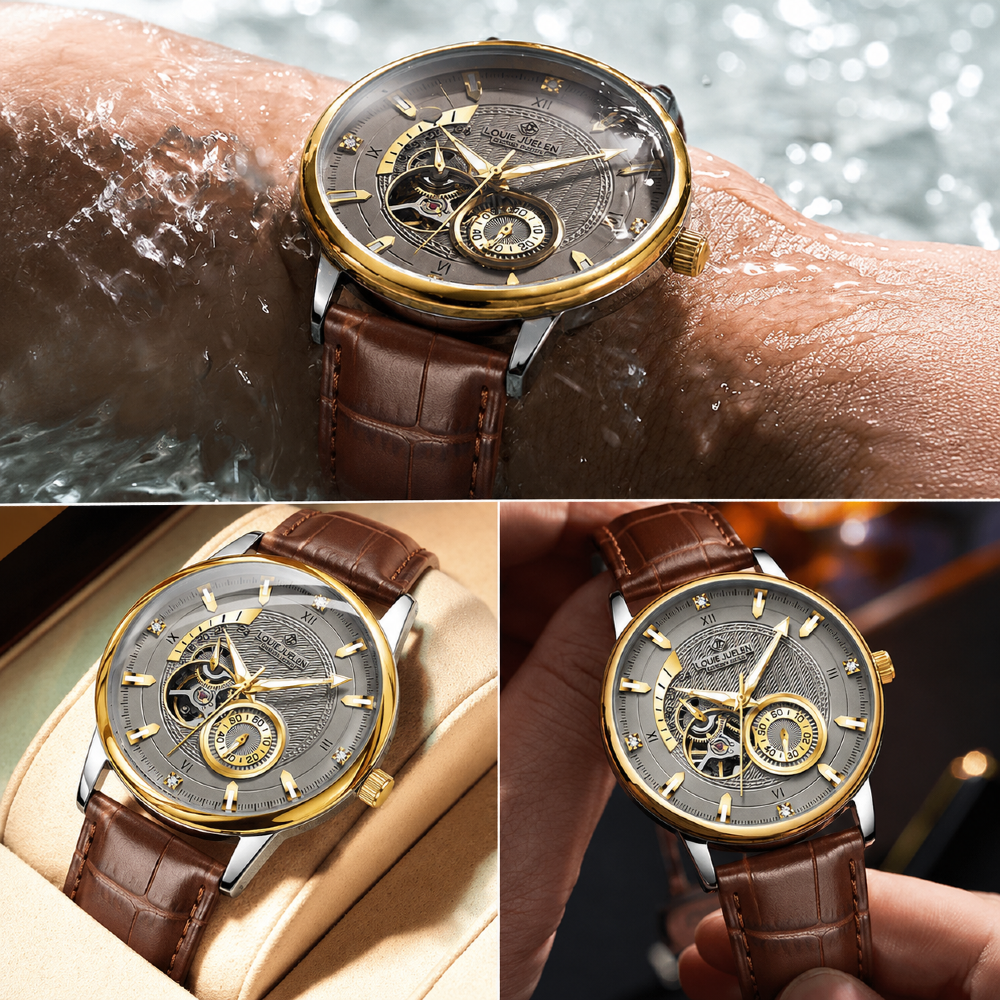
Louis Juelen Luxury Automatic(Tourbillion ) Premium Watch
Automatic Watch Winder
₦85,000
₦150,000
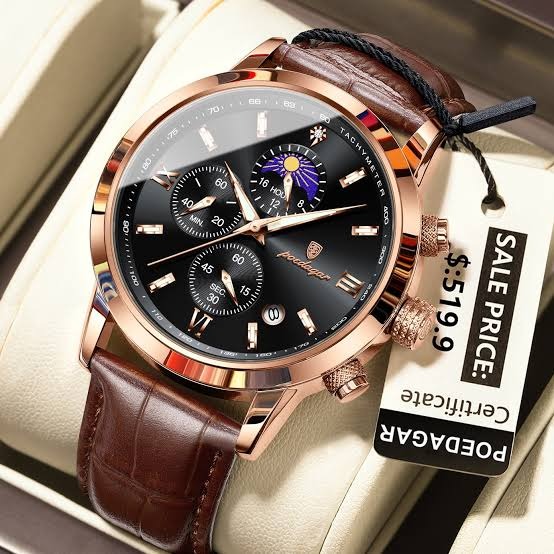
Poedagar Chronograph Luxury Watch
Free 24ml luxury Roll On oil perfume
₦45,000
₦65,000

Louis Juelen Automatic Chain Strap
Automatic Watch Winder
₦140,000
₦250,000
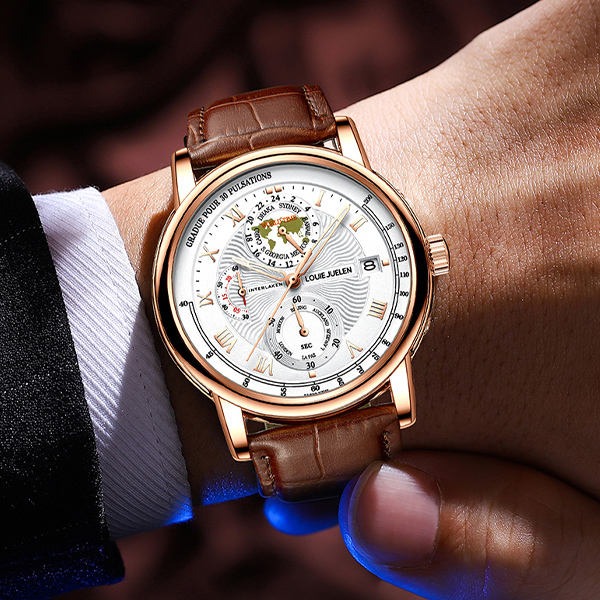
Louis Juelen Luxury Chronograph Leather Watch
Free 24ml luxury Roll On oil perfume
₦55,000
₦85,000