


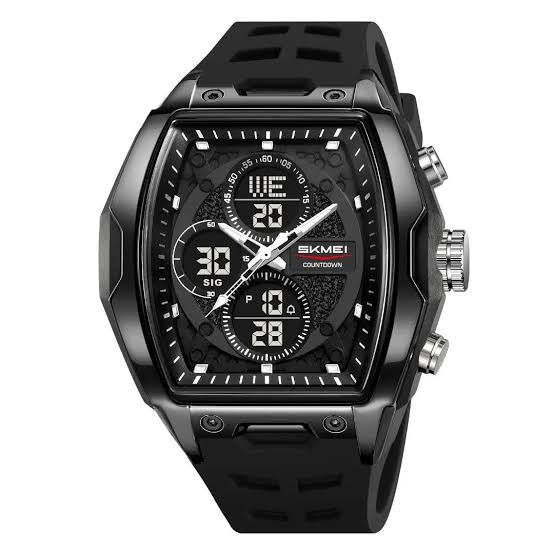


The Best Watches for the Gym: A Buyer's Guide for an Active Lifestyle
You strap on your watch, load the bar, and halfway through your first set you catch it clipping the rack. Or you finish a hard cardio session and notice a foggy ring under the crystal, or a rash forming under a leather strap that never dried out. Here is the truth: most watches are not built for what happens inside a gym, and buying watches for the gym without understanding what your training actually does to a timepiece is how good watches end up scratched, fogged, or retired to a drawer within a year.
This guide breaks down exactly what a workout does to a watch, which features actually matter for training, and how to choose a piece that survives leg day, cardio, and everything in between without babying it.
What Actually Happens to a Watch During a Workout
A workout exposes a watch to three things it rarely faces in an office setting: repeated impact, sustained moisture, and rapid temperature swings, and any one of these can damage a watch that was not built to handle them. Think about a typical strength session. Your wrist knocks against a barbell, a dumbbell rack, a pull-up bar, or the frame of a machine dozens of times. Sweat pools under the case back and along the strap for an hour or more. Then you walk into an air-conditioned locker room straight from a hot studio, and the sudden temperature change can fog a crystal that has a compromised gasket.
None of this is dramatic on its own. A single knock will not crack a case, and a bit of sweat will not corrode 316L stainless steel overnight. The real problem is repetition. Five gym sessions a week, fifty weeks a year, adds up to thousands of small impacts and hundreds of hours of moisture exposure. Cheap alloy cases, unsealed crowns, and sweat-absorbent straps fail under that kind of repeated stress, even if they survive week one.
The Non-Negotiable Features to Look for in Watches for the Gym
The right gym watch needs solid water resistance for sweat, a shock-resistant case, a comfortable non-absorbent strap, and a dial you can read mid-set without tilting your wrist awkwardly. Skip any one of these and you are trading durability for looks, which rarely survives contact with a squat rack.
Water Resistance: What Rating You Actually Need
Sweat is water, and enough of it during a long session behaves the same way rain or a splashed sink does against your watch's seals. A rating of at least 5 ATM (50 metres) is the realistic minimum for regular training, since that level is tested to handle showering, hand washing, and heavy sweating without issue. If you plan to rinse off in the gym shower or swim laps afterward, look for 10 ATM (100 metres) or higher, since swimming creates pressure spikes that a lower rating was never tested against. Anything simply labelled "water resistant" with no ATM number listed is not reliable for daily training. It is built for the occasional splash, not an hour of sustained sweat.
Shock and Impact Protection
A gym watch takes far more knocks than a desk-bound one, so the case construction matters more than the brand name on the dial. Look for a case back and bezel with some structural depth rather than a paper-thin, flat profile, since a slightly raised bezel absorbs glancing blows before they reach the crystal. Screw-down crowns also help here, both for water sealing and because they sit more securely against accidental knocks from a rack or bar. If you lift heavy or do a lot of functional training with kettlebells and barbells, favour a slightly smaller case. It is less likely to catch on equipment and easier to keep out of the way during a lift.
Strap Comfort Without the Sweat Problem
A strap that traps moisture against your skin for an hour is a strap you will resent by week three. Rubber and silicone straps do not absorb sweat the way leather does, they rinse clean in seconds, and they will not stiffen, crack, or start smelling the way a leather strap eventually will under repeated sweat exposure. Leather has its place for the office and for evenings out, but it is genuinely the wrong choice for training, since moisture strips its natural oils and leaves it dry and brittle over time. If you want one watch that moves between the gym and daily life, a quick-release strap system lets you swap a rubber band in for training and a leather or metal one back out for everything else.
Dial Legibility Mid-Set
You should be able to check your rest timer or the clock at a glance without twisting your wrist mid-lift or squinting under gym lighting. Look for high-contrast dials, bold hour markers, and a lume that actually glows rather than a decorative afterthought, since dim, low-contrast lume is common on cheaper pieces and useless in a dark corner of the gym or an early morning session before sunrise.
Quartz or Mechanical: Which Handles Training Better
Quartz movements are the more practical choice for daily gym wear because they tolerate shocks better, hold time accuracy without daily winding, and cost less to replace if something does eventually go wrong. Mechanical watches are beautiful and satisfying to wear, but their delicate gear trains and balance wheels are more sensitive to the repeated jolts of a barbell workout, and a hard knock is more likely to throw off their accuracy than it would a quartz movement. That does not mean a mechanical watch has no place near a gym bag. Plenty of people wear a rugged automatic for light cardio or a walk on the treadmill. For serious strength training, HIIT, or CrossFit-style sessions, though, quartz is simply the lower-maintenance, lower-risk option.
Matching the Watch to the Workout
Different training styles put different demands on a watch, and the table below breaks down what actually matters for each so you are not overpaying for features you will not use, or underbuying on the ones you need.
| Workout Type | Water Resistance Needed | Best Case Size | Best Strap | Priority Feature |
|---|---|---|---|---|
| Weightlifting / Strength Training | 5 ATM minimum | 38 to 42mm, avoid oversized cases | Rubber or silicone | Shock-resistant bezel, screw-down crown |
| Running / Cardio | 5 ATM | Lightweight, under 42mm | Silicone or perforated rubber | Low weight, bold legible dial |
| HIIT / CrossFit / Functional Training | 5 to 10 ATM | Compact, snug fit | Rubber with secure clasp | Impact resistance, secure fit that will not slide |
| Swimming / Pool Workouts | 10 ATM minimum | Any, prioritise sealing | Rubber or silicone only | Screw-down crown, verified swim rating |
| Light Gym Use / General Fitness | 3 to 5 ATM | Whatever suits your wrist | Any, including leather off-season | Comfort over extreme durability |
If you are shopping for one do-everything piece rather than a dedicated gym watch, explore our full watch collection here and filter toward sport-oriented pieces with rubber or silicone straps and clearly listed water resistance.
Should You Even Wear a Watch to the Gym
For most training, yes, a properly chosen watch is fine to wear straight through the session, though heavy barbell work is the one exception worth taking seriously. Experienced lifters generally agree that a watch is safe for cardio, machines, and most strength work, but during barbell lifts like deadlifts, cleans, or heavy rows, sliding your wrist under a bar with a watch on risks a scratch at best and a pinch at worst. Many people simply slide the watch up the forearm during those specific lifts and let it settle back down afterward. It takes two seconds and it protects both your wrist and your watch.
Fit and Sizing for a Watch That Moves With You
A gym watch needs to sit snug enough that it will not slide down your wrist mid-set, but never so tight that it restricts circulation during a pump-heavy session. Aim for a fit where you can slip one finger comfortably under the strap when your wrist is at rest, since it will tighten slightly as your muscles engage during a lift. A watch that spins loosely around your wrist is more likely to catch on equipment, and one that is strangling your wrist by the end of a set is doing you no favours either.
Caring for Your Watch After a Sweaty Session
Rinse rubber and silicone straps under running water and wipe the case dry immediately after every workout, since dried sweat salt is mildly corrosive and will dull metal finishes and pit clasps over time if left to sit. Do this consistently and a well-built gym watch will look nearly new years down the line. A quick wipe takes ten seconds. Skipping it repeatedly is how a decent watch starts looking tired within a single year of hard training.
A few habits worth building into your gym routine:
- Rinse after every sweaty session, not just occasionally, since salt residue is the main cause of dulled cases and stiff clasps.
- Dry the strap fully before your next wear if it is rubber or silicone, to avoid any skin irritation.
- Check the crown is pushed in or screwed down before you start, especially if your watch has a screw-down type, since water resistance depends entirely on a properly sealed crown.
- Store it away from strong magnets in gym equipment like some resistance machines and speaker docks, since magnetism can affect the accuracy of certain movements over time.
If your current watch is already showing wear from months of gym use, it may be time to retire it to casual wear and pick up something purpose-built. Shop our sport and everyday watch collection here for pieces with the water resistance and strap options this guide covers.
Frequently Asked Questions
What water resistance rating do I need for gym workouts?
Look for at least 5 ATM (50 metres) for regular sweaty training, and 10 ATM or higher if you also shower or swim after your session. Anything below 3 ATM or simply labelled "water resistant" without a number is not reliable for consistent gym use.
Can I wear an automatic watch to the gym?
You can, but quartz is generally the safer choice for serious strength training and high-impact sessions since it tolerates shocks better and needs no daily winding. A rugged automatic is fine for lighter cardio or walking sessions if you prefer the movement.
Will gym sweat actually damage my watch?
Yes, over time. Sweat contains salt that can corrode metal cases and clasps and degrade leather straps if it is not rinsed off regularly, even though a single sweaty session will not cause visible damage on its own.
Should I take my watch off during weightlifting?
Not necessarily, but slide it up your forearm during heavy barbell lifts like deadlifts or cleans, where sliding your wrist under the bar risks a scratch or pinch. For machine work, cardio, and most accessory lifts, a properly fitted watch is fine to leave on.
Featured in our collection
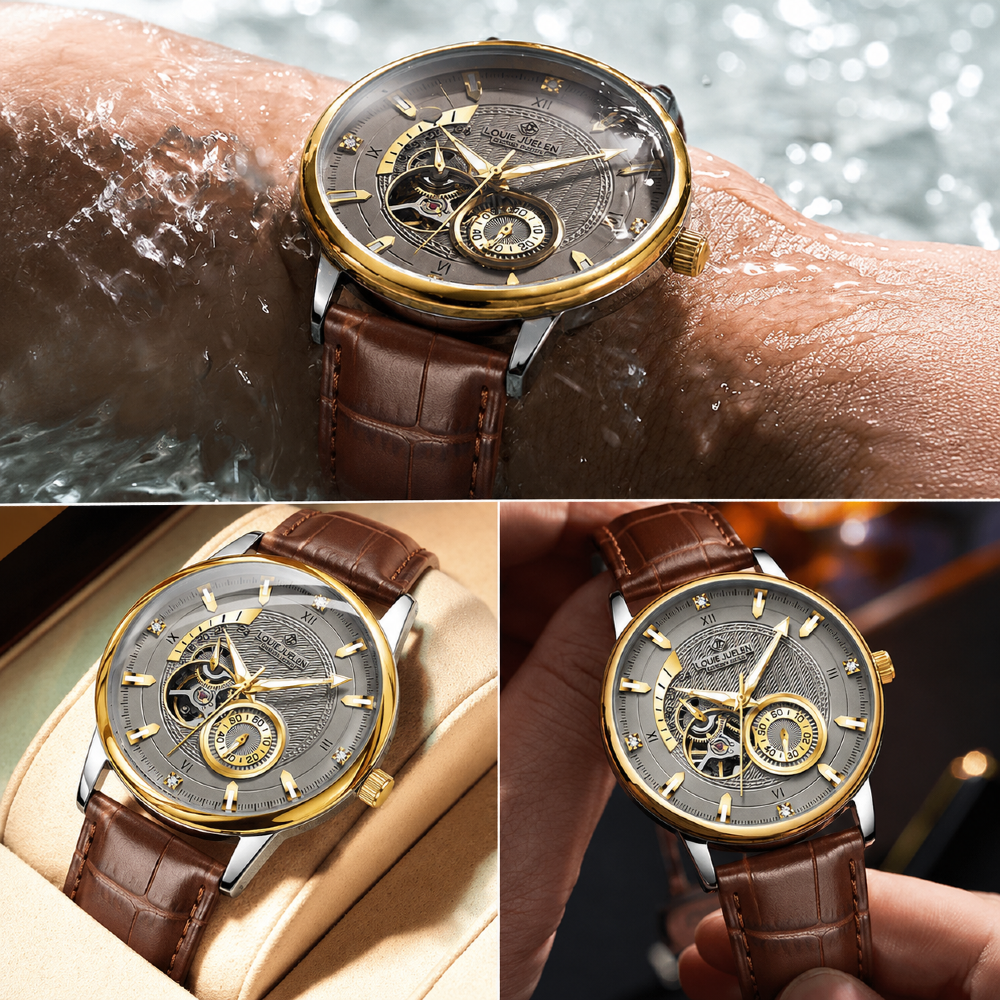
Louis Juelen Luxury Automatic(Tourbillion ) Premium Watch
Automatic Watch Winder
₦85,000
₦150,000
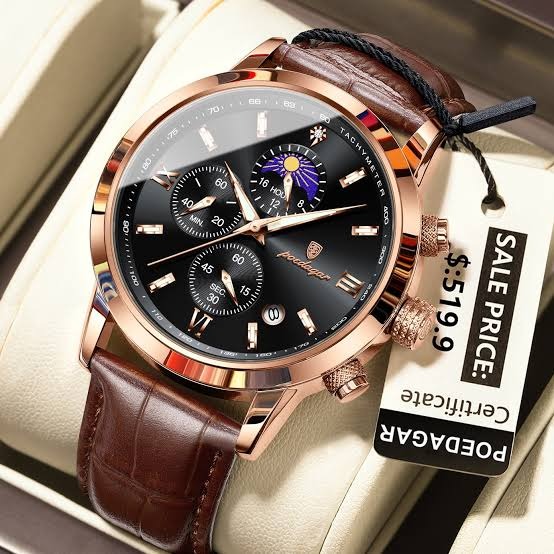
Poedagar Chronograph Luxury Watch
Free 24ml luxury Roll On oil perfume
₦45,000
₦65,000

Louis Juelen Automatic Chain Strap
Automatic Watch Winder
₦140,000
₦250,000
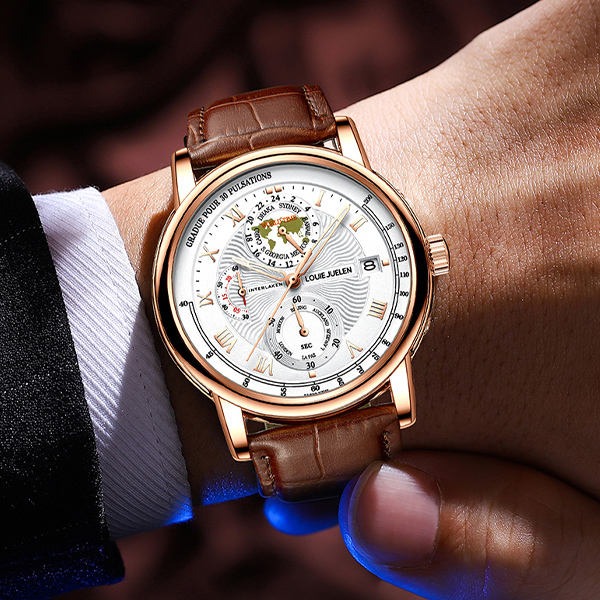
Louis Juelen Luxury Chronograph Leather Watch
Free 24ml luxury Roll On oil perfume
₦55,000
₦85,000