



Pilot Watches Explained: History, Features and How to Style One
You see a big black dial, oversized numerals and a chunky crown, and someone calls it a "pilot watch." But half the pieces sold under that name today have never been near a cockpit brief, and if you are spending real money, you deserve to know what you are actually buying. Pilot watches are one of the most misunderstood categories in menswear and womenswear alike, because the look has been copied so widely that the meaning behind it gets lost. Here is the truth: a proper pilot watch is not just a style. It is a set of design decisions that solved a real problem for aviators flying in freezing, high-vibration cockpits nearly a century ago. Once you understand where those decisions came from, choosing and styling a pilot watch becomes far easier.
What Is a Pilot Watch and Where Did It Come From?
A pilot watch is a timepiece built for legibility and durability in flight, defined by an oversized dial, bold Arabic numerals, a large crown for gloved hands, and a matte, glare-free finish designed to be read in a split second. The category traces back to early 20th century aviation, when pilots needed a reliable way to check time and navigate without taking their eyes off the horizon for long.
The most influential chapter in this story is the German "B-Uhr" (Beobachtungs-Uhr, or observation watch), commissioned for Luftwaffe navigators before and during the Second World War. Five manufacturers built these to a strict military specification: A. Lange & Söhne, Laco, Stowa, Wempe and IWC. The brief called for a large 55mm case in nickel-plated brass or steel, a movement with hacking seconds so the crown could stop the second hand for precise synchronization, and a dial legible enough to read from arm's length in a shaking cockpit. Because pilots wore thick leather gloves in unheated aircraft, the crown had to be big enough to grip and wind without removing them, which is why vintage and modern pilot watches still carry that unmistakable oversized crown today.
Two dial layouts came out of that era and both are still referenced constantly by modern brands:
- Type A dial: a matte black face with a thick minute track, plain Arabic numerals from 1 to 11, and a triangle flanked by two dots at 12 o'clock for instant orientation.
- Type B dial: minutes take priority over hours, with a large outer minute track and a smaller inner ring of hour numerals, built for navigators doing rapid time calculations mid-flight.
Civilian aviation had its own answer too. Brands like Breitling built pilot watches around chronograph functions and slide rule bezels for in-flight calculations, while military-style Fliegers stayed closer to the stripped-back, legibility-first German approach. That split, flight computer on one side and rugged military tool on the other, still shapes the category.
The Features That Actually Define a Pilot Watch
A genuine pilot watch is recognizable by a handful of functional details rather than decoration, and each one exists to solve a specific problem pilots faced in the air. Skip any of these and you are likely looking at a watch borrowing the aesthetic without the substance.
- Oversized, high-contrast dial: black or dark dials with large luminous numerals and hands, built for a fast, unambiguous read at a glance.
- Big crown: an onion-shaped or conical "diamond" crown sized for gripping with gloves on, still the single most recognizable pilot watch trait.
- Coin-edge bezel: a ridged, fluted edge on an otherwise plain bezel, more grip than decoration, and the closest thing pilot watches have to ornamentation.
- Wire lugs or a leather strap: many historic Fliegers used simple wire lugs and a long leather strap that could fit comfortably over a flight jacket sleeve.
- Hacking seconds: stopping the seconds hand when the crown is pulled out, which lets the wearer synchronize the watch to the exact second.
- Luminous markers: heavy application of lume on hands and numerals for cockpit dimness or night flying, a direct ancestor of today's Super-LumiNova dials.
Some modern pilot watches add a slide rule bezel for fuel and speed calculations, or a second time zone (GMT) hand for pilots and frequent travelers crossing time zones. Neither is essential to the category, but both are genuinely useful additions if you actually want the tool-watch function and not just the look.
Pilot Watch Styles Compared
Not every pilot watch is built the same way, and the differences matter more than most shoppers realize before they buy. Here is how the main styles stack up against each other.
| Style | Defining trait | Typical case size | Best for |
|---|---|---|---|
| Classic Type A Flieger | Matte dial, plain numerals, triangle at 12 | 39mm to 42mm | Everyday wear, minimalist wardrobes |
| Type B navigator | Minutes-first dial, inner hour ring | 40mm to 44mm | Collectors who want the historic detail |
| Chronograph pilot | Sub-dials for stopwatch timing, tachymeter or slide rule | 42mm to 46mm | Men who want a busier, technical dial |
| GMT pilot | Extra 24-hour hand for a second time zone | 40mm to 44mm | Frequent flyers and remote workers on international calls |
| Big Pilot style | Oversized case, minimal dial, huge crown | 44mm and above | Larger wrists, statement pieces |
If you are buying your first one, the classic Type A style is the safest entry point. It is legible, versatile, and never feels dated because it has already survived nearly a century of trends.
How to Choose a Pilot Watch for Everyday Life in Nigeria
Choosing a pilot watch comes down to matching the case size, dial legibility and strap to your wrist, your climate and how often you actually travel or need a second time zone. Do not buy the biggest, boldest dial simply because it photographs well online.
Work through these factors before you commit:
- Case size and wrist fit: a 40mm to 42mm case sits comfortably on most wrists and still reads unmistakably as a pilot watch. Go past 44mm only if you have a genuinely large wrist, since an oversized case will look like it is wearing you rather than the other way round.
- Movement: a reliable quartz movement keeps running accurately with almost no maintenance, which suits Nigeria's heat, humidity and dust well if you want something low-fuss. A mechanical or automatic movement rewards you with the hacking seconds and heritage feel of the originals, but expect to service it and wind it if it sits unworn.
- Water resistance: look for at least 50 meters, which comfortably handles rain, hand washing and sweat, though pilot watches are not built as dive tools so do not swim in one expecting dive-watch protection.
- Strap material: leather straps look sharp for office and evening wear but need to be kept dry and conditioned in humid weather. A stainless steel bracelet or a rugged NATO strap holds up better if you sweat a lot or commute by okada.
- Dial legibility in daylight: hold the watch at arm's length in bright light before buying. If you cannot read the time instantly, the dial has failed the one job a pilot watch exists to do.
Ready to compare real options rather than guess from photos? Shop our pilot watch collection here and check case size and strap details on each listing before you decide.
How to Style a Pilot Watch With Your Wardrobe
A pilot watch works best dressed the way it was designed, which is casual to smart-casual, because its oversized dial and utilitarian crown were never meant for black tie. The golden rule with any tool watch is to dress it like you dress yourself: casual clothes for casual watches, tailored pieces for dressier ones.
- Weekend and travel looks: pair a leather-strap pilot watch with a plain t-shirt, chinos and clean sneakers. Add aviator sunglasses if you want to lean fully into the off-duty pilot mood without trying too hard.
- Smart-casual office days: a steel bracelet pilot watch with a slim profile sits well under a rolled-up shirt sleeve, especially on the days you skip the blazer.
- Matching your metals: keep the watch case and bracelet colour consistent with your belt buckle, shoe buckles and any rings you wear. Silver with silver, gold with gold. Mixing metals rarely looks intentional unless it is a deliberate two-tone piece.
- Matching your leathers: a brown leather strap wants brown shoes and a brown belt in the same outfit. A black strap wants black leather elsewhere. This one detail separates a considered outfit from a rushed one.
- Colour choices: a black dial is the most versatile option and works with almost any colour palette you already own. A navy or deep green dial adds personality without sacrificing that easy-to-read legibility pilot watches are built for.
If your current watch does not fit into your outfit rotation the way you want, browse our full watch range here and look specifically for a black or navy dial with a strap that matches your existing shoes and belts.
Caring for a Pilot Watch So It Lasts
A pilot watch survives daily wear best when you keep it away from prolonged moisture, wipe the case and strap regularly, and have any mechanical movement serviced on schedule. These watches were built tough, but tough does not mean maintenance-free.
- Wipe the case and crystal with a soft microfiber cloth after wear, especially in Nigeria's dust and humidity, to stop grime building up around the crown and lugs.
- Keep leather straps dry. Wipe off sweat promptly and let a wet strap air dry naturally rather than near direct heat, which cracks leather fast.
- Do not pull the crown out in the rain or shower unless the watch is rated for it. Pilot watch crowns are large and easy to grip, which unfortunately also makes them easy to accidentally loosen.
- Service mechanical movements roughly every 4 to 5 years, or as your specific brand recommends, to keep the hacking function and timekeeping accurate.
- Store it dial-up in a dry drawer or box when not worn, away from direct sun, which fades matte dials faster than most owners expect.
Frequently Asked Questions
What is the difference between a pilot watch and a field watch?
A pilot watch is built primarily around dial legibility and an oversized crown for gloved cockpit use, often larger and bolder than a field watch. A field watch is a smaller, more rugged military tool designed for ground combat, usually simpler and more compact on the wrist.
Are pilot watches good for everyday wear?
Yes, pilot watches suit everyday wear extremely well because their high-contrast dials and durable cases were built for constant, no-fuss use. A classic 40mm to 42mm model with a leather or steel strap moves easily between office days, travel and weekends.
Do pilot watches work well for women?
Absolutely, and more women are choosing them precisely because the oversized, legible dial reads as confident rather than fussy. Look for a slightly smaller case, around 36mm to 40mm, paired with a slim leather strap for a more tailored fit on smaller wrists.
How big should a pilot watch case be?
Most wrists are well served by a 40mm to 42mm case, which keeps the classic oversized look readable without overwhelming the wrist. Reserve anything above 44mm for genuinely large wrists or for collectors who specifically want a Big Pilot style statement piece.
Featured in our collection
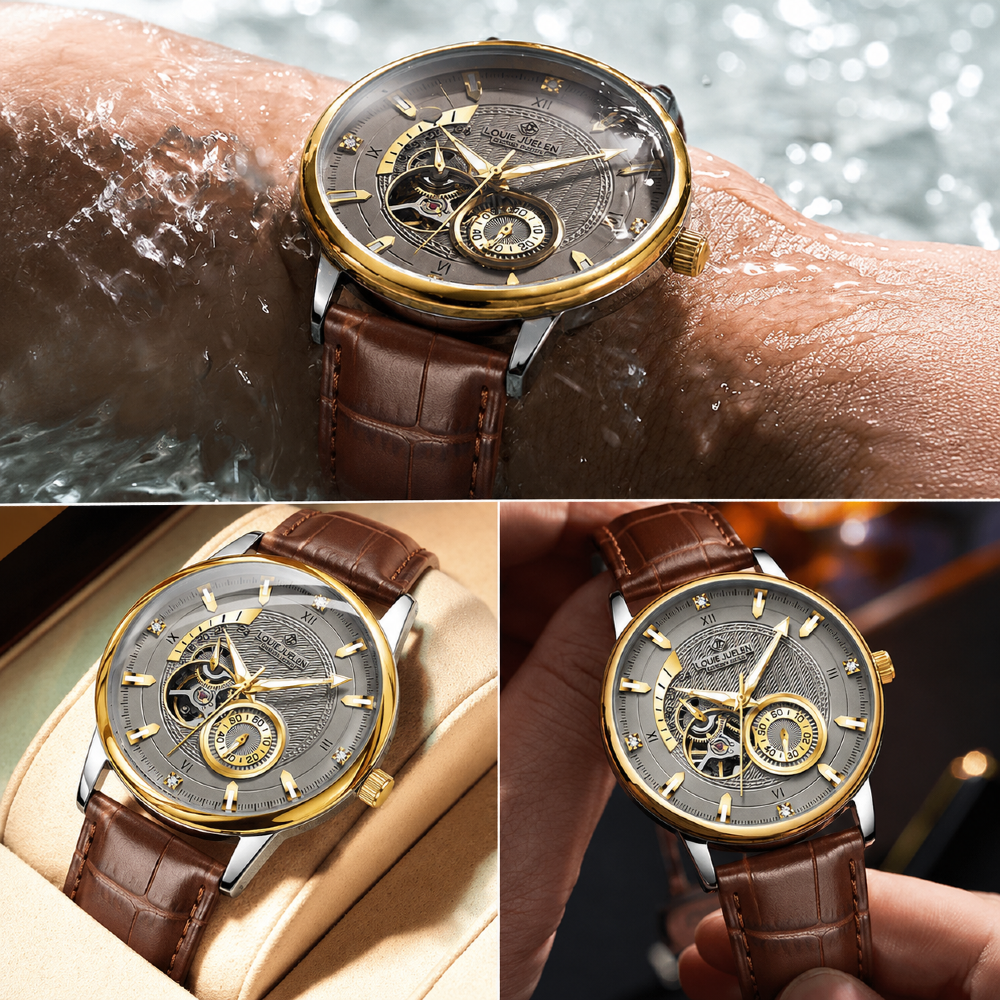
Louis Juelen Luxury Automatic(Tourbillion ) Premium Watch
Automatic Watch Winder
₦85,000
₦150,000
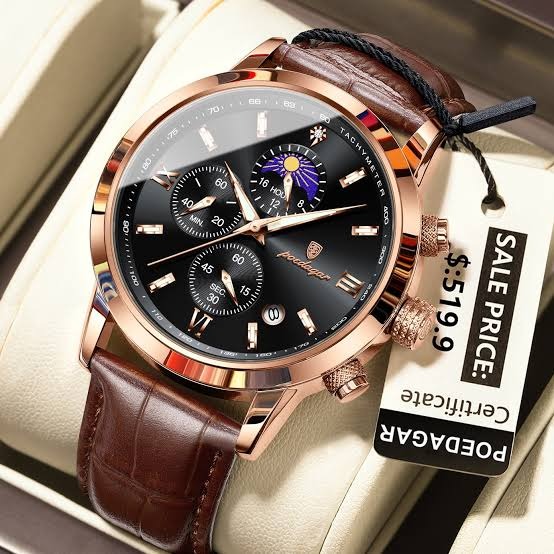
Poedagar Chronograph Luxury Watch
Free 24ml luxury Roll On oil perfume
₦45,000
₦65,000
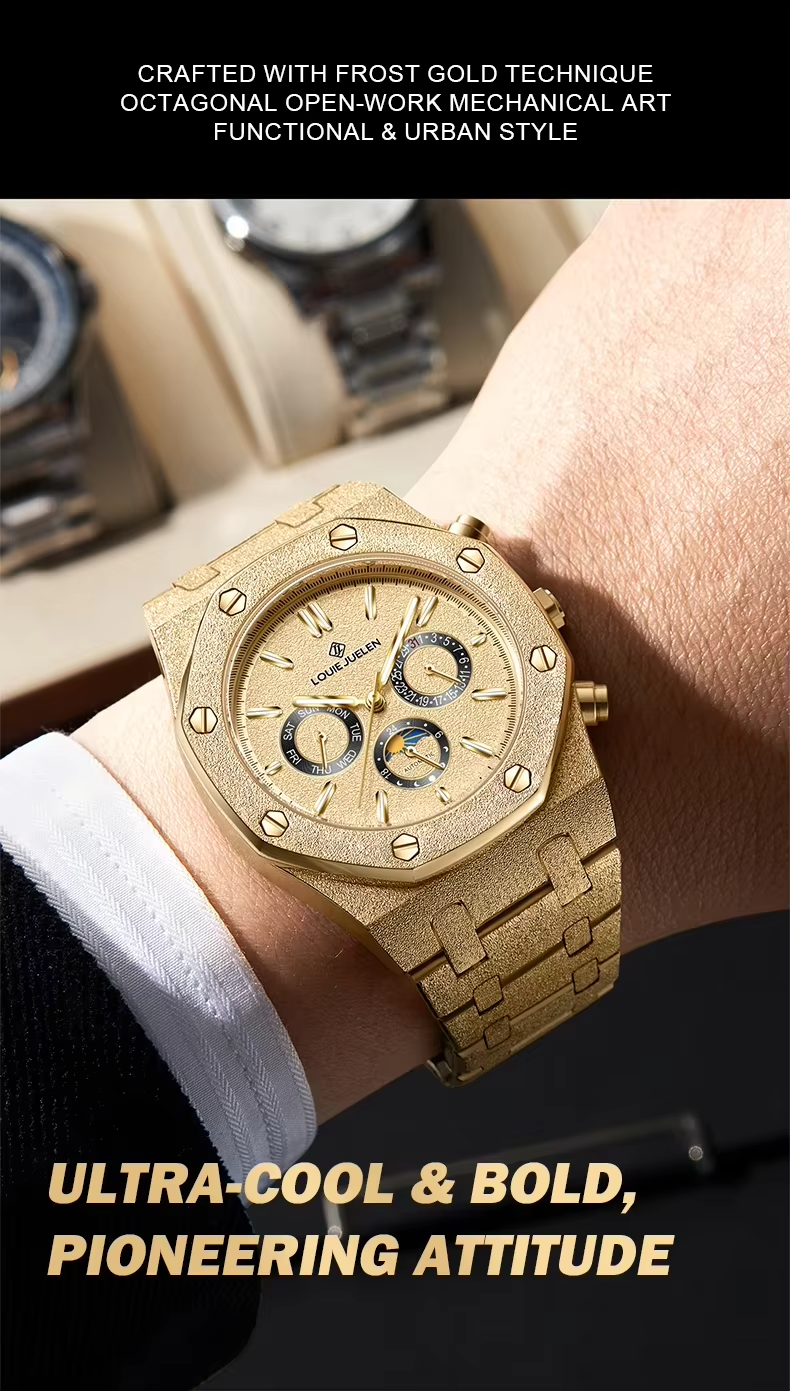
Louis Juelen Automatic Chain Strap
Automatic Watch Winder
₦140,000
₦250,000
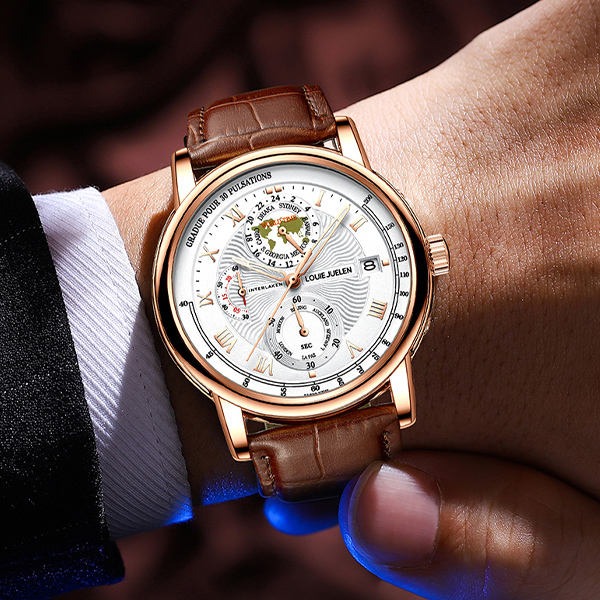
Louis Juelen Luxury Chronograph Leather Watch
Free 24ml luxury Roll On oil perfume
₦55,000
₦85,000