



How to Match Your Watch With Traditional Nigerian Attire (Agbada, Senator, Aso-Ebi)
You have paid a tailor good money for a well cut agbada or a crisp senator set, ironed it twice, chosen the right cap, and then strapped on the same sporty rubber watch you wear to the gym. The outfit looks off and you cannot quite say why. The real problem is rarely the fabric or the fit. It is the watch. Choosing the right watch with native attire is one of the fastest ways to look finished and pulled together, and getting it wrong is one of the fastest ways to look like you got dressed in a hurry.
This guide walks through exactly how to pair a timepiece with agbada, senator wear, isiagu, and the lace and iro-and-buba looks women wear to weddings and owambe. You will get real, practical direction on metal tone, case size, dial colour and strap choice, not vague style talk.
Why Your Watch Matters More on Native Attire Than on a Suit
A watch stands out far more on native attire than on a Western suit because the sleeves are wider, the colours are bolder, and there is usually no jacket cuff to half hide it. On agbada especially, the flowing sleeves keep sliding back, so your wrist is on constant display, which means the watch is doing more visual work than it would under a blazer.
With a Western suit, a shirt cuff and jacket sleeve frame the watch and keep it discreet. Native attire strips that framing away. The embroidery on an agbada or isiagu, the aso-oke trim on a cap, the beadwork on a lace dress, all of it draws the eye toward the hands and wrists. A watch with native attire is not a background accessory here. It is closer to a piece of jewellery that has to hold its own next to rich fabric and detailed stitching.
Matching a Watch to Agbada: What Wide Sleeves Actually Need
Agbada calls for a watch with real presence, meaning a larger case, a substantial bracelet or strap, and a metal tone that echoes the embroidery thread rather than fighting it. Because the sleeves are voluminous and often billow past the wrist, a small, thin dress watch simply disappears and reads as an afterthought.
For a classic agbada in white, cream or pastel with gold or silver zari embroidery, aim for:
- A case size of 40mm to 44mm. Anything smaller gets swallowed by the sleeve.
- A metal tone that matches the embroidery thread. Gold thread calls for a gold or rose gold case. Silver thread calls for a steel or silver dial watch.
- A bracelet over a slim leather strap for formal agbada, since a solid link bracelet sits better against heavy fabric than a thin strap that can look lost.
- A darker or richer dial colour, such as navy, deep green, or black, which photographs well against light coloured agbada and does not wash out under outdoor event lighting.
If your agbada has heavy embroidery, keep the watch relatively clean on the dial. You already have a lot of pattern happening on the sleeve. A busy chronograph with three sub-dials competes with that embroidery instead of complementing it. Save the chronograph for senator wear or office days.
Senator Wear and Everyday Native Outings: A More Streamlined Watch
Senator wear has a slimmer, more tailored silhouette than agbada, so it pairs well with a mid-size dress watch or a clean sports watch rather than an oversized statement piece. Because senator fits closer to the body and has a shorter sleeve, more of your forearm and wrist show, which actually gives you more room to experiment.
A 38mm to 42mm case works well here. Senator is often worn to the office, to church, or to casual family functions, so this is the attire where a quartz dress watch or a clean three hand automatic earns its keep. Stick to one metal tone throughout the outfit. If your senator has silver buttons or a silver-threaded cap, keep the watch silver or steel rather than mixing in gold.
Isiagu and Igbo Traditional Wear: Respecting the Embroidered Lion Motif
Isiagu, the lion head patterned top favoured by Igbo men, is bold on its own, so the watch should stay understated in dial design while still carrying some visual weight through case size or bracelet. The isiagu top is already doing the talking with its embroidery, and it is traditionally paired with a striped or red cap and sometimes a walking stick or beaded necklace for chiefs and titled men.
Because isiagu is frequently black or deep red with gold or cream embroidery, a gold tone watch with a simple black or brown leather strap tends to work best. Avoid a busy multi-colour dial. A plain black, white or champagne dial with clean hands lets the lion motif and any coral beads or chief's regalia remain the visual focus, while the watch quietly signals that you understand the occasion.
Gold, Silver or Two-Tone: Matching Metal to Skin Tone and Fabric
Choosing between gold and silver for native attire comes down to two things working together, your skin's undertone and the metal tone of your outfit's embroidery, beads or buttons, and getting both right is what makes a watch look chosen rather than random. Warmer, deeper skin tones tend to glow next to yellow gold and rose gold, since those tones pick up warmth rather than clashing with it. Cooler or fairer undertones often look cleaner in silver, steel or white gold, which reads crisp rather than heavy against lighter skin.
If you are unsure of your undertone, look at the veins on the inside of your wrist in natural daylight. Green tinted veins usually mean a warm undertone, which leans toward gold. Blue or purple tinted veins usually mean a cool undertone, which leans toward silver. If you genuinely cannot tell, a two-tone watch that mixes gold and steel is the safest middle ground for native attire because it can sit comfortably next to either metal in your outfit's trim.
A Quick Reference: Watch Style by Attire Type
Here is a fast comparison to keep in mind before you dress for the next owambe, wedding or naming ceremony.
| Attire Type | Best Case Size | Recommended Metal | Dial Guidance | Strap or Bracelet |
|---|---|---|---|---|
| Agbada (formal, heavy embroidery) | 40mm to 44mm | Match embroidery thread (gold or silver) | Solid colour, minimal complications | Metal bracelet preferred |
| Senator wear (everyday native) | 38mm to 42mm | Steel or gold, pick one tone | Clean three-hand or subtle chronograph | Leather strap or bracelet |
| Isiagu (Igbo traditional) | 40mm to 42mm | Gold tone, warm and understated | Plain black, white or champagne dial | Black or brown leather strap |
| Aso-ebi and lace (women) | 28mm to 34mm | Gold or rose gold to match jewellery | Mother of pearl or plain metallic dial | Slim bracelet or bangle-style |
| Iro and buba (women, traditional) | 26mm to 32mm | Gold, matching gele and beads | Simple round dial, no clutter | Thin leather or metal bangle strap |
What Women Should Wear on Aso-Ebi, Lace and Iro-and-Buba Occasions
For women, the watch should coordinate with the gele and jewellery as one connected set rather than being chosen on its own, since aso-ebi and lace outfits are already rich with beading, stones and colour, and a mismatched watch metal breaks that harmony instantly. Aso-ebi literally means family cloth, and it is worn in coordinated groups at Nigerian weddings and ceremonies, which means everyone around you is also dressed up and paying attention to detail.
A few practical rules that hold up at real events:
- Pick your gele's dominant thread colour first, then choose jewellery and watch metal to match. If the gele has gold trim, your watch, earrings and bangles should lean gold.
- Keep the case smaller and more delicate than you would for daywear, since the goal is a refined accent next to an already bold outfit, not another loud element competing with the lace and stones.
- A bangle-style bracelet watch works beautifully with iro and buba because it echoes the traditional coral or gold bangles already worn with that outfit.
- Avoid oversized sport watches at weddings and owambe. They read as casual next to formal lace, however nice the watch itself is.
If you are building a look for an upcoming wedding season, browse our women's watch collection here for pieces sized and finished for exactly this kind of occasion.
Getting the Proportions Right: Case Size, Dial Colour and Strap Under Flowing Sleeves
Getting the proportions right means choosing a watch whose case size, dial colour and strap width are scaled to how much of your wrist actually shows once you are dressed, since agbada hides more of the arm than senator or lace does, and a watch sized for a suit often looks lost or overwhelming once the sleeve is added. Stand in front of a mirror in the finished outfit, not just the shirt, before deciding on size.
A few sizing notes that matter in practice:
- Wide agbada sleeves swallow anything under 38mm, so size up rather than down.
- Senator's slimmer sleeve suits a mid-size case, since more wrist is visible and a huge case can look disproportionate against a fitted top.
- Women's lace sleeves are often three-quarter length or fitted, so a smaller, more delicate case reads as elegant rather than lost.
- Strap colour should echo your shoes or cap, not just your outfit's main colour. Brown leather strap with brown native shoes, black with black.
Common Mistakes Nigerians Make Matching a Watch With Native Attire
The most common mistake is wearing a casual sports watch, complete with a rotating bezel and rubber strap, to a formal agbada or aso-ebi event where the outfit calls for something dressier, and the mismatch is obvious the moment the sleeve moves. A close second is mixing metals carelessly, silver watch with gold buttons and a gold-threaded cap, which makes the whole look feel unplanned rather than deliberate.
Other slip-ups worth avoiding:
- Wearing a watch that is too small for agbada, so it gets lost entirely once the sleeve settles.
- Choosing a dial with too many colours or complications for an outfit that already has heavy embroidery.
- Forgetting that outdoor Nigerian events run long, in heat and sometimes dust, so a watch without solid water resistance or a reliable movement can let you down mid-event.
- Ignoring the cap or gele's metal tone entirely and choosing the watch in isolation.
Getting this right is not complicated once you know the rules. Match the metal to your embroidery thread, size the case to how much wrist actually shows, and keep the dial as clean as your outfit is busy. If you are shopping ahead of a wedding, naming ceremony or festive season, shop our full watch collection here for pieces that suit both agbada and senator wear, and if you are outfitting a couple for a matching look, our his and hers watch sets are worth a look too.
Frequently Asked Questions
What colour watch goes best with agbada?
It depends on your embroidery thread. Gold or cream zari embroidery pairs best with a gold or rose gold watch, while silver thread or a more subdued grey and white agbada looks cleaner with a steel or silver watch. Keep the dial itself in a solid, darker colour so it does not compete with the embroidery.
Can I wear a sports watch with senator wear?
Yes, a clean sports watch works with everyday senator wear, especially for casual outings, church or informal family functions. Avoid it for formal senator occasions like weddings or naming ceremonies, where a dress watch or a simple three-hand automatic looks more intentional.
Should men wear a bracelet watch or a leather strap watch with agbada?
A metal bracelet watch generally suits agbada better than a thin leather strap, because the substantial bracelet holds its own against heavy, flowing fabric. Leather straps work well for senator wear and isiagu, where the silhouette is closer to the body and a slimmer strap does not get visually lost.
How do I choose a watch to match aso-ebi and gele for a wedding?
Start with the dominant metal tone in your gele's trim or your jewellery set, then pick a watch in that same tone, gold or rose gold in most cases. Keep the case smaller and more refined than a daywear watch, and consider a bangle-style bracelet watch, which echoes the coral or gold bangles traditionally worn with aso-ebi and iro and buba outfits.
Featured in our collection
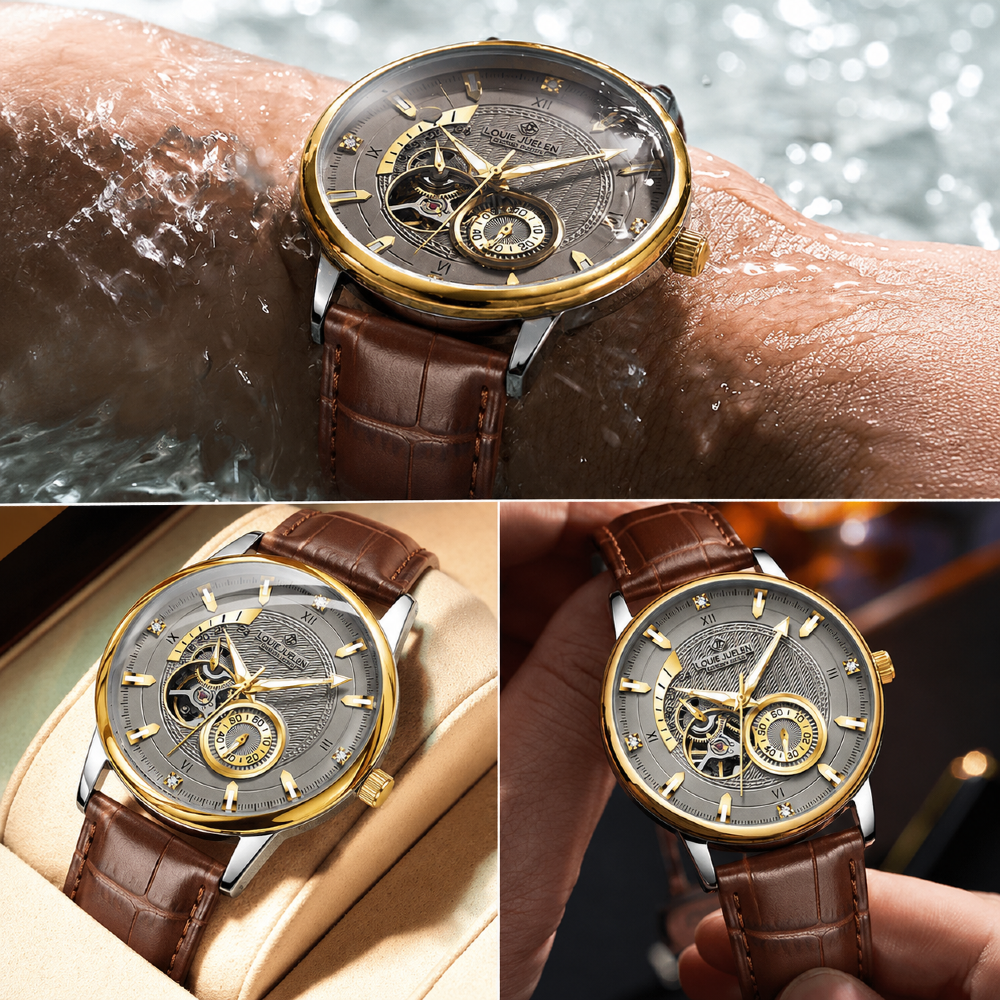
Louis Juelen Luxury Automatic(Tourbillion ) Premium Watch
Automatic Watch Winder
₦85,000
₦150,000
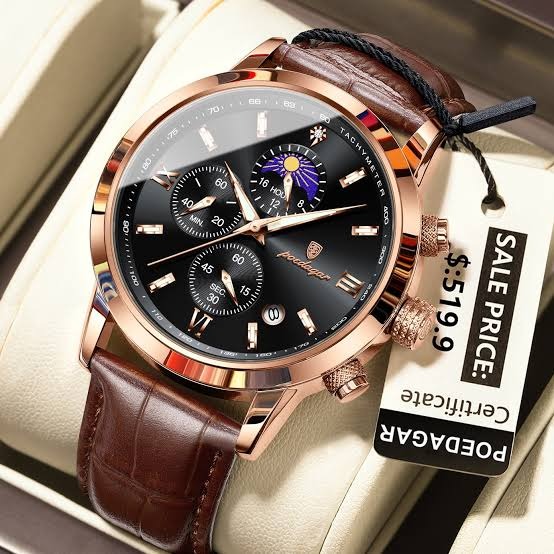
Poedagar Chronograph Luxury Watch
Free 24ml luxury Roll On oil perfume
₦45,000
₦65,000
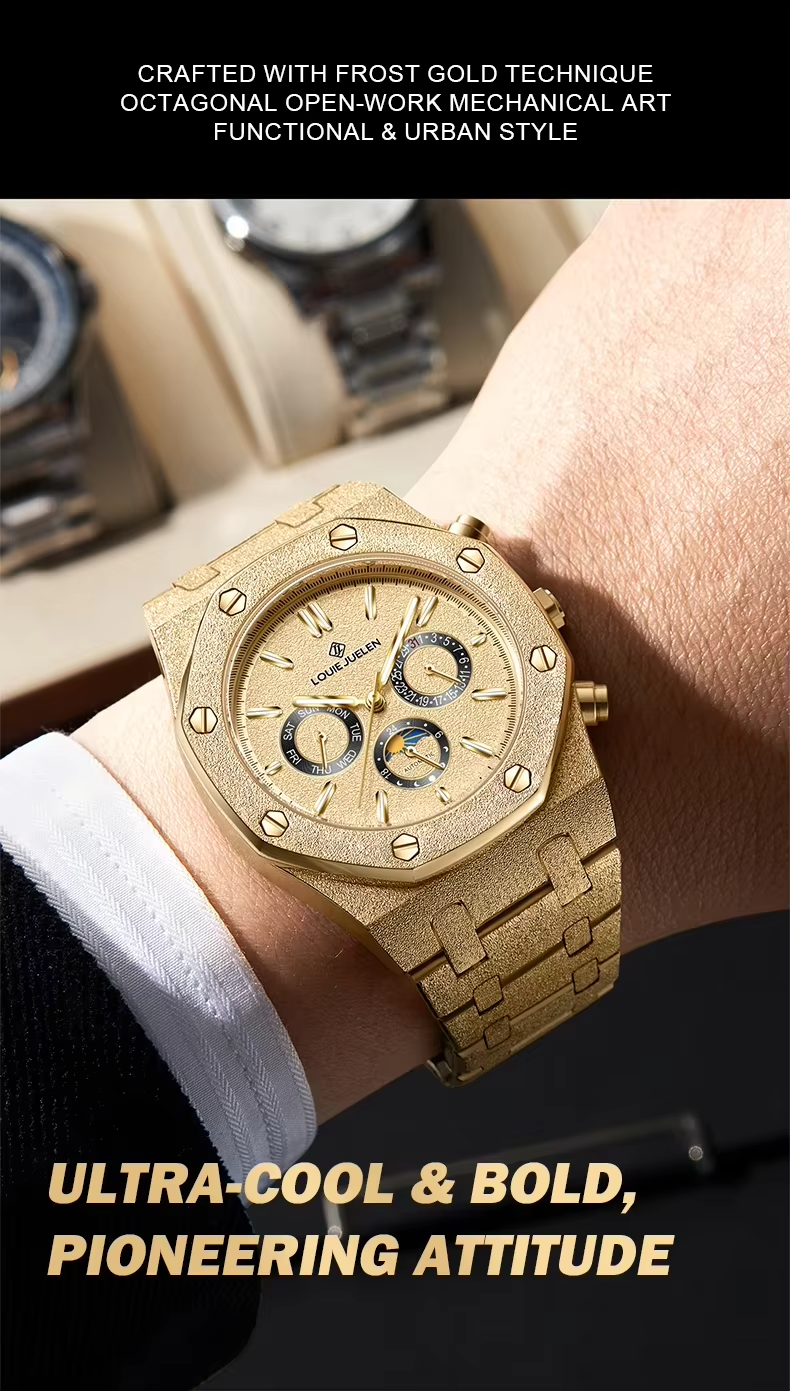
Louis Juelen Automatic Chain Strap
Automatic Watch Winder
₦140,000
₦250,000
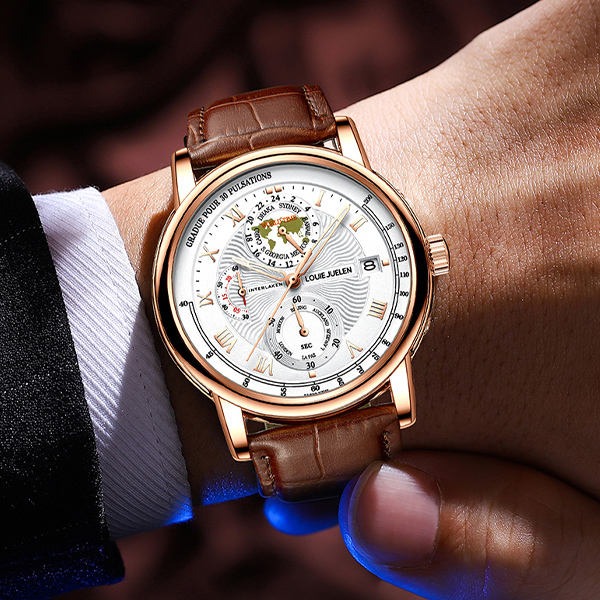
Louis Juelen Luxury Chronograph Leather Watch
Free 24ml luxury Roll On oil perfume
₦55,000
₦85,000