



Watch Terminology: A Beginner's Glossary of the Terms That Matter
You are standing in front of a watch case, or scrolling a product page late at night, and the description reads like a foreign language. Screw-down crown. Sapphire crystal. 21 jewels. 5ATM. Caliber this, complication that. You nod along, you pretend you understand, and you either buy the wrong watch or you walk away without buying anything at all. That is the real problem with watch terminology. It is not that the words are hard. It is that nobody ever sits you down and explains them in order, in plain language, before you need to make a decision with your money.
This glossary fixes that. Think of it as the cheat sheet you wish someone had handed you the first time you shopped for a proper watch. We will not drown you in horology-school detail here. Instead, you get the working definition of every term you are likely to meet on a spec sheet or hear from a sales assistant, grouped by the part of the watch it describes, so you can walk into any conversation about watches and actually follow along.
Why Watch Terminology Trips Up Even Smart Shoppers
Watch terminology confuses beginners because it borrows words from engineering, jewellery and horology all at once, and brands rarely explain them on the product page itself. A "jewel count" sounds decorative but is actually about friction inside the movement. A "bezel" sounds like a design flourish but can be a functional timing tool. Once you learn what each term is actually describing, the whole spec sheet stops feeling like a test and starts feeling like useful information you can use to compare watches properly.
The good news is that once you have the core vocabulary, it never really changes. Learn it once and you will read every future watch description with confidence, whether you are shopping for your first automatic or picking a graduation gift for someone else.
The Case and Crystal: What You Are Actually Looking At
Case: the metal (or ceramic, or titanium) housing that protects the movement inside. Case material affects weight, durability and how the watch resists scratches and corrosion.
Case diameter: the width of the case measured in millimetres, usually from 9 o'clock to 3 o'clock, excluding the crown. This is the number you compare when someone asks "what size is your watch."
Lug-to-lug: the total length of the case from the tip of the top lugs to the tip of the bottom lugs. Two watches with the same case diameter can wear very differently on the wrist depending on this measurement.
Lugs: the small projections on each side of the case where the strap or bracelet attaches. Lug width is measured in millimetres and determines which replacement straps will actually fit.
Bezel: the ring surrounding the crystal. Some bezels are purely decorative and fixed in place. Others rotate and are used to time an activity, track a second time zone, or measure speed.
Crystal: the transparent cover protecting the dial. Despite the name, it is not always made of crystal. The three common materials are mineral glass, acrylic (sometimes called plexiglass or hesalite), and sapphire crystal, which is by far the most scratch resistant of the three.
Crown: the small knob on the side of the case used to wind the movement, set the time, and adjust the date. A screw-down crown twists into the case for an extra seal against water and dust, while a push-pull crown simply pulls out to a set position.
Caseback: the panel on the underside of the watch. Some casebacks are solid, some are transparent so you can view the movement, and this is where you will usually find the water resistance rating stamped.
The Movement: The Engine Nobody Sees
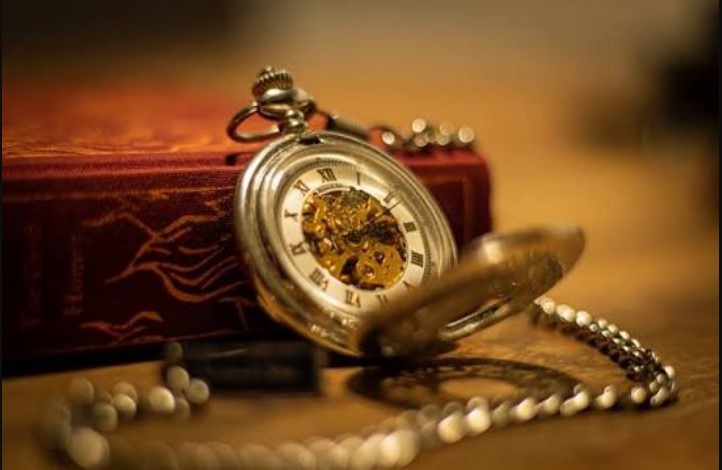
Movement: the mechanism inside the case that actually keeps time. Every watch has one, and the three broad families are mechanical, automatic and quartz.
Quartz movement: powered by a battery, using a vibrating quartz crystal to regulate timekeeping. Quartz watches are generally the most accurate and the lowest maintenance option for daily wear.
Automatic movement: a mechanical movement wound by the natural motion of your wrist rather than a battery, using a rotating weight inside the case.
Manual (hand-wound) movement: a mechanical movement with no self-winding rotor, meaning you wind the crown by hand on a regular schedule to keep it running.
Caliber: the specific model name or number a brand gives to a particular movement. Think of it as the movement's product code. Two watches can share the same caliber even if they look completely different on the outside.
Jewels: small synthetic rubies or sapphires used as bearings at friction points inside a mechanical movement. A higher jewel count generally signals a more finely finished movement, though it is not the only measure of quality.
Power reserve: how long a mechanical watch keeps running once fully wound, without any further winding or wrist motion. Many automatics offer somewhere between 38 and 80 hours, though some specialist calibers go much further.
Accuracy: how many seconds a watch gains or loses per day. Mechanical watches typically vary from minus 5 to plus 20 seconds daily depending on the caliber, while a good quartz movement will often stay within half a second.
Dial Language: Reading the Face
Complication: any function on a watch beyond simply displaying the hours and minutes. Date windows, chronographs and moon phases are all complications.
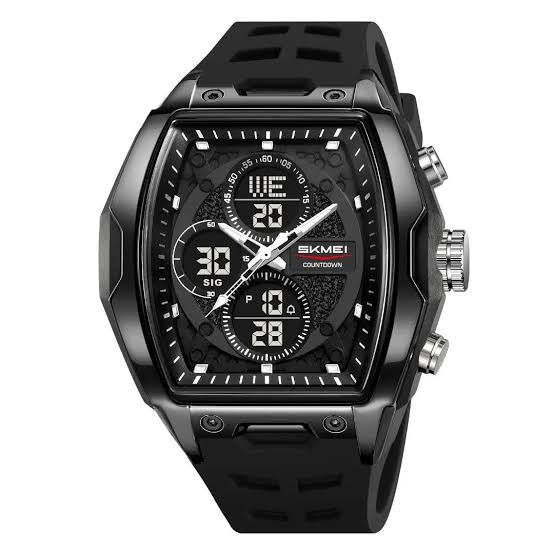
Chronograph: a stopwatch function layered onto a regular watch, operated by pushers on the side of the case and displayed on sub-dials.
Sub-dial: a smaller dial set into the main face, used to display a running seconds hand, a chronograph function, or another complication.
Tachymeter: a scale, usually printed on the bezel or dial edge, used alongside a chronograph to calculate speed over a known distance.
Lume: the luminous material applied to hands and hour markers so the dial stays readable in low light after being exposed to a light source.
Hands: the indicators for hours, minutes and seconds. Style names you will see include dauphine, baton, sword and cathedral hands, each describing a shape.
Strap, Bracelet and Fit
Bracelet: a strap made entirely of linked metal segments, as opposed to leather, rubber or fabric.
Oyster, Jubilee and Milanese: three common bracelet styles. Oyster bracelets have flat, three-link segments and a sporty look. Jubilee bracelets use five narrower links for a dressier, more fluid feel. Milanese bracelets are a fine woven mesh that flexes like fabric.
NATO strap: a single piece of woven nylon that threads under the case and through both sets of lugs, adding a layer of security since the watch head stays attached even if a spring bar fails.
Clasp: the fastening mechanism on a bracelet or strap, which can be a simple buckle, a deployment clasp that folds flat, or a butterfly clasp that opens in two hinged halves.
Water Resistance: The Numbers That Confuse Everyone
Water resistance rating: a measurement of how much pressure a case can withstand before water gets in, expressed in metres (M) or atmospheres (ATM). These numbers describe pressure resistance under laboratory conditions, not a literal depth you can safely dive to in daily life. A watch rated 30M or 3ATM should really only be considered splash resistant, while 100M or more is genuinely suitable for swimming.
Here is the truth: two watches can list very different specifications yet suit completely different lifestyles equally well. The table below shows how some of the terminology above maps onto the kind of everyday use it actually signals.
| Term on the spec sheet | What it tells you | Best suited to |
|---|---|---|
| Quartz movement, 30M water resistance | Battery powered, accurate, light splash protection only | Office wear, gifting, low-maintenance daily use |
| Automatic movement, sapphire crystal | Self-winding, highly scratch resistant face | Everyday watch you want to keep for years |
| Screw-down crown, 100M to 200M rating | Sealed against water intrusion, genuine swim ready | Active lifestyles, travel, humid climates |
| Chronograph with tachymeter | Stopwatch function plus speed calculation | Motoring enthusiasts, sporty dress watches |
| Milanese or Jubilee bracelet | Dressier, more flexible metal bracelet | Formal occasions, smaller wrists, elegant looks |
Putting the Vocabulary to Work When You Shop
Once you know the words, use them. Read the caseback before you buy, since the water resistance rating and sometimes the movement type are stamped right there. Check the lug-to-lug measurement, not just the diameter, if you have a smaller or narrower wrist, because a 40mm watch with long lugs can wear far bigger than the number suggests. Ask about the crown type if you plan to wear the watch swimming or in the rain, since a push-pull crown left slightly loose is one of the most common causes of water damage in an otherwise good watch.
If you are choosing your first proper timepiece, our guide to the best watch styles for men in Nigeria walks through how to match these terms to real buying decisions, and you can browse our full watch collection here to see the terminology in action on real product pages. Every listing in the shop states the case size, movement type and water resistance clearly, so you can shop with the vocabulary you just learned rather than guessing.
For women shopping for something dressier, the same rules apply. A smaller case, a Milanese or two-tone bracelet, and a quartz movement rated for daily splash resistance covers most needs beautifully. Explore our women's watch edit here and use this glossary as your checklist while you compare pieces.
Frequently Asked Questions
What is the difference between a movement and a caliber?
The movement is the general category, meaning mechanical, automatic or quartz, while the caliber is the specific model number a brand gives to one particular movement design. Every watch has a movement type, but only mechanical and automatic watches are usually described by a named caliber.
Does a higher jewel count always mean a better watch?
Not always. Jewel count reflects how many friction points inside the movement use synthetic ruby or sapphire bearings, and a higher count often signals a more finely finished movement, but complications like a chronograph naturally require more jewels regardless of overall quality. Judge the caliber and finishing as a whole rather than the jewel number alone.
What does ATM or M mean on a water resistance rating?
ATM stands for atmospheres and M stands for metres, and both describe the pressure a case can withstand in controlled laboratory testing rather than a literal safe swimming depth. As a simple rule, treat 30M as splash resistant only, 50M as safe for washing hands, and 100M or higher as genuinely swim ready.
Why do watch descriptions use so many unfamiliar words in the first place?
Watch terminology developed over centuries across watchmaking, jewellery and engineering traditions, so many terms are inherited rather than invented for marketing. Once you learn the core vocabulary around the case, movement, dial and strap, the same words appear consistently across every brand, which makes comparing watches much easier going forward.
Featured in our collection
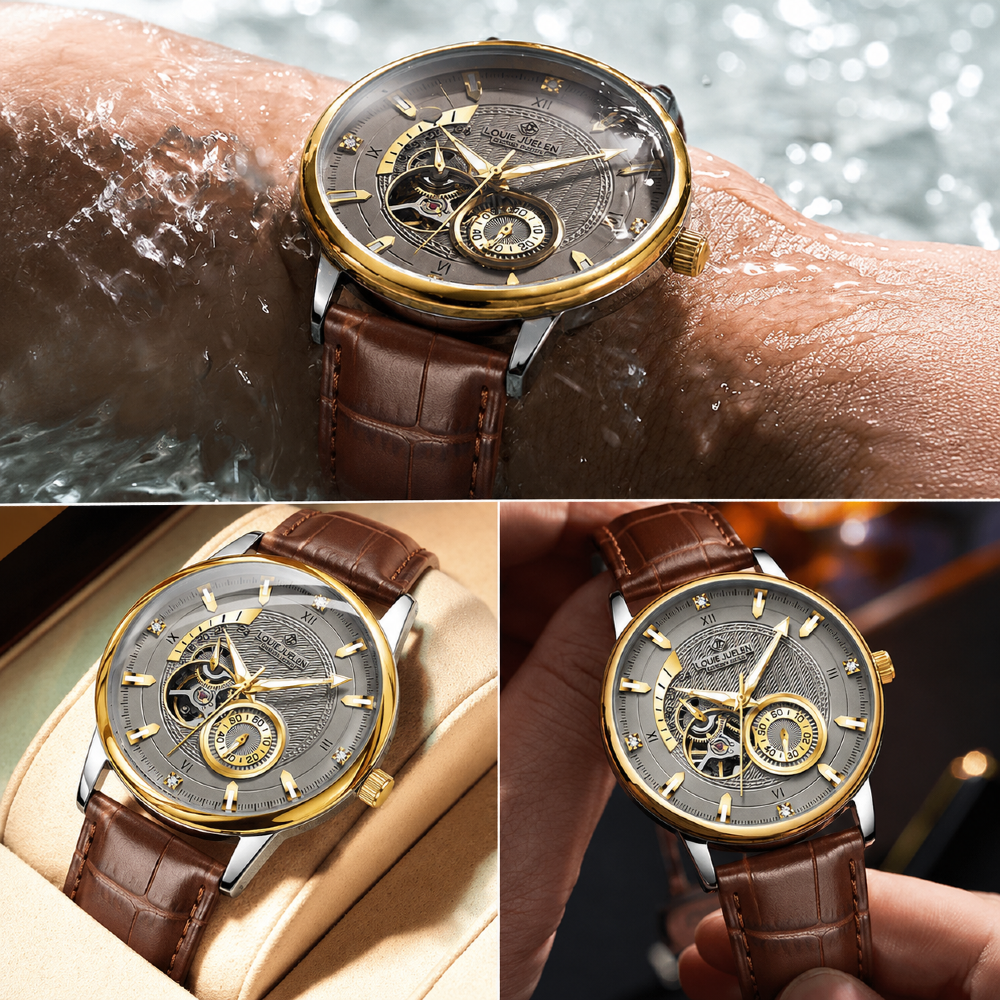
Louis Juelen Luxury Automatic(Tourbillion ) Premium Watch
Automatic Watch Winder
₦85,000
₦150,000
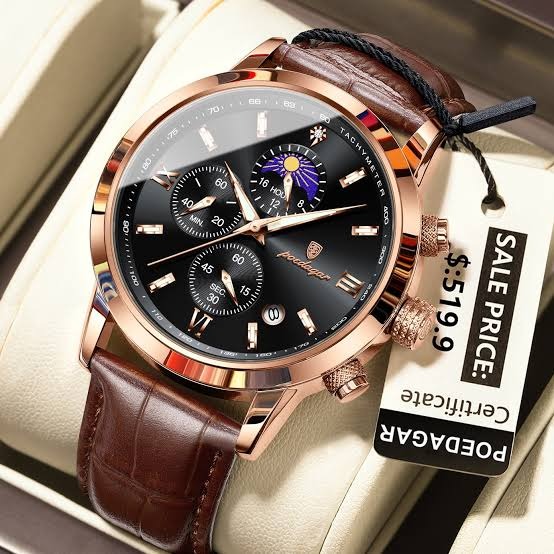
Poedagar Chronograph Luxury Watch
Free 24ml luxury Roll On oil perfume
₦45,000
₦65,000
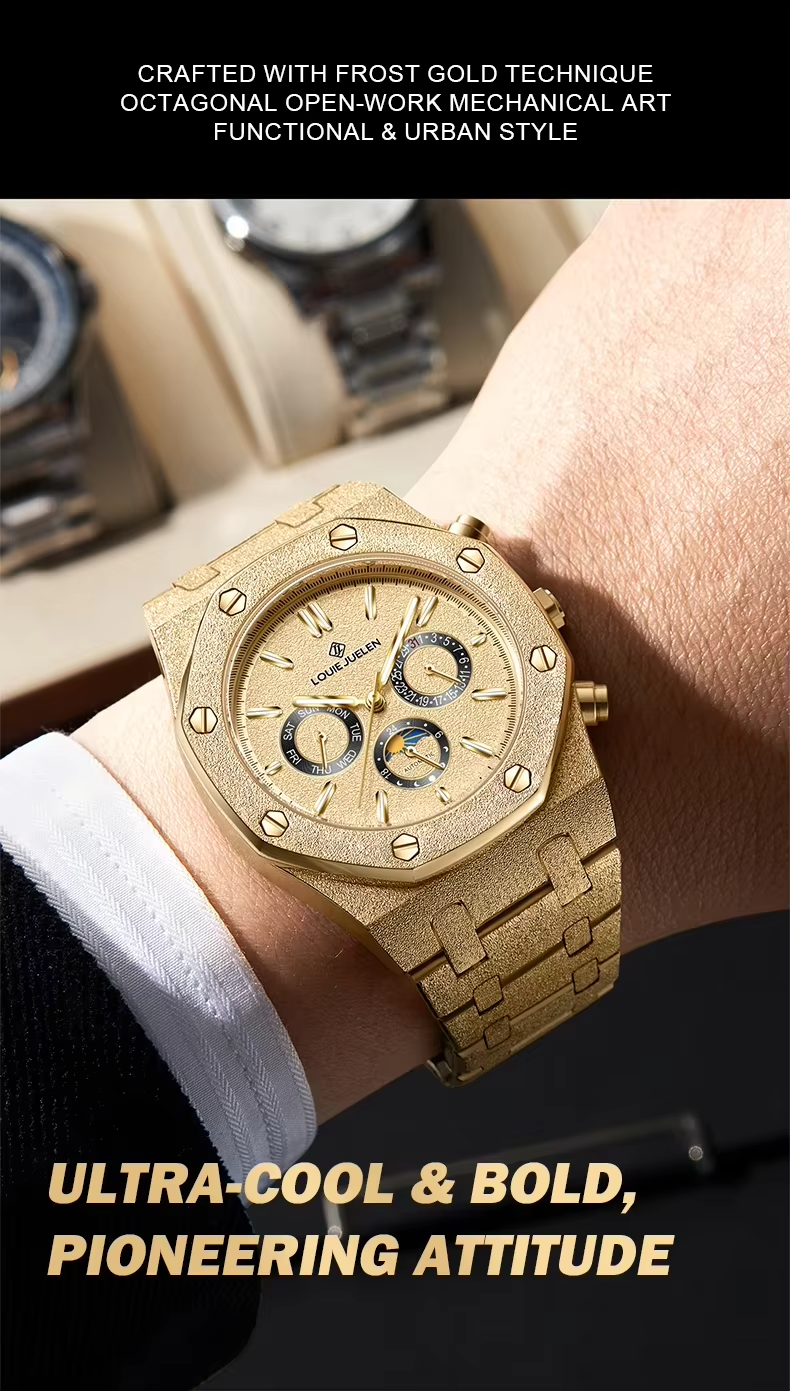
Louis Juelen Automatic Chain Strap
Automatic Watch Winder
₦140,000
₦250,000
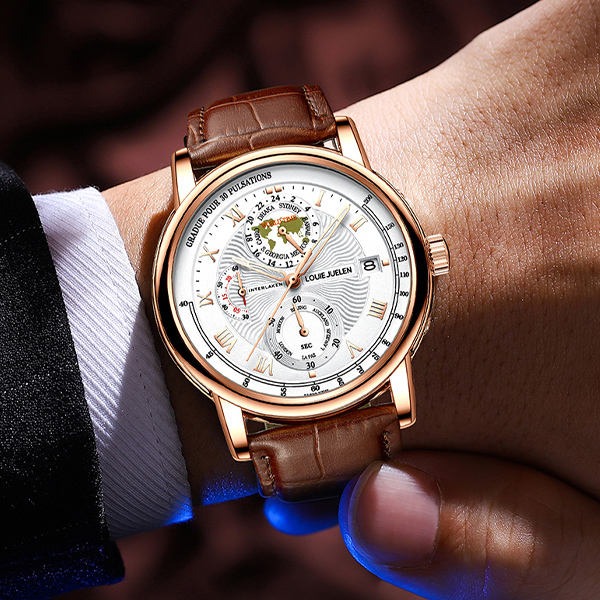
Louis Juelen Luxury Chronograph Leather Watch
Free 24ml luxury Roll On oil perfume
₦55,000
₦85,000