


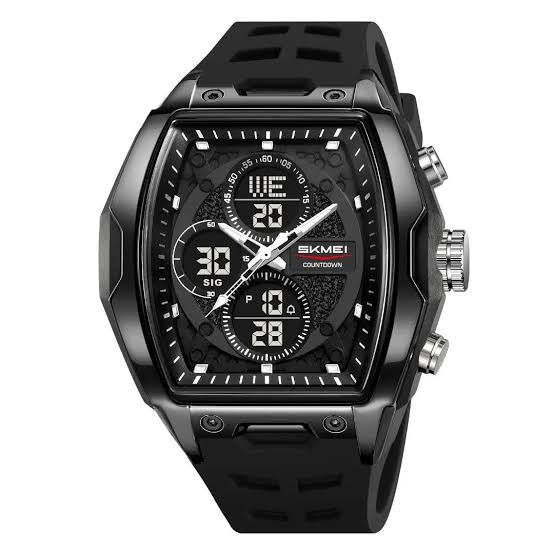


Watch Stopped Working? The Real Causes and Simple Fixes That Actually Work
You glance at your wrist to check the time and the hands have not moved since yesterday. Your watch stopped working, and your first thought is probably the worst one: is it broken for good. Here is the truth. Most of the time, a stopped watch is not dying. It is telling you something specific, and once you know what that something is, the fix usually takes less than five minutes and costs nothing at all.
I have handled enough watches, both the quartz kind that ticks on a battery and the automatic kind that runs on a spring, to know that panic is rarely the right response. A stopped watch is a symptom, not a diagnosis. The real problem is almost always one of a handful of things, and this guide walks you through exactly how to tell them apart, what to do about each one, and when it genuinely is time to see a professional instead of fiddling with the crown for the tenth time.
Why Has Your Watch Stopped Working? The Most Common Culprits
A watch stops working for one of five main reasons: a dead or dying battery in a quartz movement, an insufficiently wound spring in an automatic movement, magnetism from phones or laptops disrupting the movement, moisture or dust that has gotten past the seals, or a physical knock that has jarred something loose inside. Figuring out which one applies to your watch is the first and most important step.
A Dead or Dying Battery Is the Number One Cause in Quartz Watches
If your watch runs on a battery, this is almost certainly your answer, and it is nothing to worry about. A standard quartz watch battery lasts about 2 to 5 years, though watches with extra functions like a chronograph or a date complication running constantly can drain a battery closer to the 12 to 18 month mark. Before the battery dies completely, most modern quartz movements give you a warning called the End of Life indicator. Watch the second hand closely. If it starts jumping in four-second increments instead of ticking smoothly every second, the battery is on its way out and you have several weeks, sometimes even a month, before it stops for good. Once it does stop, a simple battery swap almost always solves it.
An Automatic Watch Simply Ran Out of Power Reserve
Automatic watches have no battery. They wind themselves using a rotor that spins with the natural movement of your wrist, storing energy in a mainspring. Most movements need roughly 8 to 12 hours of normal daily activity to stay fully wound, and the typical power reserve once fully charged runs somewhere between 38 and 70 hours depending on the movement. Here is the honest reality of modern life. If you spend your day at a desk with your wrist resting on a laptop, or you take the watch off overnight and it was only partially wound, it will run down and stop before morning. This is not a fault. It is simply physics. A quick manual wind of 20 to 30 turns of the crown before you put it on, or before bed, is usually all it takes to get it running again.
Magnetism From Phones, Laptops and Speakers
Modern life is full of magnetic fields, and a watch movement sitting near a phone case, laptop speaker, or handbag clasp for hours can pick up magnetism that makes the balance wheel stick together and the watch stop or run wildly inaccurate. If your watch was working fine, sat next to your phone or laptop overnight, and now refuses to keep time or has stopped entirely, magnetism is a strong suspect. This is a distinct issue from a dead battery and needs a different fix, which a jeweller can usually resolve in minutes with a demagnetiser.
Moisture, Dust and Corrosion Inside the Case
Water resistance ratings degrade over time as gaskets dry out and harden, especially if the watch is old or has never been serviced. Once moisture gets past a worn seal, it can corrode the tiny components inside or short out a quartz circuit entirely. If you notice fogging under the crystal, a musty smell, or the watch stopped shortly after swimming, showering, or heavy rain, do not open the case yourself. Get it to a watchmaker quickly, because trapped moisture left untreated causes rust that spreads and turns a cheap fix into an expensive one.
A Drop, Knock or Accumulated Dirt
A hard bump against a doorframe or a fall onto tile can dislodge a hairspring or crack a jewel bearing you will never see with the naked eye. Similarly, years of dust and old, dried-out lubricant can gum up the gear train enough to bring the whole movement to a halt. If your watch stopped right after a knock, or it has not been serviced in five years or more, this is likely your cause.
Quartz vs Automatic: How the Stoppage and the Fix Differ
Knowing which type of movement you own changes everything about how you diagnose a stopped watch, so use this table to compare the two before you decide on a fix.
| Factor | Quartz (Battery) Watch | Automatic (Self-Winding) Watch |
|---|---|---|
| Most common reason it stops | Dead battery | Depleted power reserve from inactivity |
| First warning sign | Second hand jumps every 4 seconds | Gradually loses time before stopping |
| Typical time before it stops for good | 2 to 5 years of use | Stops within 38 to 70 hours of being still |
| Simple home fix | Replace the battery | Manually wind 20 to 30 turns, or shake gently to spin the rotor |
| Cost to fix if simple | Low, a battery swap at any jeweller | Free, just wind it or wear it more |
| When it needs a professional | Corrosion, water damage, stuck crown | Full stop despite winding, or grinding sound |
Simple Fixes to Try Before You Book a Repair
Work through these steps in order, because they cover roughly 90 percent of stopped watches without needing to visit anyone.
- Check the crown position first. A crown that is not fully pushed in, or not screwed down on a dive watch, can pause the movement entirely. Push it in firmly and see if the second hand starts moving.
- Give an automatic watch a manual wind. Turn the crown 20 to 30 times clockwise, gently, without forcing it. This restores enough tension in the mainspring to get the balance wheel swinging again.
- Wear it and move. If winding does not work immediately, put the watch on and move your wrist normally for 15 to 20 minutes. The rotor needs motion to start building power.
- Inspect the battery contact points on a quartz watch. If you or a jeweller recently replaced the battery, dirt or oxidation on the contacts can prevent power from reaching the circuit. A gentle clean with a cotton swab and a little isopropyl alcohol on the contact points, done by someone comfortable opening the case, often solves it.
- Rule out magnetism. If the watch runs fast, slow, or stops after being near electronics, keep it away from phones and speakers for a day and see if normal function returns once you wind or reset it.
- Do not open the case yourself if you suspect water got in. This is the one situation where a DIY attempt can turn a small problem into a total loss. Take it straight to a professional.
If you have tried the above and the watch still refuses to run, or you hear a faint grinding or rattling when you shake it gently, stop troubleshooting and get it looked at. That sound usually means a broken part, not a power issue, and a watchmaker needs to open it up properly.
When a Stopped Watch Signals a Bigger Problem
A stopped watch needs a professional, not a home fix, when there is visible moisture under the crystal, a burning or musty smell, a rattling sound inside the case, or the watch stopped immediately after a hard knock or a fall. In these cases, trying to force the crown or shake the watch harder can make the damage worse. A reputable local watchmaker or jeweller can open the case, assess the movement, and tell you honestly whether it is a small fix like a battery or a gasket, or something that needs a full service. Ask for a quote before any work begins, and always confirm the water resistance rating is retested if the case was opened, since a fresh gasket only works if it is pressure tested afterward.
To fix this properly and avoid repeat visits, it also helps to know what you are buying in the first place. A well-made watch with a reliable, well-known movement and a properly sealed case is simply less likely to stop on you unexpectedly. If your current watch has stopped one too many times and you are ready for something more dependable, browse our full watch collection here and look for pieces built with solid, tested movements rather than unnamed generic ones.
How to Stop Your Watch From Stopping Again
Prevention is far cheaper than repair, and most of it comes down to a few small habits.
- Wear your automatic watch daily, even if only for a few hours, so the rotor keeps the mainspring topped up.
- Keep watches away from phones, laptop speakers and magnetic handbag clasps when you are not wearing them.
- Store watches you are not wearing in a watch box or soft pouch, away from direct sunlight and humidity, rather than tossed in a drawer with keys and coins that can scratch the case and loosen the crown.
- Have the battery replaced the moment you see the End of Life jump, rather than waiting for a full stop, since a battery left dead in the case for months can leak and corrode the movement.
- Get a service every 3 to 5 years for mechanical and automatic watches, since old lubricant thickens and eventually gums up the gear train enough to stop the watch entirely.
- Avoid wearing any watch in the shower, sauna or swimming pool unless the water resistance rating explicitly supports it, since temperature swings and pressure change the seal's effectiveness over time.
If you are shopping for a replacement or a second watch to rotate in while yours is being serviced, shop our watches for men and women here and look at the specification sheet for water resistance and movement type before you buy, so you know exactly what kind of care it will need going forward.
Frequently Asked Questions
Why did my watch stop working even though I just changed the battery?
A fresh battery does not always solve a stoppage on its own. Dirty or oxidised contact points inside the case, a battery inserted the wrong way up, or a weak new battery from a bargain source can all keep the circuit from powering the movement properly. Take it back to whoever changed it and ask them to clean the contacts and test the new battery's voltage.
Can a watch start working again on its own after it stops?
Yes, in many cases it can, especially with automatic watches. If the stoppage was simply a depleted power reserve, winding the crown or wearing the watch for a short while restores full function immediately with no lasting damage. A quartz watch, on the other hand, will not restart on its own once the battery is truly dead. It needs a replacement.
How do I know if my watch stopped because of magnetism and not a dead battery?
Magnetism usually shows up as erratic timekeeping before a full stop, running noticeably fast or slow rather than simply losing power gradually. A dead quartz battery gives the tell-tale four-second jump warning first, while a magnetised movement often has no warning at all and can affect both quartz and mechanical watches equally.
Is it worth repairing an old watch that keeps stopping, or should I just replace it?
It depends on the value and sentiment attached to the watch and the cost of the repair relative to buying new. A basic battery or gasket fix is almost always worth doing, but if a watchmaker quotes you for a full movement overhaul on a low-cost quartz watch, it is often more practical to invest that money into a new, reliable piece instead. Explore watches built to last here if you decide a fresh start makes more sense than another repair bill.
Featured in our collection
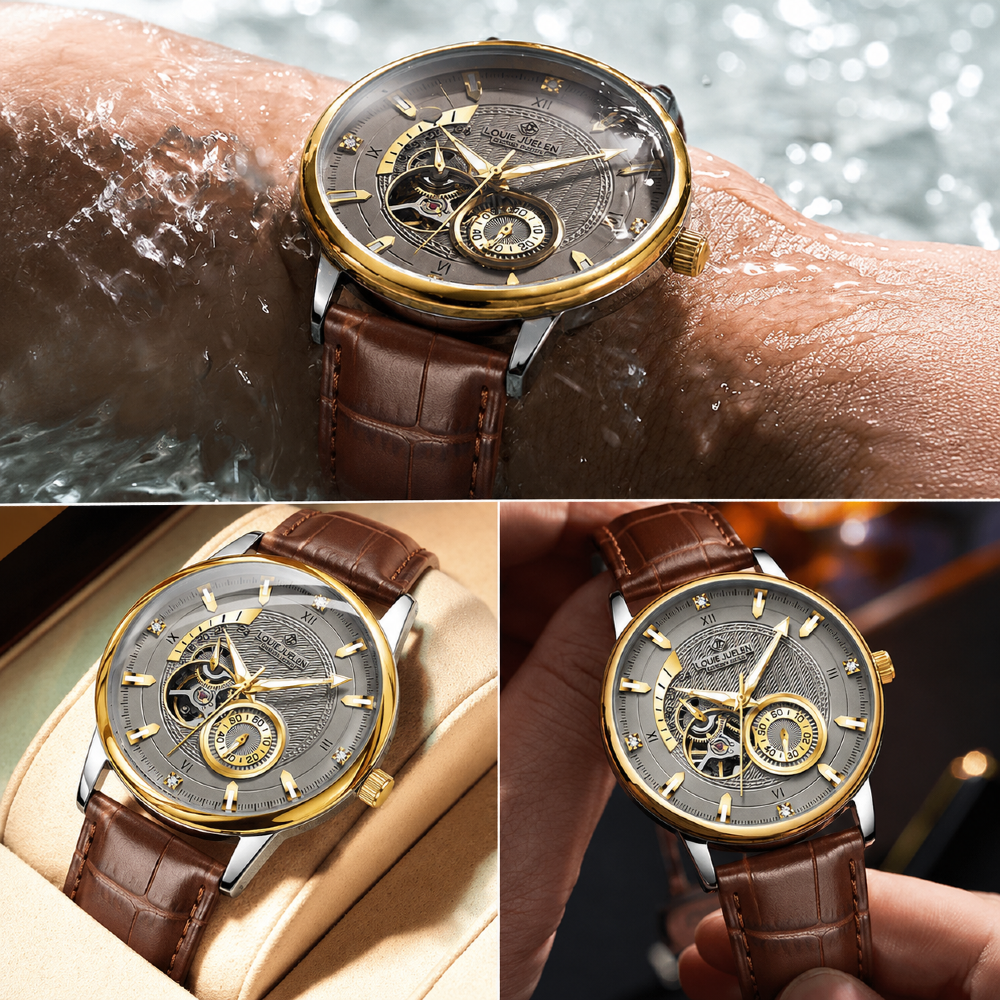
Louis Juelen Luxury Automatic(Tourbillion ) Premium Watch
Automatic Watch Winder
₦85,000
₦150,000
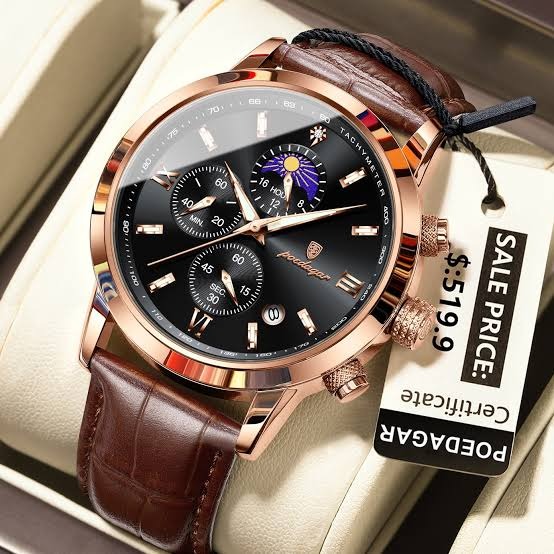
Poedagar Chronograph Luxury Watch
Free 24ml luxury Roll On oil perfume
₦45,000
₦65,000

Louis Juelen Automatic Chain Strap
Automatic Watch Winder
₦140,000
₦250,000
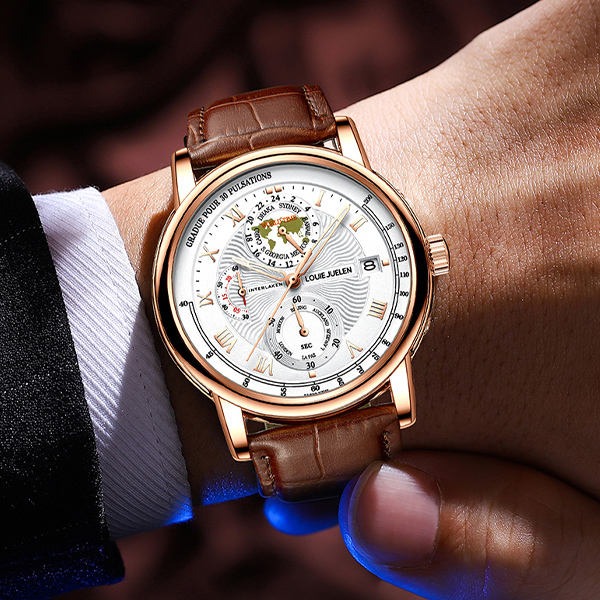
Louis Juelen Luxury Chronograph Leather Watch
Free 24ml luxury Roll On oil perfume
₦55,000
₦85,000