


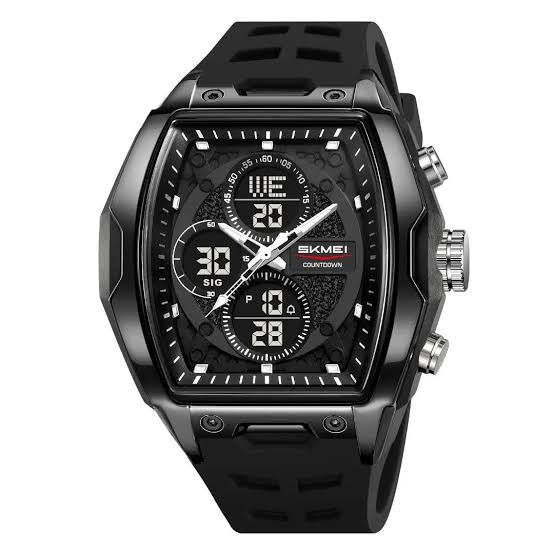


Watch Buying Mistakes Beginners Make and How to Avoid Them
You save for months. You finally place the order. Then it arrives and something feels off, the case looks huge on your wrist, the "water resistant" watch fogs up after one shower, or worse, you start reading reviews and realise the "genuine" piece you paid for has telltale signs of a fake. This is how most people learn about watch buying mistakes, after the money has already left their account. It does not have to be this way. The mistakes beginners make when buying a watch follow a predictable pattern, and once you know the pattern, you can avoid every single trap.
We have watched customers walk into buying decisions with excitement and walk out with regret, not because they lack taste, but because nobody sat them down and explained the practical side of watch shopping. This guide fixes that. Below are the specific, recurring watch buying mistakes beginners make, and the exact fix for each one, so your first serious watch purchase is one you are still proud of in five years.
Mistake 1: Falling for a Beautiful Photo Instead of Checking the Full Spec Sheet
The single biggest beginner mistake is choosing a watch purely from a glossy product photo without reading the actual specifications, because a photo cannot tell you the case size, movement type, crystal material, or water resistance rating. Product photography is shot under studio lighting with the watch enlarged to fill the frame, so almost anything looks impressive on a screen. The real information lives in the spec sheet, not the image.
Before you commit to any watch, confirm these details in writing:
- Case diameter and lug-to-lug width, not just diameter, because lug-to-lug determines how the watch actually sits on your arm
- Movement type, quartz, automatic, or solar, since this affects accuracy, maintenance, and how the watch behaves if you forget to wear it for a week
- Crystal material, sapphire resists scratches far better than mineral glass, which matters if you are rough on your things
- Water resistance rating in metres or ATM, so you know exactly what the watch can survive
- Case and bracelet material, stainless steel grade, plated finishes, or solid metal
To fix this, treat the spec sheet the way you would treat an ingredient label. Read it before you fall in love with the picture, not after.
Mistake 2: Buying by Diameter Alone and Ignoring How the Watch Actually Sits
Many beginners pick a watch size using diameter alone, a 40mm case for example, without checking the lug-to-lug measurement, which is the true number that decides whether a watch overhangs your wrist or sits neatly within it. Two watches can share the same 40mm diameter and fit completely differently because one has a compact lug-to-lug and the other stretches much wider across the wrist.
As a rough guide for wrist circumference:
- Smaller wrists, around 6 inches, generally suit case diameters from 34mm to 38mm
- Average wrists, roughly 7 to 7.5 inches, comfortably carry 39mm to 42mm cases
- Larger wrists, 8 inches and above, can support 44mm cases and up without looking oversized
The real problem is that beginners shop the number instead of shopping the fit. A watch is the right size when the lugs stay within the edges of your wrist and the case does not dig in or slide around when you flex your hand. If you are buying online and cannot try the watch on first, measure your wrist with a soft tape or a strip of paper and compare it honestly against the case dimensions listed, not just the diameter.
Mistake 3: Trusting a Water Resistance Number You Do Not Actually Understand
Beginners routinely assume any "water resistant" label means the watch is safe for swimming or long showers, when in reality water resistance is measured under still laboratory pressure, not the moving pressure your wrist creates in a pool or under a shower head. A watch rated at 30 metres or 3 ATM is built to survive splashes and a light rain shower, nothing more. Swimming and snorkelling genuinely need a rating of 100 metres or higher, and serious diving needs considerably more than that.
Hot showers make this worse. Steam and heat cause the rubber gaskets that seal your watch to expand and contract, which can let moisture past seals that would otherwise hold up fine in cold water. Soap and shampoo residue also degrades those gaskets over time. To fix this mistake, match the rating to your actual lifestyle:
- Everyday splashes and handwashing, a 30m to 50m rating is enough
- Swimming and light water sports, look for 100m or higher
- Serious water use or diving, choose a dedicated dive watch rated 200m and above, with a screw-down crown
If in doubt, take the watch off before you shower or swim. It costs nothing and it protects your investment.
Mistake 4: Choosing a Movement Because It Sounds Impressive, Not Because It Fits Your Life
A common beginner error is picking an automatic movement purely because it sounds prestigious, without considering that automatic watches need regular wrist time or a winder to stay accurate, while a quartz watch simply keeps ticking in a drawer for months. Automatic movements are wound by the natural motion of your wrist, which is romantic in theory but inconvenient if you rotate several watches or travel light and leave one at home for weeks at a time.
Quartz movements, by contrast, run on a battery and typically lose or gain only a few seconds a month, needing almost no attention beyond an occasional battery change. Neither option is objectively better, they simply suit different people:
- Choose quartz if you want low maintenance, dependable accuracy, and a watch that is always ready to wear
- Choose automatic if you enjoy the craftsmanship, wear the same watch daily, or do not mind occasionally resetting the time and date
To fix this mistake, be honest about your habits before you decide, not after you own a watch that stops every time you switch bags.
Mistake 5: Chasing Hype Instead of Buying What You Will Actually Wear
A frequent trap for first-time buyers is choosing a watch because everyone online is talking about a particular style or brand, rather than because it suits their own wardrobe and personality. Social media creates a loop where a handful of trending styles look like the only options worth owning, which pushes buyers toward pieces that do not match how they actually dress. The fix is straightforward, buy for your own life, not for a feed. If you wear mostly corporate outfits, a slim dress watch will serve you far better than a bold sports piece you saw trending, no matter how popular it is right now.
Shop our full watch collection here and filter by the styles that already match what is already hanging in your closet, rather than what is popular this month.
Mistake 6: Ignoring Where You Buy From and Getting Burned by a Fake
Beginners often focus so much on the watch itself that they forget to vet the seller, which is exactly how counterfeit and grey-market pieces end up on people's wrists. A trustworthy seller can answer detailed questions about materials, movement, and origin without hesitation, offers clear warranty terms, and never pressures you into a rushed decision with an unrealistically steep discount. If a deal feels too good against the known market price of that watch, treat that as a warning, not a bargain.
To fix this mistake, buy only from retailers who state their materials and specifications plainly, provide aftercare support, and stand behind what they sell.
Mistake 7: Forgetting the Real Cost of Owning a Watch
Many first-time buyers budget only for the sticker price and forget the ongoing costs of ownership, strap replacements, battery changes, resizing, and occasional servicing, all of which add up over the years you own the piece. A watch is not a one-time transaction, it is a small ongoing relationship. Straps wear out from sweat and sun, batteries eventually die, and metal bracelets sometimes need links removed or added as your wrist size or preference changes.
Build this into your decision from day one:
- Set aside a little extra for a spare strap in a different material, leather for the office, silicone for the gym
- Ask whether the seller offers resizing support before you buy, so the watch actually fits when it arrives
- Budget for a battery change every couple of years if you choose quartz
- Keep the original box and any documentation, since it protects resale value later
Mistake 8: Rushing the Decision on Your First Big Purchase
The most avoidable mistake of all is treating a meaningful watch purchase like an impulse buy, deciding within minutes instead of comparing a few honest alternatives in the same price range. A watch you will wear for years deserves a short pause before checkout. Sleep on it for a night. Compare two or three options side by side. Ask a seller a genuine question and see how clearly they answer it. None of this costs you anything except a little patience, and it is the difference between a purchase you love and one you quietly regret.
Quick Comparison: Beginner Mistake vs the Smarter Move
| Beginner Mistake | Why It Backfires | The Smarter Move |
|---|---|---|
| Judging size by diameter only | Two watches with the same diameter can fit completely differently | Check lug-to-lug width against your actual wrist measurement |
| Assuming any water resistance means swim-safe | Lab-tested static ratings do not match real swimming pressure | Match the rating to your activity, 100m or more for swimming |
| Picking automatic for prestige alone | Automatics stop if left unworn without a winder | Choose quartz for low maintenance, automatic if worn daily |
| Chasing the trending style | Trend pieces rarely match your existing wardrobe | Buy what fits your daily outfits, not this month's feed |
| Buying from an unclear or too-cheap source | Steep, unexplained discounts are a common fake-watch signal | Buy from sellers who answer detailed questions and offer warranty support |
| Ignoring ongoing ownership costs | Straps, batteries, and resizing add up over time | Budget for aftercare from the start, not as an afterthought |
| Deciding in minutes | Rushed decisions skip comparison and honest reflection | Compare two or three options and sleep on the decision |
How to Buy Your First Watch With Confidence
Fixing every mistake above comes down to one simple habit, slow down enough to check the facts before you check out. Read the full spec sheet, measure your own wrist honestly, match the water resistance to what you actually do, choose a movement that fits your routine rather than your ego, and buy from a seller who can answer your questions without flinching. None of this requires expert knowledge, it only requires a little patience and the right checklist.
If you are ready to start looking with fresh eyes, browse quality watches built for everyday Nigerian life here, or if you already have a style in mind, our team can help you match the right case size, movement, and water resistance to exactly how you plan to wear it. A watch bought carefully is a watch you reach for every single morning without a second thought, and that is worth the extra ten minutes of homework.
For anyone building out a full look rather than a single piece, it is worth remembering that a watch works best alongside pieces that share its tone and finish. Explore our watches and accessories collection here to see options that pair naturally with what you already own, rather than fighting against it.
Frequently Asked Questions
What is the most common mistake beginners make when buying their first watch?
The most common mistake is buying by diameter alone without checking lug-to-lug width, since two watches with an identical diameter can sit completely differently on the same wrist. Always compare the full case dimensions against your actual wrist measurement, not just the headline diameter number.
Is it a mistake to buy a watch based only on photos online?
Yes, because photography cannot show you the true case size, movement type, or water resistance rating, all of which matter more than how the watch looks enlarged on a screen. Always read the full specification sheet before deciding, and measure your wrist against the listed dimensions.
How do I avoid buying a fake watch as a beginner?
Buy only from sellers who can answer detailed questions about materials and origin without hesitation, who offer clear warranty terms, and who never push unrealistically steep discounts against known market prices. A too-good-to-be-true price on a recognisable style is the clearest warning sign there is.
Should a beginner choose an automatic or quartz watch?
Choose quartz if you want low maintenance and dependable accuracy with almost no upkeep, and choose automatic if you plan to wear the same watch daily and enjoy the craftsmanship of a mechanical movement. Neither is better, the right choice simply depends on your daily habits.
Featured in our collection
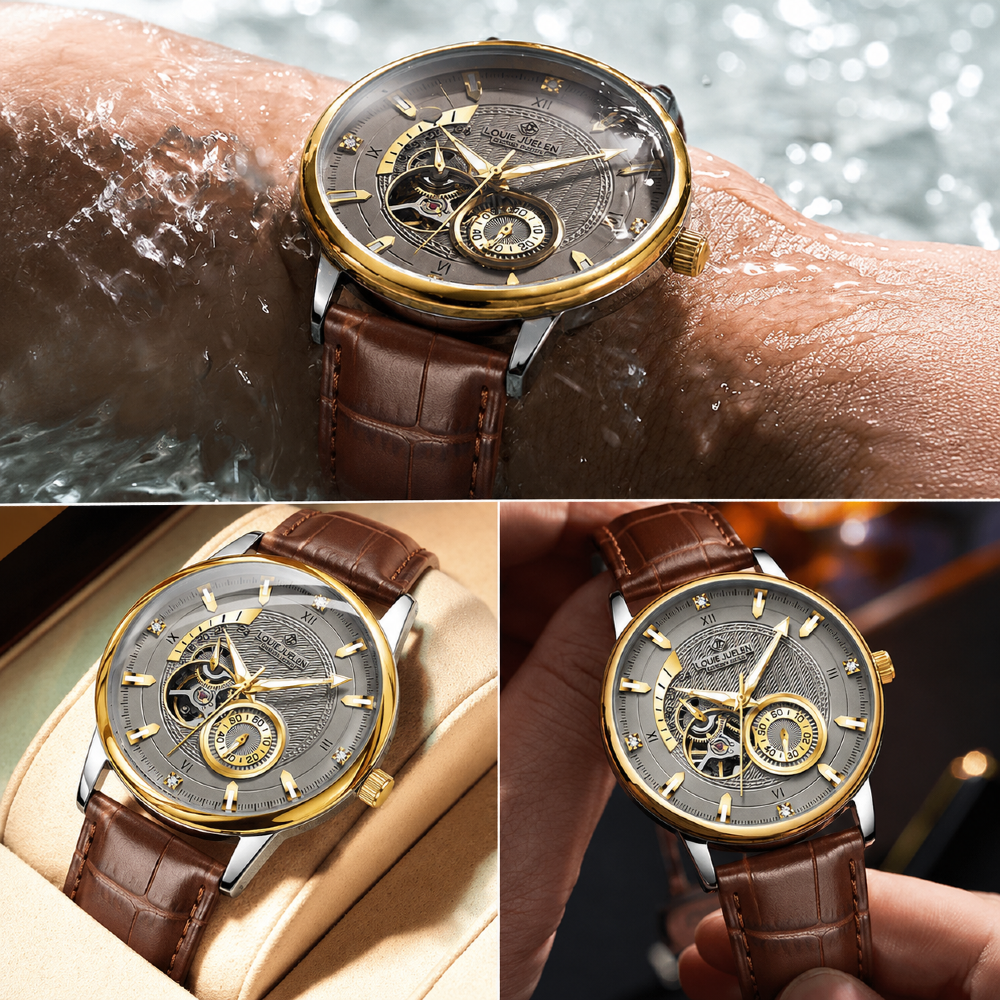
Louis Juelen Luxury Automatic(Tourbillion ) Premium Watch
Automatic Watch Winder
₦85,000
₦150,000
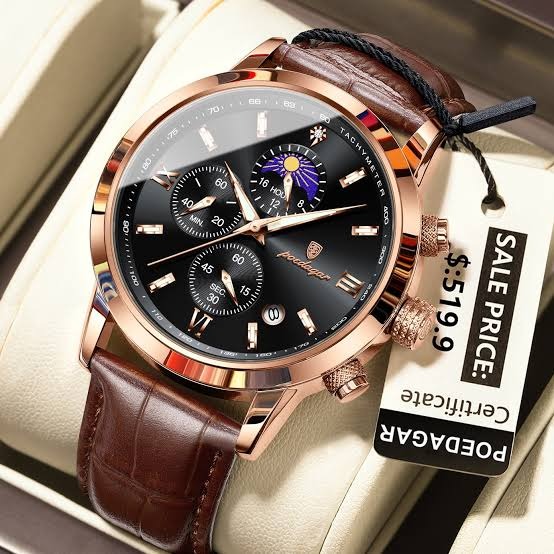
Poedagar Chronograph Luxury Watch
Free 24ml luxury Roll On oil perfume
₦45,000
₦65,000
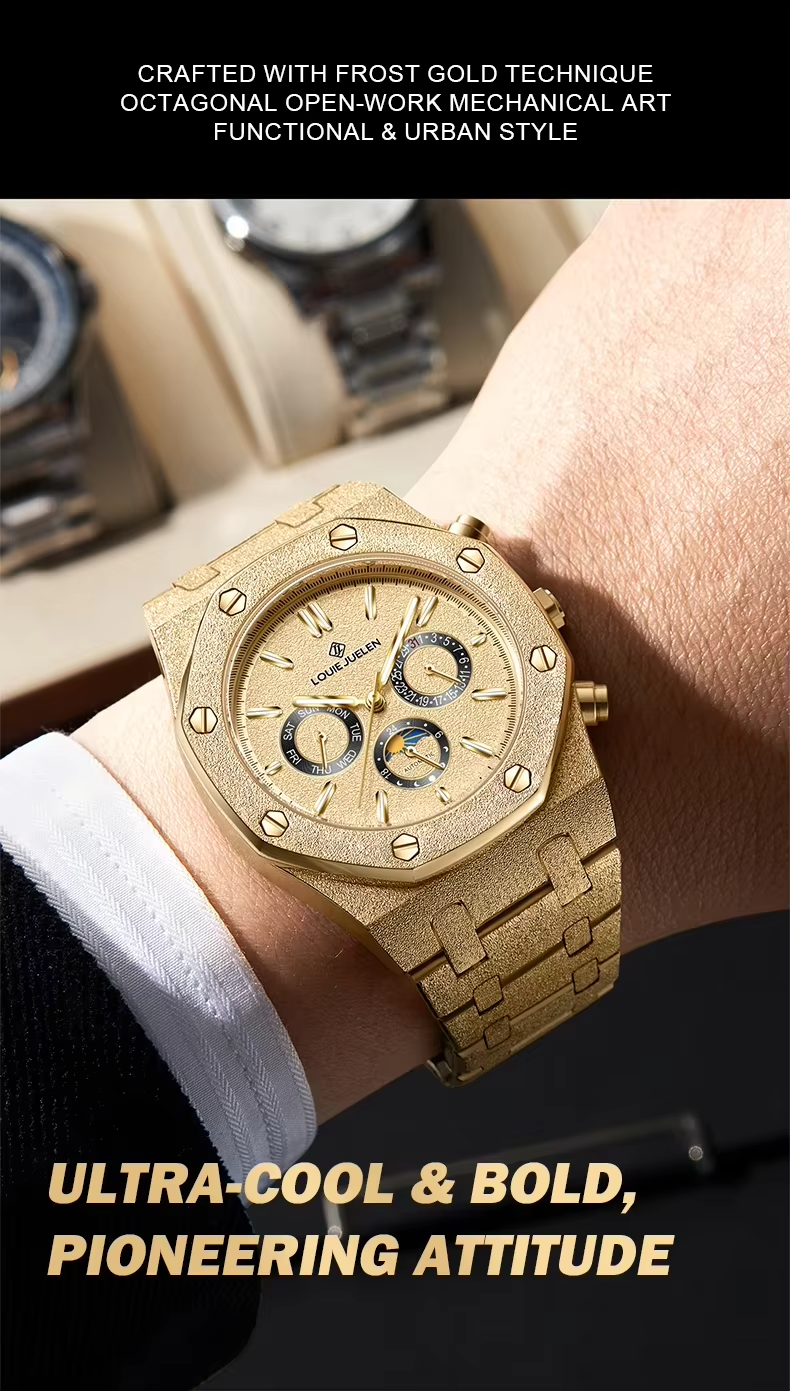
Louis Juelen Automatic Chain Strap
Automatic Watch Winder
₦140,000
₦250,000
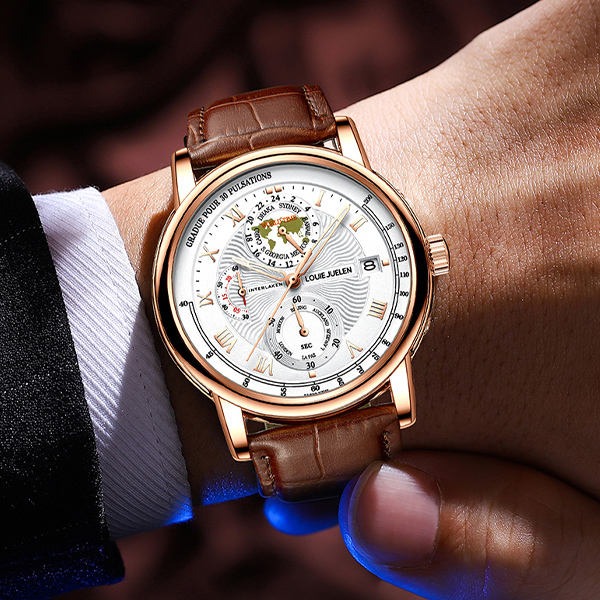
Louis Juelen Luxury Chronograph Leather Watch
Free 24ml luxury Roll On oil perfume
₦55,000
₦85,000