


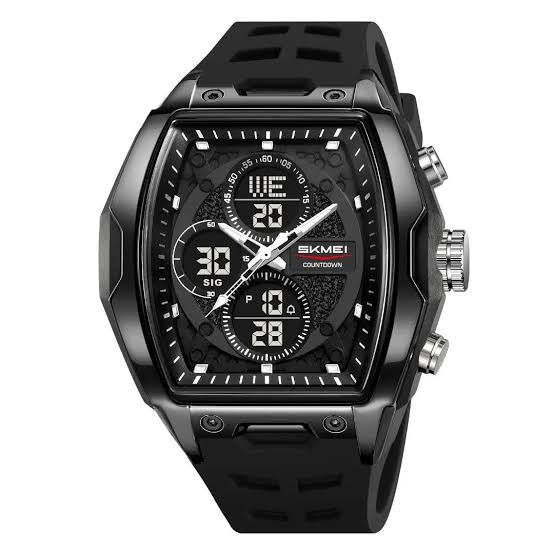


Smartwatch vs Mechanical Watch: Which Should You Actually Buy?
You have stood in front of a screen or a jewellery counter, phone in one hand, wallet in the other, trying to decide if you should buy a smartwatch that buzzes with every notification or a mechanical watch that just quietly keeps time. Everyone around you seems to have an opinion. Your tech friend swears by his fitness tracker. Your uncle still wears the same watch he got at his wedding, thirty years ago, and it still runs. Here is the truth: this is not really a question of which watch is "better." It is a question of which one is better for the life you actually live, and most people get this decision wrong because they compare specs instead of comparing lifestyles.
Smartwatch vs Mechanical Watch: The Real Difference You Need to Understand First
A smartwatch is a small computer you wear, built to run apps, track your health and sync with your phone, while a mechanical watch is a purely physical instrument, powered by a wound spring and gears, built to do one job: tell the time beautifully for decades. Once you understand that one is a gadget with an expiry date and the other is an heirloom-grade tool, the rest of the decision gets much easier.
This is not a small distinction. A smartwatch is designed by an engineering team to be replaced. The battery degrades, the software stops receiving updates, and within four or five years you are shopping for a new one. A mechanical watch, on the other hand, has almost no electronics to fail. With basic servicing every few years, a well-made automatic or hand-wound watch can run for generations. That difference alone should shape how you think about the purchase, not just the price tag on the box.
Who Should Actually Buy a Smartwatch
A smartwatch makes sense for you if your priority is health tracking, instant notifications and staying connected to your phone without pulling it out constantly. It is the right choice for a specific type of daily life, not a universal upgrade over traditional watches.
Consider a smartwatch if:
- You train seriously and want heart rate, step count, sleep tracking or GPS running data on your wrist
- You need calls, texts and app alerts visible without checking your phone in meetings
- You travel often and like having boarding passes, maps or contactless payment on your wrist
- You do not mind charging a device every one to three days
- You are comfortable with a gadget that will likely be replaced within four to five years
Smartwatches genuinely win on pure functionality. Multiple time zones, workout tracking, mobile payments, sleep scores, blood oxygen readings, none of that exists on a traditional dial. If your life revolves around data and connectivity, this is a legitimate and smart purchase.
Who Should Actually Buy a Mechanical Watch
A mechanical watch is the right choice if you want a piece that lasts decades, holds or even grows in value, and signals genuine taste rather than tech spending power. It suits people who see a watch as a personal statement and a long-term possession, not a device to upgrade next year.
Consider a mechanical watch if:
- You want something you can hand down to your children, not throw away in five years
- You attend weddings, church, owambe parties or corporate events where a dial on the wrist reads as polish and intention
- You are tired of notifications and want fewer screens pulling at your attention, not more
- You appreciate craftsmanship, the same way you might appreciate a well-tailored suit or a hand-finished shoe
- You want a piece that can actually hold its value, and in some cases appreciate, if the brand and condition are right
Here is something most smartwatch conversations skip entirely. A smartwatch starts losing value the moment you switch it on for the first time, much like a phone. A mechanical watch that is properly cared for does the opposite. Decades later, the right piece can be worth more than you paid, because scarcity and craftsmanship do not depreciate the way electronics do.
Battery Life and Power Reserve: How Long Each One Actually Runs
Most smartwatches last one to three days on a single charge, while more efficient models with basic health tracking can stretch to a week, but a mechanical automatic watch typically runs for 40 to 80 hours off the wrist purely on stored spring tension, with no battery at all. That is the entire difference in one sentence: one needs a wall socket regularly, the other needs winding or wrist motion.
If you take your smartwatch off overnight to charge, that is normal and expected. If you take a mechanical automatic watch off for a weekend trip and leave it in a drawer, it will likely stop and need resetting when you pick it back up, unless it has a longer power reserve or you use a watch winder. Neither situation is a flaw. They are simply different rhythms of ownership, and knowing this before you buy prevents the disappointment of a watch that "stopped working" when it was actually just resting.
Smartwatch vs Mechanical Watch at a Glance
Here is a side-by-side view of how the two actually compare across the factors that matter most to a real buyer, not just spec-sheet marketing.
| Factor | Smartwatch | Mechanical Watch |
|---|---|---|
| Power source | Rechargeable battery | Hand-wound spring or self-winding rotor |
| Typical runtime | 1 to 7 days per charge | 40 to 80 hours power reserve |
| Lifespan | Around 4 to 5 years before replacement | Decades, often generations, with servicing |
| Resale value | Depreciates immediately, like a phone | Can hold or even appreciate in value |
| Maintenance | Software updates, occasional battery replacement | Servicing every few years by a watchmaker |
| Best for | Fitness tracking, notifications, travel tools | Formal wear, gifting, long-term investment |
| Style signal | Tech-forward, practical | Craftsmanship, taste, tradition |
| Daily upkeep | Charge nightly or every few days | Wind daily or wear consistently |
Cost Over Time: Which One Actually Saves You Money
A mechanical watch usually costs more upfront but loses value slowly, or not at all, while a smartwatch costs less to enter but needs full replacement every four to five years, so the real cost comparison has to be measured over a decade, not at the checkout page. Run the numbers honestly and mechanical ownership often wins for anyone keeping a watch for more than six or seven years.
Think about it this way. Buy a good mechanical watch today and, aside from a service every few years, that same watch is still on your wrist a decade from now, possibly worth close to what you paid, sometimes more if it is a well-regarded brand kept in good condition. Buy a smartwatch today and by year five you are choosing a replacement, because the battery health has declined and the software has moved on without it. Over ten years, you could be on your second or third smartwatch, each one worth nothing to sell, while a single mechanical watch has simply been ticking along the entire time.
Style and Status: What Each One Says at a Nigerian Wedding, Church Service or Boardroom
A mechanical watch on your wrist at a formal event reads as intentional and considered, the same way a genuine leather shoe or a well-cut agbada does, while a smartwatch reads as practical and modern but rarely as elegant in the same setting. This is not snobbery. It is simply how each object was designed to be seen.
At a corporate meeting, a clean mechanical or quartz dress watch pairs quietly with a suit and says you take the room seriously. At a wedding or an owambe, a smartwatch strap tends to clash with agbada, lace or a well-tailored kaftan in a way a leather or metal-bracelet dial never does. That does not make the smartwatch wrong. It simply means each has its lane, and dressing for the occasion matters as much as the watch itself.
Can You Own Both? Building a Two-Watch Wardrobe That Works
Yes, and honestly, most serious watch owners eventually do exactly this, keeping a smartwatch for the gym and daily tracking, and a mechanical watch for work, church and events where presentation matters. Treat them as two different tools solving two different problems, not as competitors for the same wrist.
A practical routine many of our customers settle into looks like this:
- Wear the smartwatch for workouts, runs and casual weekend errands where notifications and step counts genuinely help
- Switch to a mechanical or quartz dress watch for the office, client meetings, church and weddings
- Keep the mechanical piece wound or on a small watch winder if it sits unworn for more than a day or two
- Rotate based on the day's dress code rather than habit alone, the same way you would choose shoes
If you are ready to add that timeless second piece to your wrist collection, browse our mechanical and quartz watch collection here and look for a case size and dial colour that suits your existing wardrobe.
Maintenance and Care Differences Worth Knowing Before You Buy
A smartwatch mainly needs charging, occasional software updates and eventually a battery or unit replacement, while a mechanical watch needs winding, protection from magnets and moisture, and professional servicing roughly every few years to keep the movement accurate. Knowing this upfront stops buyer's remorse after the first six months of ownership.
Smartwatch care is mostly about software and charging habits. Keep it updated, avoid letting the battery drain to zero repeatedly, and expect the battery to hold less charge as the years pass, the same way a phone battery ages. Mechanical watch care is more hands-on but far less frequent. Keep it away from strong magnets, avoid extreme temperature swings, wind it gently if it is hand-wound, and get it serviced by a trusted watchmaker on the schedule your brand recommends. Neither is difficult once you know the rhythm, but they are genuinely different rhythms.
If your decision is leaning toward the traditional side after reading this, shop our full range of quality wrist watches for men and women here and pick a piece built to last well beyond the next software update cycle.
Making the Final Call Without Regret
Ask yourself one honest question before you buy: are you buying a tool for your health and connectivity, or a piece for your presentation and legacy? If the answer is tracking and notifications, a smartwatch genuinely earns its place on your wrist. If the answer is craftsmanship, occasion dressing and something you could pass down one day, a mechanical watch is the smarter long-term buy, and it is rarely a decision people regret once the initial price shock fades.
Whichever direction you choose, buy with intention rather than trend. A watch, digital or mechanical, is one of the few accessories people notice on you every single day, so let the decision reflect how you actually live, not just what looks impressive in a box. For a piece that will still be running long after the current smartwatch generation is obsolete, explore our collection of premium wrist watches here and start building a wrist wardrobe that fits every part of your life.
Frequently Asked Questions
Is a mechanical watch worth it if I already own a smartwatch?
Yes, because they solve different problems. A smartwatch handles fitness tracking and notifications, while a mechanical watch handles formal presentation, gifting value and long-term ownership. Many owners keep both and switch depending on the occasion, rather than treating one as a replacement for the other.
Do mechanical watches lose accuracy compared to smartwatches?
Yes, mechanical watches can gain or lose a few seconds per day due to the nature of a spring-driven movement, while smartwatches sync to internet time and stay perfectly accurate. If split-second precision matters more to you than craftsmanship, a smartwatch or quartz watch will serve you better.
Which one holds its value better, a smartwatch or a mechanical watch?
A mechanical watch holds value far better over time, and well-regarded models can even appreciate, while a smartwatch depreciates immediately, much like a smartphone, and typically has little resale value after a few years of use.
Can a mechanical watch survive daily wear like a smartwatch does?
Yes, a mechanical watch is built for daily wear and, unlike a smartwatch, has no battery to degrade, so with basic care and servicing every few years, it can handle decades of everyday use, often outlasting several generations of smartwatches along the way.
Featured in our collection
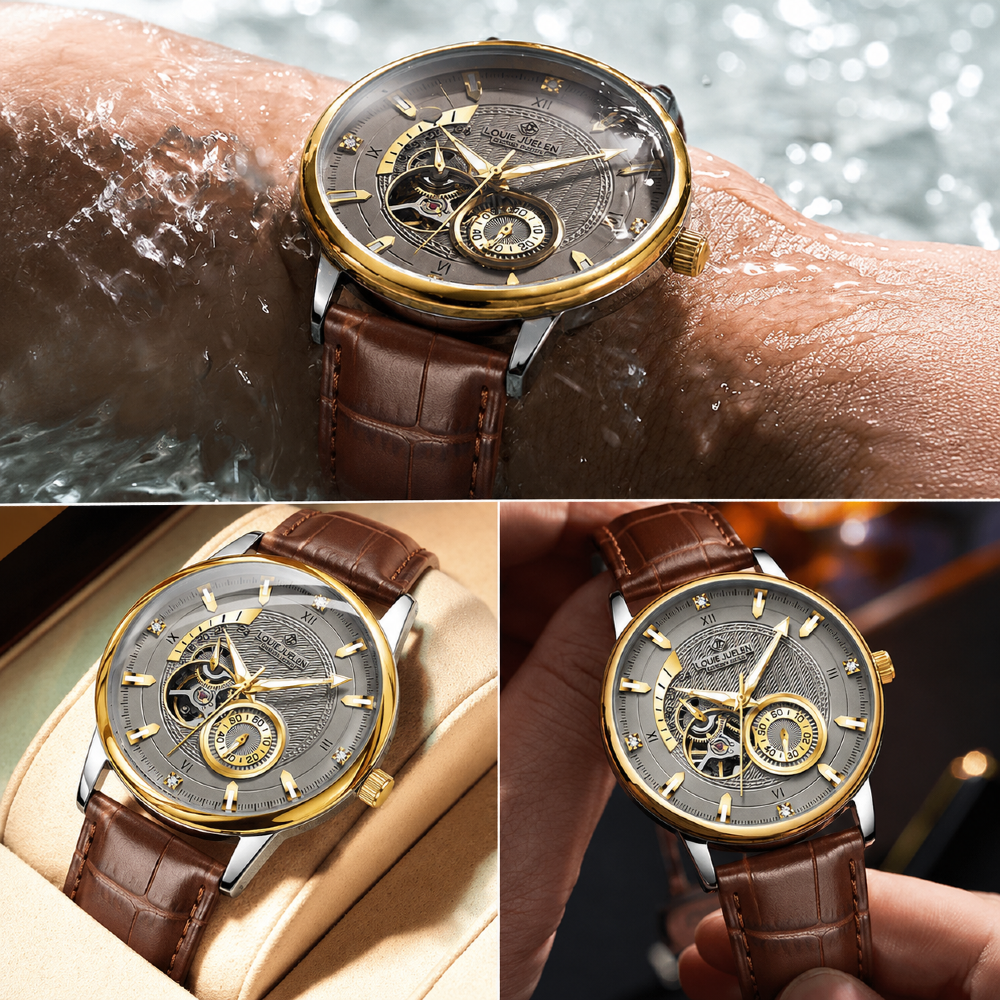
Louis Juelen Luxury Automatic(Tourbillion ) Premium Watch
Automatic Watch Winder
₦85,000
₦150,000
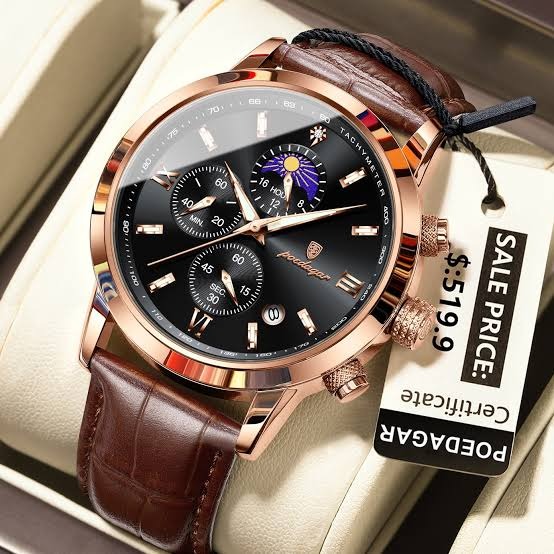
Poedagar Chronograph Luxury Watch
Free 24ml luxury Roll On oil perfume
₦45,000
₦65,000
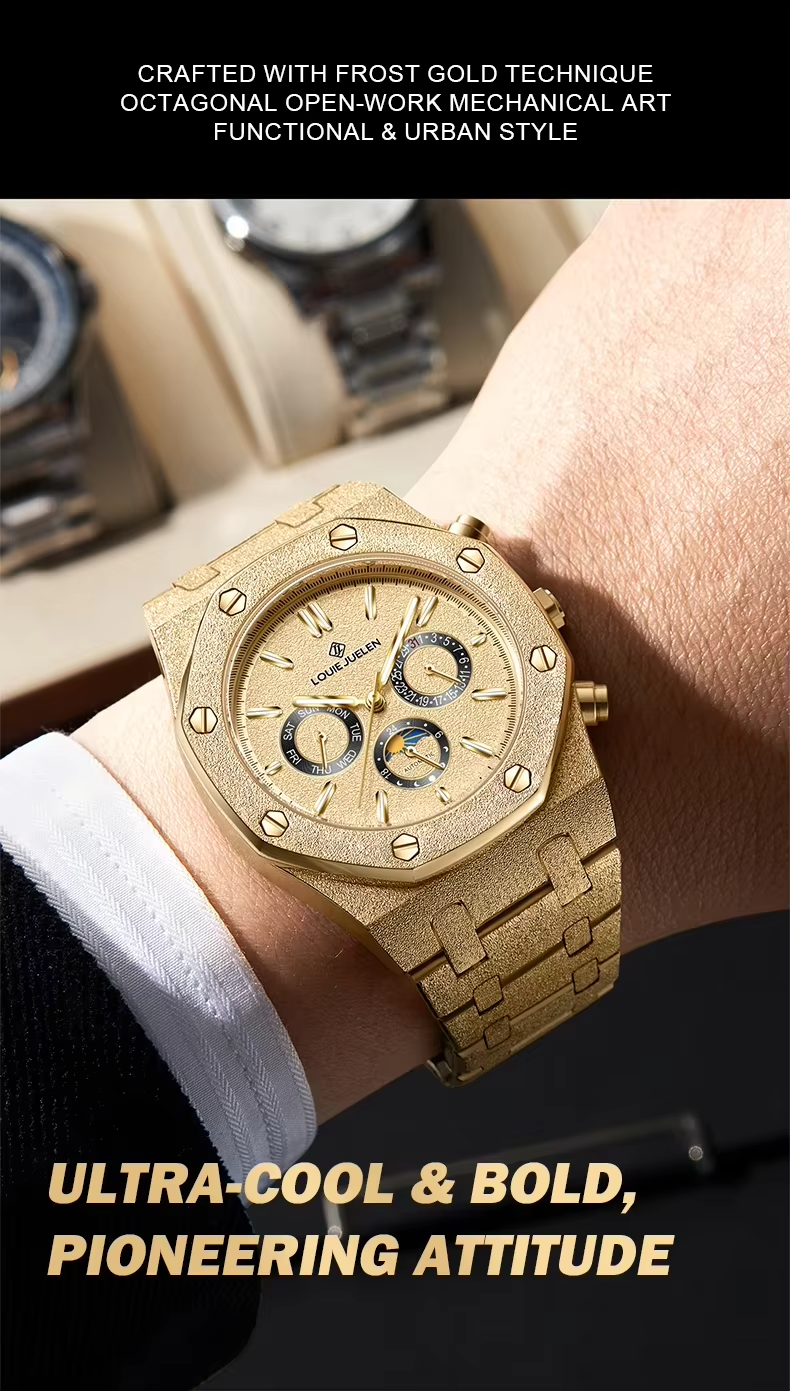
Louis Juelen Automatic Chain Strap
Automatic Watch Winder
₦140,000
₦250,000
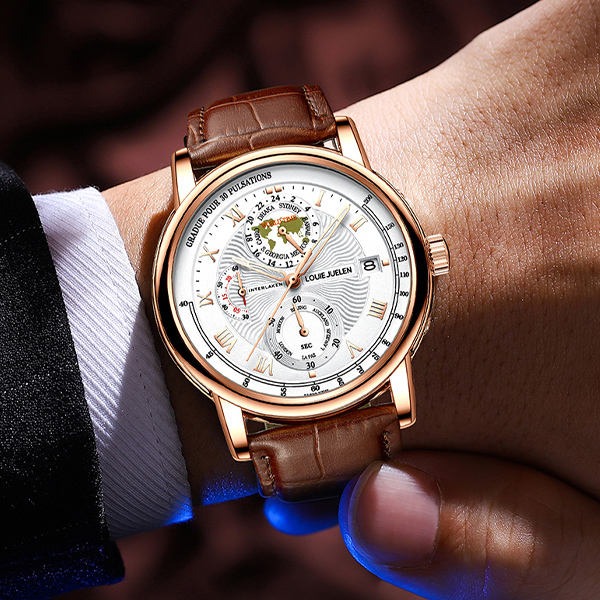
Louis Juelen Luxury Chronograph Leather Watch
Free 24ml luxury Roll On oil perfume
₦55,000
₦85,000