


How to Price Hair Products for Profit: A Practical Guide for New Vendors
Most new hair vendors do not fail because their hair is bad. They fail because they never sat down and worked out what a bundle actually costs them before they slapped a price on it. You buy a pack of hair for a certain amount, add a little "profit" on top because that number feels fair, post it for sale, and six months later you are busier than ever and somehow still broke. If that sounds familiar, the problem is not your hustle. It is your pricing.
Knowing how to price hair products properly is the single skill that separates vendors who build a real business from vendors who are still working for free a year in. This guide walks through the actual math, the markup formulas experienced sellers use, and the two pricing mistakes that quietly sink new hair businesses before they get off the ground.
What It Really Costs You to Stock a Bundle or a Wig
Your true cost is never just the price tag on the hair itself. It is your landed cost, meaning every naira you spend to get that bundle, closure or wig into a sellable state in your customer's hands, and most new vendors only count half of it.
To fix this, list out every cost that touches a single unit before you ever think about a selling price:
- The hair itself, whatever you paid the supplier or vendor per bundle, closure, frontal or wig unit
- Inbound shipping or delivery to get the stock to you, including courier fees if you are sourcing from another city or importing
- Customs, clearing or agent fees if the hair is coming in from outside Nigeria
- Packaging, meaning your branded bags, boxes, wig stands, dust bags or ribbon that make the product look sellable, not just the plain nylon it arrived in
- Payment processing fees, the small percentage your bank, POS terminal or payment gateway takes on every transaction
- Wastage and damage, a realistic allowance for units that get returned, tangle in transit, or simply do not sell at full price
Add all of that together per unit and you get your landed cost. This is the number you build your price on, not the invoice price your supplier gave you. A bundle that "cost" ₦15,000 on paper might really cost you ₦17,500 once shipping, packaging and a fair wastage buffer are added in. Skip this step and you are pricing against a number that was never accurate in the first place.
Why "What I Paid" Is Never Your True Cost
Your supplier's invoice tells you what you paid for the hair, not what it cost you to be ready to sell. New vendors routinely forget delivery, packaging and payment fees, then wonder why their "profit" disappears into transport and data subscriptions by the end of the month. Build the full landed cost first, every time, before you touch a calculator for markup.
The Markup Formula Most Successful Hair Vendors Use
The most reliable pricing method is to take your full landed cost and multiply it by a fixed number, usually between 2 and 4 times, depending on your positioning and the level of finishing you offer. This is called cost-plus or markup pricing, and it is the backbone of nearly every profitable hair business, from small home sellers to large wholesale vendors.
Here is the formula in its simplest form:
Selling price = Landed cost x Markup multiplier
If a raw bundle lands you at ₦20,000 and you apply a 2.5x multiplier, your selling price is ₦50,000. That is not greed, that is standard practice. Industry pricing across the hair trade typically runs 2x to 2.5x wholesale cost on the hair itself, with high-end vendors who offer custom coloring, pre-plucking or bleached knots pushing closer to 3x because they are also charging for skill and time, not just the raw product.
It also helps to think in terms of gross profit margin rather than just markup, since margin tells you what percentage of the selling price is actually profit once cost is removed:
Gross profit margin (%) = (Selling price minus Cost) divided by Selling price, multiplied by 100
So on that ₦50,000 wig with a ₦20,000 landed cost, your gross profit margin is 60 percent. That is a healthy number. In the wider beauty and hair industry, a gross profit margin of 50 percent and above is generally considered solid, giving you room to run promotions, pay for advertising, and still walk away with real money at the end of the month.
How Much Profit Margin Should You Actually Aim For
New hair vendors should target a gross profit margin somewhere between 50 and 70 percent on finished units like wigs and installed pieces, and a slightly tighter but still healthy margin, often 35 to 50 percent, on raw bundle sales where competition is steepest. Anything consistently below 35 percent leaves almost no cushion for returns, ads, delivery mishaps or slow weeks, which are all a normal part of running a hair business.
Where you land inside that range depends on a few honest questions:
- How much finishing work do you personally add? Plucking a hairline, bleaching knots, customizing a part or pre-styling a unit is skilled labor. Price it in.
- What is your market actually paying? Check three to five vendors selling comparable quality before you settle on a final figure.
- Are you positioning as budget, mid-market or premium? Each lane has a different acceptable margin, and trying to be all three at once confuses buyers.
- How reliable is your supply? If you are sourcing consistent, well-graded stock, you can defend a firmer price with more confidence than a vendor whose quality varies pack to pack.
Comparing Pricing Tiers Across Common Hair Products
Seeing the markup formula applied side by side across product tiers makes the math click faster than any explanation alone. The table below shows how landed cost, markup multiplier and target buyer shift as you move from entry-level bundles up to premium HD lace units.
| Pricing Tier | Typical Product | Landed Cost Range | Suggested Markup | Target Buyer |
|---|---|---|---|---|
| Entry-Level | Machine-weft bundles, basic closures | Lower cost, high volume | 2x to 2.5x | First-time buyers, budget-conscious shoppers |
| Mid-Grade | Raw or Remy bundles, frontals, basic wig units | Moderate cost | 2.5x to 3x | Repeat customers wanting durability and better texture |
| Premium | HD lace wigs, custom-colored or pre-plucked units | Higher cost plus labor | 3x to 4x | Clients paying for finish, convenience and expertise |
Notice that the multiplier climbs as the product demands more of your time and skill, not just because the hair itself is pricier. A wig you have plucked, tinted and styled is not the same product as the raw unit it started as, and your price should say so.
Pricing By Category: Bundles, Closures, Frontals and Full Wigs
Each hair product category carries its own cost structure and customer expectation, so a single blanket price across your whole catalogue almost always leaves money on the table somewhere.
Bundles and Loose Extensions
Bundles are usually your highest-volume, most price-sensitive product, which means your margin per unit can be slightly leaner as long as your volume makes up for it. A common approach is to keep bundle pricing at 2x to 2.5x landed cost and let closures, frontals and full wigs carry the richer margins that fund your marketing and restocking.
Closures and Frontals
Closures and frontals demand more careful sourcing since the lace, the knots and the parting all need to look natural, so buyers expect to pay a premium over a plain bundle of similar length. Price these at 2.5x to 3x landed cost, and if you personally bleach the knots or customize the part, add that labor cost on top rather than folding it invisibly into the base price.
Full Machine-Made and HD Lace Wigs
Full wigs, especially HD lace units, sit at the top of your pricing ladder because they combine raw material cost with construction, styling and finishing work. A wig that took you two hours to pluck, tint and lay is worth more than one you sold straight out of the pack, and your price needs to reflect the extra skill, not just the extra hair. This is also where new vendors most often underprice, because they forget to value their own labor at all.
If you are still sourcing stock to build out these categories, browse our wholesale-ready bundles and units here before you finalize your first price list, so your landed cost numbers are based on real current figures rather than guesswork.
The Two Pricing Mistakes That Sink New Hair Vendors
Underpricing and overpricing both come from the same root problem: skipping the cost calculation and guessing instead. Here is how each one plays out, and why underpricing is actually the more dangerous of the two.
Underpricing feels safe at first because sales come in fast and customers seem happy. The real problem is that underpricing is self-reinforcing. Once buyers get used to your low price, raising it later means an uncomfortable conversation you will keep avoiding, and every month you delay that increase, the gap between what you charge and what you should charge grows wider and scarier to close. Over time, customers can even start reading a suspiciously low price as a sign of lower quality, which works against the very trust you are trying to build.
Overpricing without the brand, presentation or customer service to back it up simply pushes buyers toward a competitor offering similar quality for less. Price is only one part of the story. Your photography, your responsiveness, your packaging and your reputation for consistent quality all justify a higher number, so build those first if you want to charge premium prices with confidence.
The fix for both is the same discipline: calculate your true landed cost, apply a deliberate markup based on your tier and finishing level, then check that number against three to five real competitors before you publish it.
Beyond the Base Price: Fees, Discounts and Room to Grow
Your sticker price needs to survive contact with the real costs of actually running a hair business, not just the cost of the hair itself. Build a buffer into your margin for the expenses that show up after the sale, including delivery to the customer, payment gateway or POS charges, occasional returns or exchanges, and the seasonal discounts you will inevitably want to run around events like Christmas, Valentine's or back-to-school season.
A vendor pricing at a bare 20 percent margin has almost nothing left once a delivery goes wrong or a customer requests a refund. A vendor pricing with a proper 50 to 70 percent margin can absorb that hit, still run a 10 percent promo when needed, and reinvest in better stock for the next cycle. Healthy margins are not about overcharging your customers. They are about staying in business long enough to keep serving them well.
If you are ready to put this pricing formula into practice, explore our current hair and wig collection here to compare real landed costs against your local market before you write a single price tag.
Frequently Asked Questions
What profit margin should a new hair vendor aim for?
New vendors should target a gross profit margin of 50 to 70 percent on finished wigs and styled units, and 35 to 50 percent on raw bundle sales where competition is tighter. Anything consistently below 35 percent leaves too little cushion for returns, delivery issues and advertising costs, so treat that figure as a hard floor rather than a comfortable target.
How do I calculate the true cost of a wig before I set a price?
Add up every cost that touches that specific unit, including the hair itself, inbound shipping or courier fees, customs where relevant, packaging, payment processing charges and a realistic allowance for wastage or returns. That total is your landed cost, and it is the number your markup multiplier should be applied to, never the raw supplier invoice alone.
Should I lower my prices to attract customers as a beginner vendor?
Dropping prices below a sustainable margin to win early customers usually backfires, because once buyers anchor to that low price, raising it later becomes difficult and can even signal lower quality. A better approach is competitive but honest pricing from day one, paired with strong photos, fast responses and reliable delivery to earn trust without undercutting your own margin.
How much extra can I charge for custom work like plucking or bleaching knots?
Customization such as pre-plucked hairlines, bleached knots or custom coloring typically adds meaningful value on top of the base hair cost, since you are charging for skilled labor and time, not just materials. Many vendors price finished, customized units at 3x to 4x their landed cost specifically because that extra work is what turns a raw bundle into a ready-to-wear premium piece.
Featured in our collection
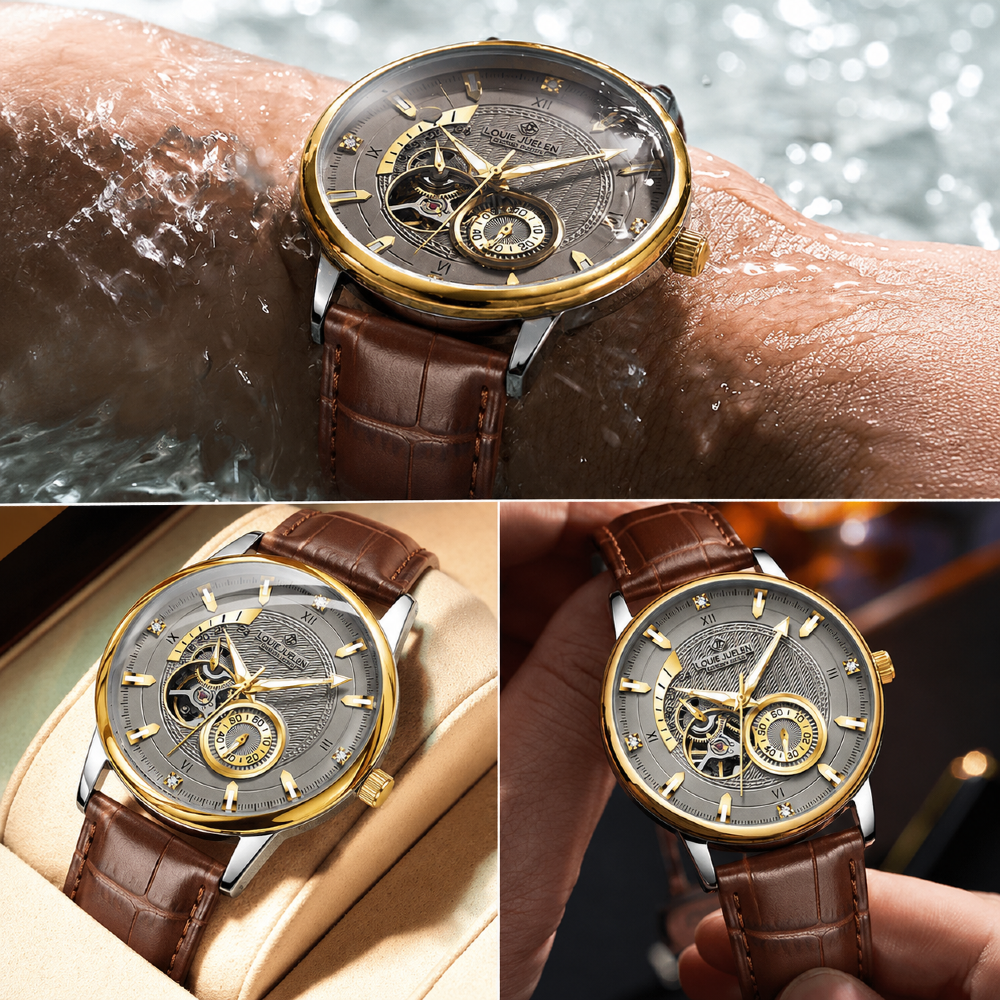
Louis Juelen Luxury Automatic(Tourbillion ) Premium Watch
Automatic Watch Winder
₦85,000
₦150,000
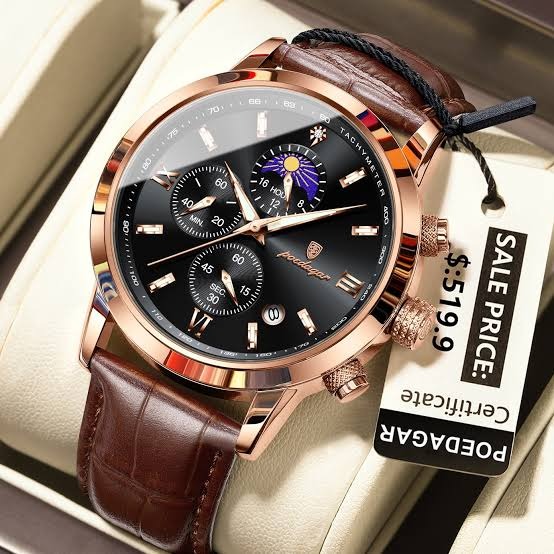
Poedagar Chronograph Luxury Watch
Free 24ml luxury Roll On oil perfume
₦45,000
₦65,000

Louis Juelen Automatic Chain Strap
Automatic Watch Winder
₦140,000
₦250,000