

Ponytail Extensions: How to Get a Long, Full Ponytail in Minutes
You have tried everything. Gel, edge control, a tighter hair tie, even sleeping in a silk bonnet to keep your baby hairs behaved. Yet the ponytail you wake up to still looks thin, barely grazes your shoulders, and starts sagging by midday. If you have ever scrolled past a photo of a woman with a swinging, waist-length pony and wondered how her hair does that, here is the truth. It almost never does. That length and fullness comes from a ponytail extension, not from twelve months of growth serum.
Ponytail extensions have quietly become one of the most requested items in Nigerian hair shops, and for good reason. They solve a real problem: natural hair that is healthy but simply is not long or thick enough to give you the dramatic, editorial pony you want for a wedding, a birthday shoot, or a Monday when you just do not have time to lay a full wig. This guide breaks down exactly what ponytail extensions are, which type suits your hair, how to install one yourself, and how to protect your edges while wearing one.
What Are Ponytail Extensions and Why More Nigerian Women Are Wearing Them
Ponytail extensions are pre-styled hairpieces, either 100% human hair or high-quality synthetic fibre, that attach directly to your own ponytail to add instant length, volume, and polish without braiding, glue, or a salon visit. Unlike a full wig or sew-in, they leave your natural hair out at the crown, so your hairline and parting still look like yours. This is what makes them so popular for quick transformations. You are not committing to hours in a chair, and you are not covering your entire head. You get the drama of long hair with the convenience of something you can put on in your bedroom before you even finish your makeup.
For Nigerian weather in particular, this matters. Between the heat, the humidity in the south and the harmattan dust up north, many women find that a full wig feels heavy and hot for a quick outing, while a ponytail extension gives length and glam with far less fuss on the scalp.
The Three Main Types of Ponytail Extensions
Ponytail extensions attach to your hair in one of three ways: drawstring, wrap-around, or claw clip, and the right one for you depends on how much time you have, how curly your natural hair is, and how much your ponytail already weighs.
Drawstring Ponytail Extensions
A drawstring ponytail has an adjustable string and small combs built into a net base. You gather your own hair into a bun, place the net over it, pull the drawstring to tighten it snugly, and lock the combs into your hair for grip. This is the most secure option and the best choice if your natural hair is curly, coily, or prone to frizz, because the net fully conceals your bun and hides any flyaways underneath. It is also the go-to pick for a high, sleek ponytail since the drawstring holds its shape all day without slipping.
Wrap-Around Ponytail Extensions
A wrap-around ponytail uses a small comb or clip at the base, then a slim section of hair wraps around your existing hair tie to hide the attachment point completely. There is no visible hardware once it is wrapped, which gives a very natural, seamless finish. This style works beautifully if your natural hair is straight to wavy and you want a lower, more relaxed pony rather than a tight high bun look.
Claw Clip Ponytail Extensions
A claw clip ponytail is the fastest of the three. It clamps directly onto your gathered hair with a built-in jaw clip, no bun-building or wrapping required. It genuinely takes seconds to put on and take off, which makes it ideal for a quick change before you run out the door. The trade off is that the clip sits on top of your hair rather than fully hiding inside it, so it suits thicker natural hair better than fine or thin hair, where the clip's weight and grip can feel like too much pressure on a small section.
How to Choose the Right Length, Texture and Weight
Choosing the right ponytail extension comes down to three factors, matching the length to where you want it to fall, matching the texture to your own curl pattern, and choosing a weight that your hair tie and scalp can comfortably carry without strain. Get these three right and the extension will look like it grew straight out of your head.
On length, here is a rough guide for where each size sits when worn in a mid-height pony:
- 14 to 16 inches sits around the collarbone, a natural everyday length
- 18 to 20 inches falls mid to upper back, a popular in-between choice
- 22 to 24 inches reaches the low back for a dramatic, statement look
- 26 inches and above is the waist-skimming, red-carpet length
Keep in mind that a higher ponytail will always look shorter than the same piece worn lower, simply because there is more hair between the base and the floor. Curly and wavy textures also read shorter than straight hair of the same length, since the curl pattern pulls the strands upward. If you love a curly ponytail and want it to hit a specific point, it is worth sizing up slightly to allow for the shrinkage.
On texture, always match the extension's curl pattern to your leave-out hair as closely as possible, whether that is bone straight, a loose body wave, or a defined curl. A straight piece on wavy leave-out will look like two different heads of hair the moment there is any humidity in the air.
On weight, most ponytail pieces range from around 80 to 150 grams. Heavier pieces give a fuller, thicker look but put more pull on your hair tie and your roots, so if your natural hair is fine or your edges are already a little fragile, start with a lighter piece in the 80 to 100 gram range rather than reaching for the thickest option available.
| Feature | Drawstring Ponytail | Wrap-Around Ponytail | Claw Clip Ponytail |
|---|---|---|---|
| Attachment | Net base with drawstring plus combs | Small comb or clip, hidden by a wrap section | Built-in claw clip, clamps directly on |
| Install time | 3 to 5 minutes | 3 to 5 minutes | Under 1 minute |
| Best for | Curly, coily or textured natural hair | Straight to wavy hair, lower ponytails | Quick changes, thicker natural hair |
| Hides natural hair bun | Fully covers the bun | Covers the base only | Sits over the gathered hair |
| Security level | Very secure, adjustable tension | Secure but can loosen with movement | Fast but least secure for active wear |
| Ideal occasion | Weddings, all-day events, high ponytails | Everyday wear, office, low sleek pony | Errands, last-minute outings |
How to Install a Ponytail Extension in Under 10 Minutes
Installing a ponytail extension is a simple five-step process that takes most women under ten minutes once they have done it a couple of times, and it does not require glue, heat, or another pair of hands. Here is the routine that gives the cleanest, most natural result.
- Brush your natural hair thoroughly. Work out every knot before you gather it. A smooth base is what makes the extension sit flat instead of lumpy.
- Gather your hair at your chosen height. Decide on a high, mid, or low pony first, since the extension needs to sit exactly where your own hair is tied.
- Secure a tight, small bun with a strong hair tie. For drawstring and wrap-around styles, wrap your ponytail into a compact bun rather than leaving it loose. A bulky, loose bun will make the extension sit unevenly.
- Attach the piece. For a drawstring, slide the net over the bun, pull the drawstring taut, and lock the combs into your hair. For a wrap-around, clip the base in first, then wind the wrap section around the hair tie. For a claw clip, simply clamp it over your gathered hair.
- Blend and finish. Smooth a small section of your own leave-out hair over the join, tuck away any visible drawstring or comb, and set the whole style with a light-hold edge product or a mist of hairspray.
If your ends look blunt or too uniform where the extension meets your own hair, a few light layers cut into the piece by a stylist will make the blend disappear completely.
How to Protect Your Edges and Avoid Traction Alopecia
The biggest risk with any ponytail extension is tension, not the hair itself, and pulling your natural hair too tightly at the root is what leads to thinning edges and, over time, traction alopecia. Dermatologists are clear that repeated tight styling, especially at the hairline and temples, is one of the main causes of this kind of hair loss, and it is reversible only if you catch it early.
To wear ponytail extensions safely:
- Never pull your bun so tight it hurts or gives you an instant headache. Slight tension is fine. Pain is not.
- Avoid wearing the same style, especially a high tight pony, every single day. Alternate between high, mid, and low placements so the same section of hair is not always under strain.
- Give your scalp regular breaks. A day or two a week with your natural hair completely loose lets the follicles recover.
- Choose a lighter piece if your hair is fine or already thinning. A heavy extension on weak edges accelerates damage.
- Moisturise your scalp and edges regularly, since dry, brittle hair snaps and breaks under tension far more easily than well-conditioned hair.
If you already notice your edges thinning, it is worth easing off tight ponytails and giving your hairline several months to recover before styling that area again.
Styling Tips for a Flawless, Salon-Finished Look
A ponytail extension only looks expensive when the base is invisible, so the real styling work happens at the join, not at the ends. Start by smoothing your edges with a boar bristle brush and a light styling gel, then lay your baby hairs the same way you would under a lace wig, using a soft toothbrush and a touch of gel for a crisp, laid finish. Wrap a thin section of your own hair, or a matching wrap piece, tightly around the base of the ponytail to hide the tie completely, securing it underneath with a bobby pin rather than leaving it exposed.
For extra volume right at the crown, backcomb the top section of your natural hair gently before pulling it into the ponytail, then smooth the top layer over it so the height stays polished rather than messy. If your ponytail extension is curly or wavy, scrunch a light curl cream through the ends once it is installed to refresh the pattern and blend it smoothly with your own texture.
Shop our ponytail extensions here to find lengths from a natural everyday 16 inches right up to a dramatic 26 inch statement pony in straight, wavy, and curly textures.
How to Care for Your Ponytail Extension So It Lasts
A well cared for human hair ponytail extension can last several months to a year with regular wear, while cheaper synthetic pieces tend to last several months before the fibres start to look dull or tangle permanently, so care habits make a real difference to how long your investment holds up. Wash it only every 10 to 15 wears, since over-washing strips the moisture that keeps the strands soft and shiny. Always use a sulfate-free shampoo and a rich conditioner, and let it air dry rather than blasting it with heat.
When you do detangle, always start at the ends with a wide-tooth comb and work your way up to the base, never the reverse, to avoid unnecessary shedding. Keep any heat styling under 180 degrees Celsius, and use a heat protectant every single time if you are curling or straightening a human hair piece. Between wears, braid the ponytail loosely and store it in a breathable bag away from direct sunlight and humidity, which keeps the texture from frizzing or matting while it sits in your drawer.
Explore full ponytail and bundle collections here if you also want matching bundles or a wig for a fuller, all-over transformation on bigger occasions.
Choosing Quality Over a Cheap Bargain
Cheap synthetic ponytails feel tempting, especially when you only need one for a single event, but they tangle fast, do not take heat, and often have a shine that reads artificial in photos. A well made human hair ponytail extension, or a high grade synthetic blend, costs more upfront but styles like real hair, holds curls, and survives repeated wear without matting at the base. If you are choosing between several options in your budget, prioritise a natural-looking wefted base, a texture that closely matches your own hair, and a drawstring or wrap mechanism strong enough to hold securely through a full day of movement.
Browse premium human hair pieces here and compare textures side by side before you commit to a length and curl pattern.
Frequently Asked Questions
How long do ponytail extensions last?
A human hair ponytail extension can last from six months up to a year or longer with proper care and moderate wear, roughly once a week, while a synthetic piece typically lasts a few months before the fibres begin to dull and tangle permanently. Washing only every 10 to 15 wears and storing it braided extends the lifespan of either type significantly.
Can I wear a ponytail extension every day without damaging my natural hair?
Daily wear is possible, but it raises your risk of traction alopecia if the base is pulled tight every single day without a break. Rotate the height of your pony, keep tension gentle rather than painful, and give your scalp at least one or two days a week completely free of any pulled-back style.
What size ponytail extension should I buy if I have thin or fine hair?
Choose a lighter piece, ideally in the 80 to 100 gram range, and a drawstring or wrap-around style rather than a heavy claw clip, since a lighter base puts less strain on fine strands and a fragile hairline. A drawstring net also fully conceals a smaller bun, so thin natural hair blends more convincingly underneath it.
Can I curl or straighten my ponytail extension at home?
Yes, if it is 100% human hair, you can safely curl, straighten, or wave it using tools under 180 degrees Celsius, always with a heat protectant applied first. Synthetic ponytails cannot take direct heat and will melt or frizz permanently, so check the hair type before you reach for any hot tool.
Featured in our collection
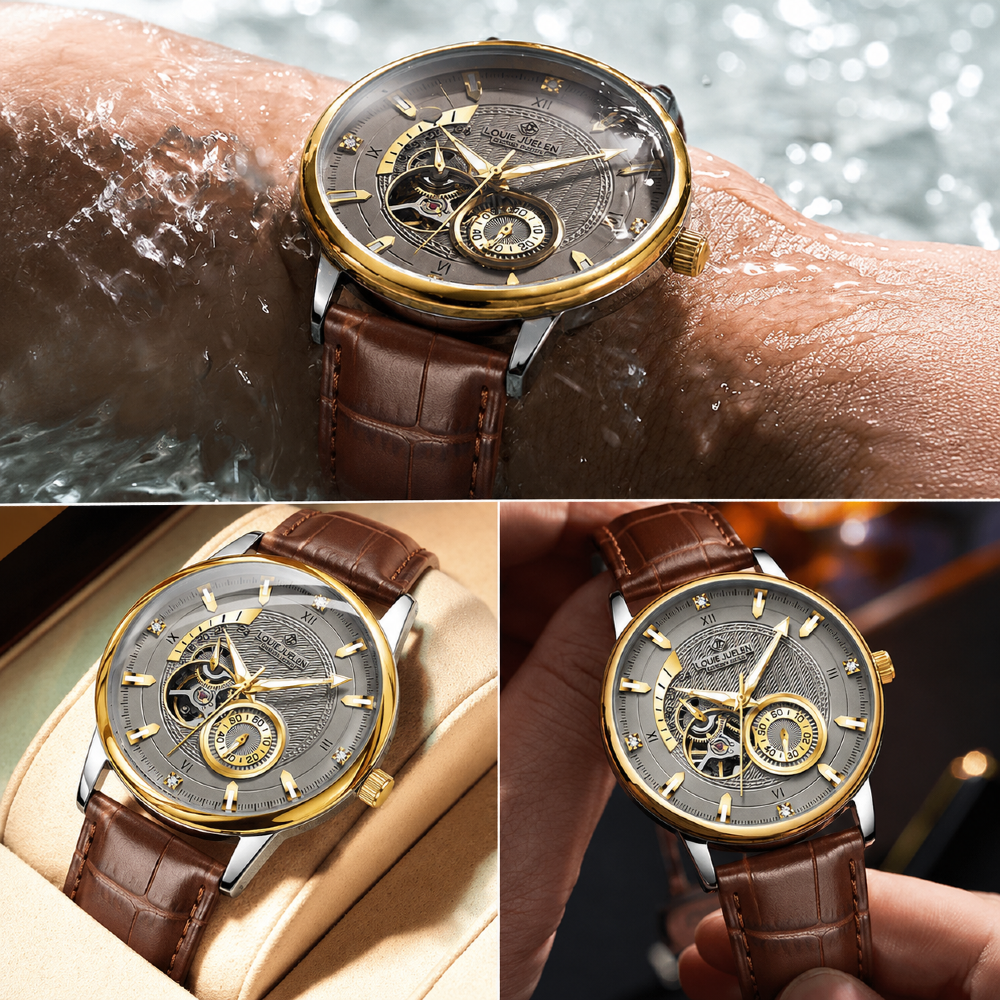
Louis Juelen Luxury Automatic(Tourbillion ) Premium Watch
Automatic Watch Winder
₦85,000
₦150,000
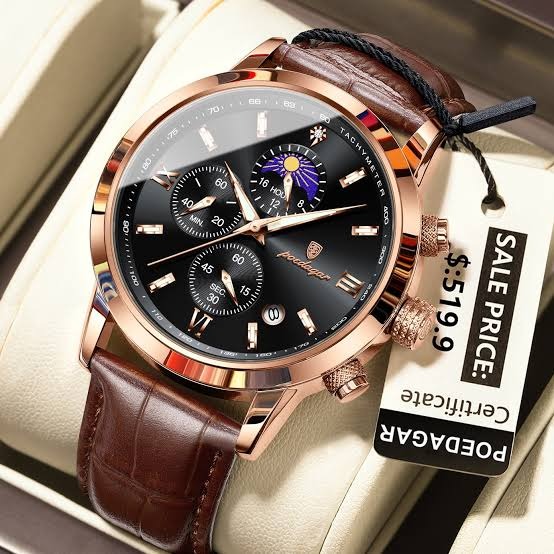
Poedagar Chronograph Luxury Watch
Free 24ml luxury Roll On oil perfume
₦45,000
₦65,000

Louis Juelen Automatic Chain Strap
Automatic Watch Winder
₦140,000
₦250,000