



Leather Watch Strap Care: How to Make It Last for Years, Not Months
You bought a beautiful leather strap, wore it proudly for a few months, and now it looks tired. The edges are curling. There is a faint ring of discoloration where your wrist meets the buckle. It smells faintly of sweat no matter how many times you wipe it down. Here is the truth: none of that is normal wear and tear. It is what happens when leather watch strap care is skipped entirely, and it is almost always preventable.
Leather is not plastic. It is skin, tanned and treated, and it behaves like skin. It needs moisture in the right amount, protection from heat and sun, and the occasional rest. Give it that, and a good strap can outlast the watch case it sits on. Ignore it, and even an expensive strap can look shabby within six months. This guide walks you through exactly what to do, in the order that actually matters, so your strap stays supple and sharp for years rather than one Lagos dry season.
Why Leather Straps Crack, Fade and Start to Smell in the First Place
Leather straps break down because they lose natural oils faster than most owners replace them, and heat, sweat and sunlight all speed up that process at the same time. Once the fibers dry out, they cannot flex the way they used to, so every time you bend your wrist, tiny cracks form along the crease near the buckle.
Three things are working against your strap every single day, whether you notice them or not:
- Sweat and skin oils. Your wrist releases moisture constantly, and leather absorbs it. Salt from sweat draws out the strap's own conditioning oils over time, leaving the fibers dry and stiff.
- Sun and heat. Direct sunlight and dashboard-level heat dry leather out fast. Anything above roughly 35 degrees Celsius accelerates moisture loss, which explains why straps kept in a hot car or left on a sunny windowsill crack sooner than ones stored in a drawer.
- Water exposure. A splash from washing your hands, a sudden downpour, or a swim with the watch still on your wrist all push moisture into the leather. As it dries unevenly, the fibers stiffen and the surface can warp or stain.
None of these are dramatic events on their own. The damage is cumulative. A strap that survives one hot afternoon is fine. A strap that spends every hot afternoon for a year without any conditioning is the one that arrives at your jeweler with a split right where it bends.
The Climate Factor Nigerian Owners Should Not Ignore
Nigeria's climate makes leather strap care slightly more urgent than it would be in a cooler, drier country. Humidity encourages mold and a musty smell if a strap is put away damp, while harmattan dust and dryness pull moisture out of the leather from the other direction. The fix is the same either way: keep the strap clean, keep it lightly conditioned, and never store it while it is still damp with sweat or rain.
The Daily Habits That Quietly Wear Down Your Strap
Most of the damage done to a leather strap has nothing to do with a single accident and everything to do with small habits repeated daily. Wearing the strap too tight, leaving it on in the shower, and never letting it air out are the three most common culprits, and all three are easy to fix once you notice them.
Watch out for these:
- Wearing it too tight. A snug strap traps sweat against the leather with no airflow to help it evaporate. Leave a little breathing room, roughly enough to slide one finger underneath comfortably.
- Showering, swimming or washing dishes with it on. Even a "water resistant" watch case does not protect an exposed leather strap. Take it off before water gets involved.
- Never rotating straps. Wearing the same strap every single day means it never gets a chance to fully dry out or recover its shape. If you own more than one watch, alternate them. If you own one, consider a spare strap so the leather gets rest days.
- Storing it curled up in a drawer with the buckle still fastened. This locks in a crease and encourages cracking exactly where the fold sits.
- Ignoring the first signs of dryness. A strap that starts to feel stiff or look slightly matte is asking for conditioner. Waiting until it visibly cracks means the damage is already done.
If you recognize two or three of these in your own routine, you are not alone. They are the default way most people treat a watch strap, simply because nobody explains the alternative.
How to Clean a Leather Watch Strap the Right Way
Cleaning a leather strap properly means using a barely damp cloth and a tiny amount of mild soap, working in gentle circular motions rather than scrubbing, and then letting it dry fully before wearing it again. Done correctly, once every one to two weeks of regular wear, this single habit prevents most of the sweat-related damage that ages a strap.
Follow these steps:
- Remove the strap from your wrist, and take it off the watch case if you are comfortable doing so and it clips off easily.
- Dampen a soft cloth with lukewarm water. Do not soak it. A microfiber cloth works well because it will not scratch the surface.
- Add a very small amount of mild soap or saddle soap to the cloth, not directly onto the leather.
- Wipe gently in small circles, focusing on the areas nearest the buckle and the underside, where sweat collects most.
- Wipe again with a clean, barely damp cloth to remove any soap residue.
- Pat dry with a dry cloth, then leave the strap somewhere shaded and well ventilated to finish air drying. Never use a hairdryer, a heater, or direct sun to speed this up, since fast drying is exactly what causes cracking.
- Only re-wear or condition the strap once it is completely dry, which usually takes several hours.
Avoid baby wipes, alcohol-based cleaners, and anything with bleach. They strip the leather's natural oils faster than they clean it, which defeats the purpose entirely.
Conditioning: What Actually Keeps the Leather Soft
Conditioning replaces the natural oils that sweat, sun and normal wear strip away, and it is the single most effective habit in leather watch strap care because it is the difference between a strap that stays supple and one that eventually cracks. A pea-sized amount, applied once every one to two months for a daily-wear strap, is usually enough.
A few practical notes worth knowing before you reach for a bottle:
- Use a proper leather conditioner, not household products. Petroleum jelly, cooking oil and furniture polish are not made for skin-contact leather and can cause discoloration or a sticky film.
- Mink oil softens leather well but can darken lighter colors, and in very humid conditions it has been known to encourage a light mold film if applied too heavily. It is best reserved for black or dark brown straps, applied sparingly.
- Apply with a soft cloth in a thin, even layer, let it absorb for ten to fifteen minutes, then buff off any excess with a clean cloth. A greasy, over-conditioned strap attracts dust and grime, which brings you right back to needing another clean.
- Test on the underside first if you are trying a new product, since some conditioners react differently with different tannages and dyes.
Between full conditioning sessions, simply wiping the strap down after a sweaty day and letting it dry properly does most of the protective work. Conditioning is the finishing touch, not a substitute for basic cleanliness.
Full-Grain, Top-Grain or Bonded: Which Leather Holds Up Best
Not all leather straps age the same way, and knowing what you are wearing changes how much care it actually needs. The table below compares the three leather types most commonly used on watch straps.
| Leather Type | Durability | Water Resistance | Care Needed | Typical Lifespan With Good Care |
|---|---|---|---|---|
| Full-grain leather | Highest, develops a rich patina over time | Moderate, absorbs moisture but recovers well if dried properly | Occasional conditioning every 4 to 8 weeks | 3 to 5 years or more |
| Top-grain / genuine leather | Good, slightly more uniform and less rugged than full-grain | Moderate, similar sensitivity to moisture | Conditioning every 4 to 6 weeks | 1.5 to 3 years |
| Bonded or faux leather | Lower, tends to peel or delaminate rather than crack | Better short-term water resistance, but poor recovery once damaged | Wipe clean regularly, conditioning has limited effect | 6 to 18 months |
Full-grain leather is worth the slightly higher price if you plan to wear a strap daily, because it responds best to the exact care routine described above and rewards you with character rather than damage as it ages. If your current strap is bonded leather and already peeling at the edges, no amount of conditioning will fully reverse it, and it may simply be time for an upgrade. Browse genuine leather straps and watches here if you want to start with a strap built to actually hold a conditioning routine.
Storing Your Watch and Strap Between Wears
Proper storage means keeping the strap somewhere cool, dry and out of direct sunlight, ideally lying flat or gently curved rather than tightly folded, so the leather is not held under stress while it rests. A watch box, a soft pouch or even a drawer lined with cloth all work well.
Keep these points in mind:
- Never fasten the buckle tightly around nothing when storing the watch. Leave the strap slightly open in its natural curve.
- Avoid airtight plastic bags for long-term storage, since trapped humidity can encourage mold. A breathable pouch or cloth is better.
- Keep silica gel packets nearby if you live somewhere humid, which helps control moisture in a drawer or watch box during the rainy season.
- Do not store a strap while it is still damp from sweat, rain or a recent cleaning. Let it dry completely first.
If you are rotating between a few pieces, this is also a good moment to check each strap for early wear. A quick monthly inspection catches problems while they are still cosmetic rather than structural.
Signs Your Strap Has Reached the End of Its Life
Even a well cared for leather strap eventually needs replacing, and the clearest signs are visible cracking or splitting, a strap that no longer holds its shape and constantly needs tightening, and a persistent odor that cleaning no longer removes. Fraying stitching or a buckle that has started to loosen the leather around the holes are also reliable indicators.
Trying to nurse a genuinely worn-out strap along with more conditioner rarely works once cracking has actually started, because the fiber damage underneath is already done. At that point, a replacement is the more sensible move, and it is also a chance to size up in quality. Shop leather and premium watch straps here for options built with the kind of full-grain leather that rewards the routine above rather than fighting it.
Good leather strap care is not complicated. It is five small habits practiced consistently: keep it reasonably loose, keep it dry, wipe it down regularly, condition it lightly every so often, and store it properly when it is off your wrist. Do that, and the strap you buy today has every chance of still looking sharp on your wrist years from now. If you are shopping for a new watch and want a strap that is genuinely worth the upkeep, explore MelexWorld's watch collection here and start with leather that ages well instead of leather that just looks good on day one.
Frequently Asked Questions
How often should I clean and condition a leather watch strap?
Wipe it down with a barely damp cloth after particularly sweaty days, and give it a proper clean roughly every one to two weeks with regular wear. Full conditioning is needed less often, usually every four to eight weeks depending on how frequently you wear the watch and how humid your climate is.
Can a cracked leather watch strap be repaired, or does it need replacing?
Minor surface dryness can often be improved with careful conditioning, but once actual cracks or splits appear in the leather, the fibers are structurally damaged and conditioning will not reverse it. At that stage, replacing the strap is the safer option, since a cracked strap is also more likely to fail and drop the watch.
Is it safe to wear a leather watch strap every day?
Yes, as long as you let it breathe and dry out properly between wears, ideally by rotating it with another strap or watch so it is not under constant sweat exposure. Daily wear with no rest at all is the fastest way to age a strap prematurely, regardless of how good the leather is.
What is the best way to protect a leather strap from Nigeria's heat and humidity?
Keep the strap out of direct sun and away from car dashboards, dry it fully and promptly whenever it gets wet from sweat or rain, and store it with a silica gel packet nearby during humid months to reduce the risk of mold. Light, regular conditioning also helps counter the drying effect of harmattan winds.
Featured in our collection
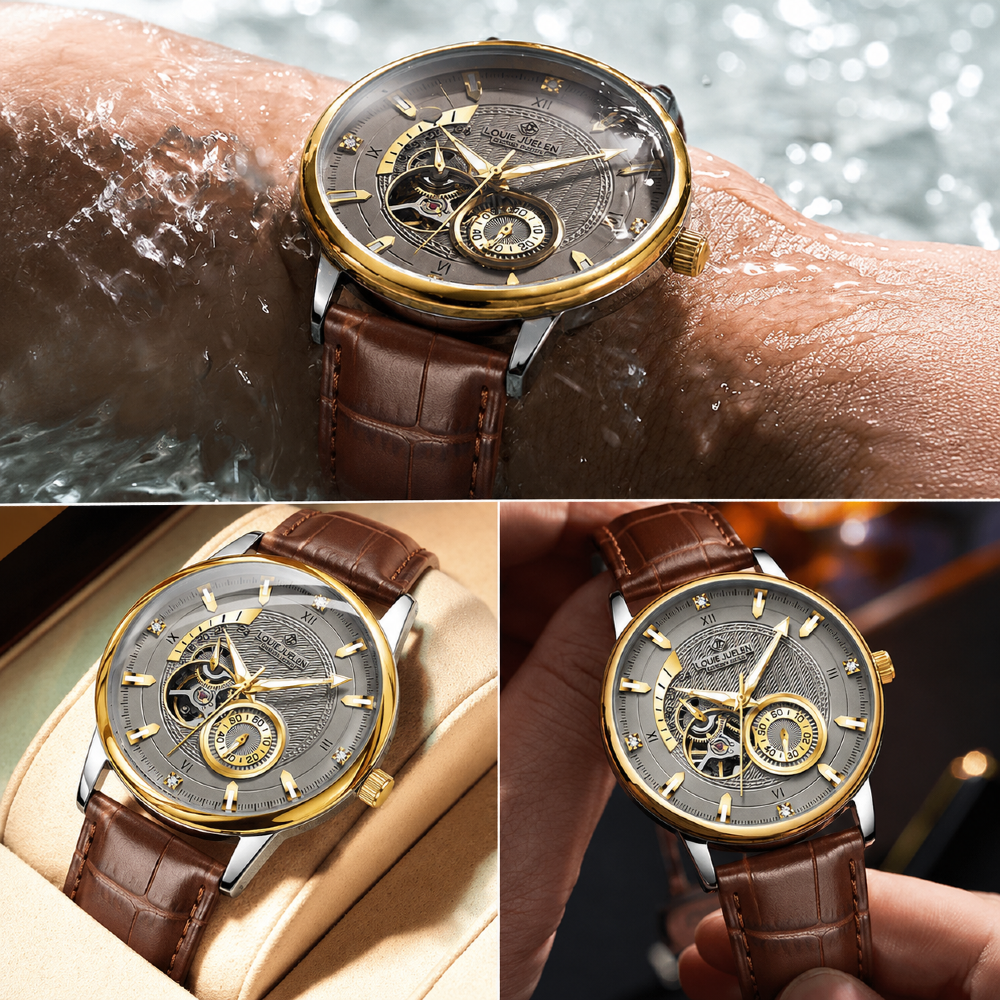
Louis Juelen Luxury Automatic(Tourbillion ) Premium Watch
Automatic Watch Winder
₦85,000
₦150,000
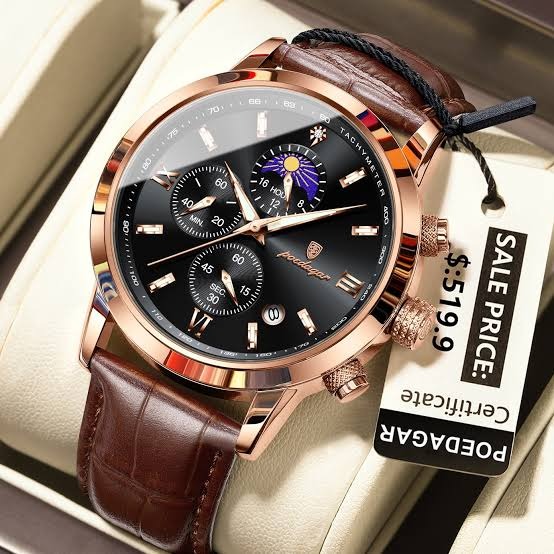
Poedagar Chronograph Luxury Watch
Free 24ml luxury Roll On oil perfume
₦45,000
₦65,000

Louis Juelen Automatic Chain Strap
Automatic Watch Winder
₦140,000
₦250,000
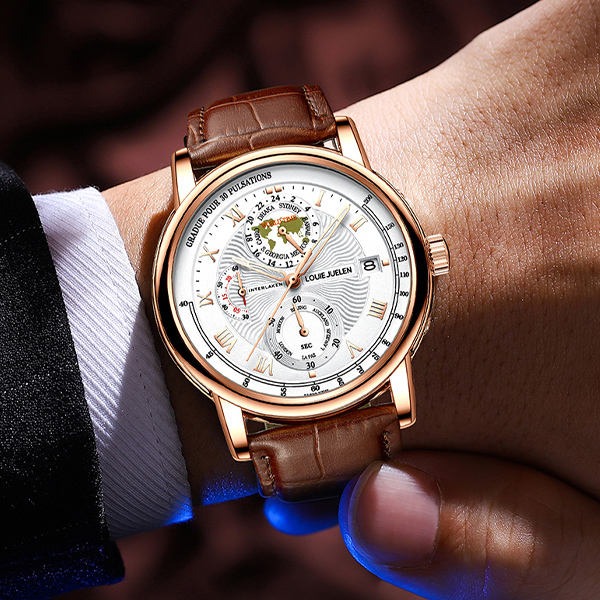
Louis Juelen Luxury Chronograph Leather Watch
Free 24ml luxury Roll On oil perfume
₦55,000
₦85,000