


How to Wear a Wig Cap the Right Way for a Flat, Natural Base
You spent good money on a lace wig with a soft, natural hairline. You melted the lace, plucked it just right, and it still looks off. There is a ridge at your crown. A bump sits right above your ear. By afternoon the whole unit has crept an inch to the left. Here is the truth nobody tells first-time wig wearers: the problem is rarely the wig itself. It is what is happening underneath it. Knowing how to wear a wig cap properly is the one skill that separates a flawless, salon-fresh install from a wig that looks like, well, a wig.
A wig cap is not just a hygiene layer you throw on out of habit. It is the foundation of your entire look, the same way primer is the foundation of a flawless makeup application. Get the cap wrong and every step after it, the lace, the parting, the styling, has to fight against a lumpy, sliding base. Get it right and the wig practically installs itself.
Why Your Wig Cap Matters More Than You Think
A wig cap creates the smooth, even surface your wig needs to sit flat and stay put, while also protecting your natural hair, hiding your hairline, and giving your scalp a barrier against glue, adhesive, and friction. Skip it or wear it badly and you are fighting an uphill battle for the rest of the day.
Think about what your wig actually rests on. Underneath the lace and the wefts, there is only your own hair and your scalp. If that surface has ridges, loose ends poking out, or an uneven ponytail bump at the nape, the wig has no choice but to sit on top of those imperfections. That is where you get the visible ridge across your forehead, the gap at your temples, or the wig rocking backward every time you turn your head. The cap is what turns your natural hair from an obstacle into a smooth canvas.
There is also a practical, everyday reason to master this. Nigerian heat and humidity make scalps sweat fast under a full wig. A properly fitted cap wicks a little of that moisture away from your hairline and stops your own hair from tangling into the wig's wefts, which is one of the most common reasons a good wig starts shedding prematurely from the inside.
Choosing the Right Wig Cap Type for Your Hair
The best wig cap type depends on your hair length, texture, and the climate you are wearing the wig in, with mesh dome caps being the most popular all-round choice because they stretch to fit securely while staying breathable enough for warm weather. Nylon and spandex blends are common because they are elastic enough to accommodate different head sizes without feeling tight.
Here is how the main options actually perform in daily wear:
- Mesh dome caps. Made from a fine, net-like fabric with visible tiny holes, these are the most breathable option and the go-to for hot, humid days. They stretch generously, which makes them forgiving for beginners still learning to gauge tension.
- Nylon or spandex caps. These give a very snug, second-skin fit and come in shades that can be matched closer to your scalp tone. They are stretchy enough to work for most head sizes, but the fabric loses its shape faster than mesh and typically will not survive more than a handful of wears before it needs replacing.
- Cotton caps. Softer against the skin and a good pick if you have a sensitive scalp or you are prone to itching under synthetic fabrics, though they trap more heat than mesh.
- Wig grip bands. Not a full cap, but a velvet-lined elastic band worn at the hairline in combination with a cap or on its own. It adds extra hold at the point where wigs slip the most, right along the front edge.
If you are new to wigs, start with a mesh dome cap in a shade close to your skin tone. It is the most forgiving on fit, the coolest to wear for a full day out, and it gives you a stable base while you are still practising your braid-down or flat-twist technique.
Prepping Your Natural Hair Before the Cap Goes On
Your natural hair has to lie completely flat against your scalp before the cap goes on, because any bump, loose strand, or thick ponytail underneath will telegraph straight through the cap and the wig on top of it. This single step decides whether your finished look is flawless or lumpy.
The right prep method changes depending on your hair length.
If your hair is short (pixie length to chin length): Smooth it down firmly with a boar bristle brush, working in the direction it naturally falls. A small amount of edge control or gel along the hairline tames flyaways and stops short pieces from creeping out from under the cap later in the day.
If your hair is medium length (shoulder length): Section it into four to six parts, depending on thickness. Flatten each section against your scalp with small, flat bobby pins, criss-crossing the pins for extra grip. Avoid one big clump pinned in the centre, which is exactly what creates that dreaded crown bump.
If your hair is long or thick: Braid it. Cornrows laid flat and close to the scalp give the smoothest, most secure foundation of all, especially for a full sew-in or a long-term install. If cornrows are not an option that day, divide your hair into four sections, twist each one firmly, then wrap the twists around your head in a flat circle at the crown and pin them down like a low, coiled bun. The key word is taut. A loose twist unravels under a wig within an hour and creates the very bulge you are trying to avoid.
Whatever method you use, keep sections small. Smaller, evenly distributed sections always lie flatter than one or two large ones, because there is less bulk concentrated in any single spot.
The Correct Way to Put On a Wig Cap Step by Step
Putting on a wig cap correctly means stretching it evenly, placing it from front to back, and tucking every loose hair underneath before smoothing it flat against the scalp so there are no gaps at the hairline or bulges at the crown. Rushing this step is the number one reason wigs slip mid-day.
- Start with clean, dry hair and scalp. Oil and product buildup make caps slide. A light dry shampoo at the roots can help absorb excess oil if you are not washing that day.
- Finish your braid-down, twist, or flat pin-up first. Never put the cap on over loose, unsecured hair.
- Hold the cap by its edges and stretch it gently with both hands to open it out fully before placing it on your head.
- Position it from your natural hairline back, pulling it snugly toward the nape of your neck. Starting at the front, not the crown, keeps the front edge, the part your wig lace will sit closest to, lying flattest.
- Tuck in every loose strand, especially at the nape and around the ears, where hair likes to escape.
- Smooth the cap flat with your palms, checking for any air pockets or ridges, and adjust until the surface feels even all the way around.
- Secure the edge with a few flat bobby pins, angled so the pin catches a little of your own hair underneath the cap, not just the fabric. This stops the cap itself from sliding once the wig goes over it.
A cap that fits correctly lies flat against your scalp, does not shift when you tilt your head, and feels snug without pinching. If you can see the outline of your ears pressing hard or you get an instant headache, size up.
Getting the Sizing Right
Wig cap size is based on your head circumference, and most brands offer a range from extra small around 20 to 21 inches up to extra large around 24 inches, with medium, roughly 22 to 22.5 inches, fitting the average adult head. Measuring properly before you buy saves you from a cap that gaps at the edges or squeezes your temples all day.
To measure yourself accurately, wrap a soft tape measure around your head starting at the front hairline, down behind one ear, around the nape, up behind the other ear, and back to the start. Take the measurement three times and use the average, since head shape is rarely perfectly symmetrical. If your number falls between two sizes, size up. A cap that runs slightly large can always be pinned tighter; one that is too small will squeeze your scalp and give you a headache by mid-afternoon.
Comparing Wig Cap Types at a Glance
| Cap Type | Breathability | Best For | Grip & Hold | Typical Lifespan |
|---|---|---|---|---|
| Mesh dome | Excellent, visible airflow holes | Hot weather, all-day wear, beginners | Good, stretches to fit securely | Several months with care |
| Nylon/spandex | Moderate | Snug, close-to-scalp fit | Very good, elastic hold | A few wears before losing shape |
| Cotton | Low to moderate, traps some heat | Sensitive or itchy scalps | Moderate | Multiple wears, washable |
| Wig grip band | Excellent, worn with another cap | Extra front-edge security | Best at the hairline specifically | Long-lasting, reusable |
Common Mistakes That Ruin a Flat Base
Wearing the cap over a ponytail or bun. This is the single biggest cause of the back-of-head bump that tugs your wig backward all day. Always flatten and pin, never just tie up and cover.
Skipping the cap entirely. Some wearers try to save time by installing straight onto braided or pinned hair. Without the cap smoothing everything into one continuous surface, individual braid ridges show through even the finest lace.
Choosing a cap that is too small. A tight cap does not equal a secure cap. It equals a headache, visible pressure lines at your hairline, and hair that cannot lie flat because it is being compressed unevenly.
Not securing the cap itself before adding the wig. People assume the wig's own combs and adjustable straps will hold everything down. They hold the wig to the cap, not the cap to your head. Pin the cap first.
Reusing a stretched-out nylon cap for months. Once nylon loses its elasticity it stops gripping and starts sliding. Treat caps as a low-cost, replaceable part of your kit rather than a one-time buy.
Once your base is flat and secure, the wig itself has a real chance to look natural, because the lace can sit directly against your skin at the hairline instead of riding on a ridge of hidden braids. Shop our HD lace wig collection here if you are ready to pair a flawless base with a wig that melts into your skin from the first wear.
Caring for Your Cap So It Keeps Doing Its Job
A wig cap is not a one-and-done purchase. Wash mesh and cotton caps by hand in cool water with a mild shampoo, squeeze out the excess water without wringing, and lay them flat to dry so the elastic band keeps its shape. Rotate between two or three caps if you wear wigs often, since giving each one a rest day helps the elastic recover between wears. Once a cap feels loose, thin, or stretched out of shape even after washing, it is time to retire it. A tired cap cannot give a wig the flat, dependable base it needs, no matter how carefully you prep your hair underneath it.
If you are building out your wig routine from scratch, it is worth picking up a couple of quality caps in your usual size along with a wig grip band for extra security on busy days. Browse wig accessories and grip bands here to complete the kit properly rather than making do with whatever came free in the box.
A flat, secure base takes an extra five to seven minutes of prep. That is a small price for a wig that sits naturally all day, does not creep backward by evening, and photographs the way it looked the moment you put it on. Once you get the sequence, braid down or pin flat, choose the right cap, stretch and place it front to back, secure the edge, it becomes second nature every single time you install.
Frequently Asked Questions
Do I really need a wig cap if my wig already has combs and an adjustable strap?
Yes, because combs and straps hold the wig onto the cap or your hair, but they do nothing to flatten the surface underneath. Without a cap, ridges from braids or pins will still show through the lace, and your own hair is more likely to tangle into the wig's wefts over a full day of wear.
Why does my wig cap keep sliding backward even when the wig feels secure?
A cap sliding backward is almost always caused by an uneven or bulky base at the nape, usually from a ponytail or bun instead of flat pinned or braided hair. Flatten that section specifically, pin the cap's edge to your own hair rather than just the fabric, and add a wig grip band along the front hairline for extra hold.
How tight should a wig cap feel when it is on correctly?
It should feel snug and secure without pinching or leaving deep pressure marks, and you should be able to move your head naturally without the cap shifting. If you feel an instant headache or see red lines at your temples after removing it, size up to the next cap size.
Can I wear a wig cap every day without damaging my natural hair?
Yes, as long as your hair is properly moisturised beforehand and you are not pulling it excessively tight during braiding or twisting, since the tension, not the cap fabric itself, is what causes breakage over time. Give your edges a break from tight styles between wears and keep the hairline lightly moisturised to protect it long term.
Featured in our collection
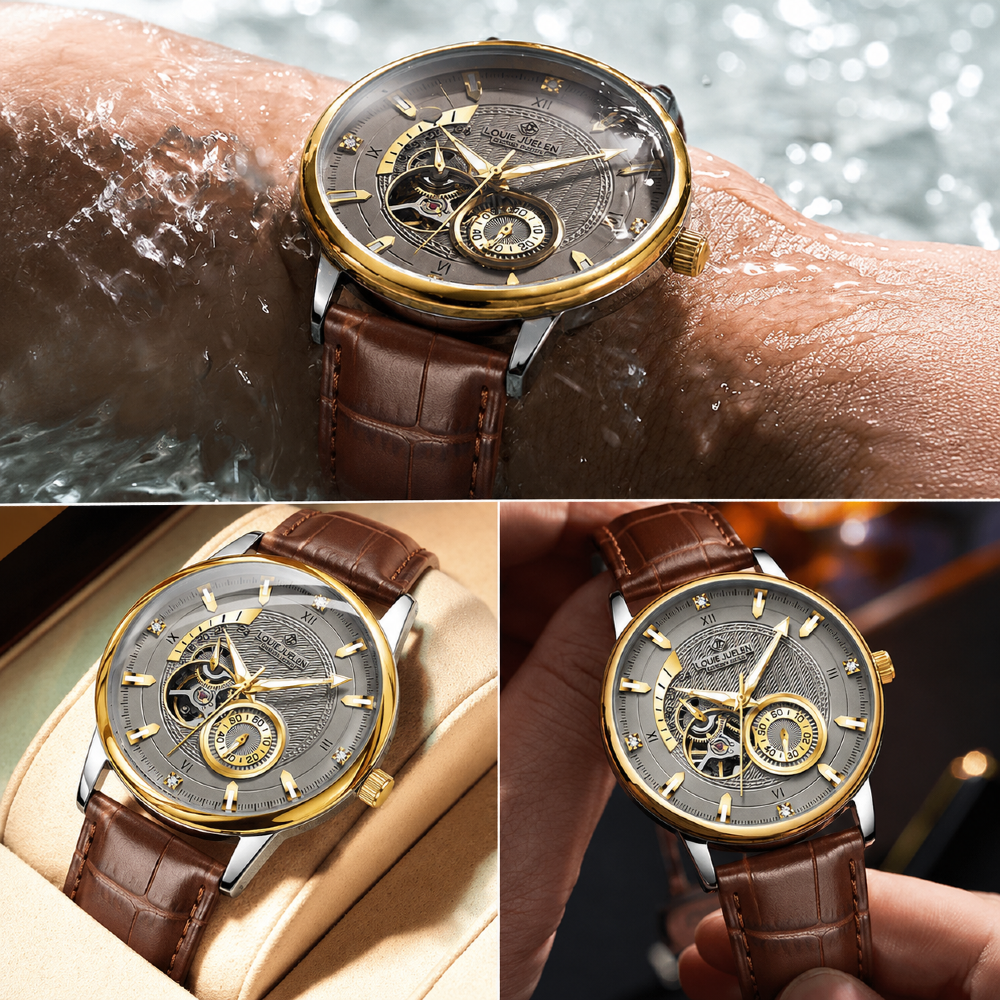
Louis Juelen Luxury Automatic(Tourbillion ) Premium Watch
Automatic Watch Winder
₦85,000
₦150,000

Poedagar Chronograph Luxury Watch
Free 24ml luxury Roll On oil perfume
₦45,000
₦65,000

Louis Juelen Automatic Chain Strap
Automatic Watch Winder
₦140,000
₦250,000