


Halo Hair Extensions: Full, Long Hair in Two Minutes
You have twenty minutes before you need to be out of the door, hair still looking thin and flat, and no time for a full sew-in or a wig install. This is exactly the gap halo hair extensions were built to fill. One weft, one thin wire, and you go from "just okay" to full, long hair in roughly the time it takes to boil a kettle.
Here is the truth about most extension methods: they demand a trade-off. Clip-ins mean ten to fifteen minutes of sectioning. Sew-ins mean hours in a chair and weeks of commitment. Glue and tape-ins mean chemicals sitting close to your scalp. Halo extensions were designed to remove that trade-off almost entirely, and that is why they have quietly become one of the fastest-growing extension categories for women who want length and volume without the labour.
What Are Halo Hair Extensions and How Do They Work
Halo hair extensions are a single, continuous weft of hair attached to a thin, nearly invisible wire that rests on your head like a headband, sitting just above your natural hairline and under the crown. You do not clip it into your strands or glue it to your scalp. Instead, the wire itself carries the weight of the hair, and your own hair is combed over the top to hide the band completely.
The mechanism is refreshingly simple:
- The wire sits on your crown, positioned about an inch back from your natural hairline, resting where a hairband would sit.
- Two small clips, placed roughly 1.5 inches from each end of the weft, secure the halo lightly at your temples so it does not shift.
- Your natural hair is combed over the wire, and because the wire is made from a thin, semi-transparent nylon or elastic cord, it disappears once your own hair covers it.
Because nothing is clamped onto your individual strands and nothing is glued to your scalp, the hair extension simply rests on top of your head rather than pulling from it. That is the whole trick behind why people can put it on, blend it, and walk out the door.
Why Halo Extensions Are the Fastest Way to Long, Full Hair
A halo extension can be applied in about one to two minutes because it involves placing a single pre-attached weft on your crown and combing your natural hair over it, compared with the ten to fifteen minutes needed to section and clip in a full set of individual wefts. There is no parting into six or seven sections, no clip-by-clip placement, and no risk of missing a spot near your nape.
To put one on properly:
- Hold the wire by both ends and gently place it on your head like a crown, letting it rest just behind your hairline.
- Adjust the position so the weft sits evenly across the back of your head, not too far forward or too far to one side.
- Secure the two side clips at your temples for extra hold, especially if you plan to be active.
- Comb your natural hair over the wire in small sections, working from the front back, until the band is fully hidden.
- Blend the ends with a light curl or wave so your natural hair and the halo hair move together.
That is genuinely the entire process. No heat is required to install it, though a light curl afterward helps the join disappear.
Who Should Wear a Halo, and Who Should Skip It
Halo hair extensions suit women with shoulder-length or longer natural hair who want more length and volume without any daily clipping or long-term commitment, but they are not the right pick for very short hair or styles worn mostly in high ponytails. The general rule quoted by extension specialists is that you need at least 6 to 8 inches of natural hair to fully cover the wire and get a seamless blend. If your hair sits above your shoulders, the band is likely to peek through no matter how carefully you comb it over.
Halo extensions are a strong match if:
- You have fine or thinning hair and want extra fullness without the tension of clips or the tugging of a sew-in.
- You need a quick fix for an event, a wedding guest look, a photo shoot, or a night out, and do not want to commit to a full install.
- You wear your hair down or in loose styles most of the time, since the wire is easiest to hide when hair falls naturally over the crown.
- You want an extension you can take on and off daily without paying for repeated salon visits.
A halo is not ideal if you live in high ponytails, sleek buns, or middle-parted styles that expose the crown, because the wire has nowhere to hide in those looks. If that is your go-to style, a clip-in set or a full wig from our shop will serve you better.
Halo Extensions Compared to Other Popular Methods
Picking the right extension type comes down to how much time you have, how often you want to wear it, and how much hair health matters to you right now. The table below lines up halo extensions against the other methods you are most likely weighing them against.
| Method | Application time | Hair damage risk | Best for | Typical wear |
|---|---|---|---|---|
| Halo extensions | 1 to 2 minutes | Very low, no clips or glue on strands | Quick length and volume, events | Day wear, removed nightly |
| Clip-in extensions | 10 to 15 minutes | Low to moderate with frequent use | Styling flexibility, colour pops | Day wear, removed nightly |
| Sew-in weave | 2 to 4 hours (salon) | Moderate, tension on braided tracks | Long-term protective styling | 6 to 8 weeks |
| Glueless wig | 5 to 10 minutes | Very low | Full coverage, changing styles often | Day wear, removed nightly |
| Tape-in extensions | 1 to 2 hours (salon) | Moderate, adhesive on scalp area | Seamless long-term wear | 6 to 8 weeks |
If your priority is speed and zero commitment, the halo wins outright. If you want to switch colours and lengths for different looks in the same week, clip-ins give you more pieces to play with. And if you want your whole head covered with a natural parting and hairline, a quality human hair wig is still the better tool for the job.
Choosing the Right Halo: Texture, Length and Colour
Getting a halo that blends invisibly starts with matching it to your natural hair rather than picking whatever length looks prettiest online. Match the texture first, since a straight halo dropped onto naturally wavy or coily hair will always show a visible line where the two textures meet, no matter how good the wire is.
A few practical pointers:
- Match texture before length. A silky straight halo on straight relaxed or silk-pressed hair blends instantly. If your natural hair has body wave or a light curl, look for a halo with the same pattern, or plan to flat iron both your natural hair and the weft to the same finish before wearing it.
- Buy slightly darker rather than slightly lighter. Hair extensions often look a shade lighter once they catch the light, so a colour that matches your natural shade under the shop's lighting can read a touch lighter once you are outdoors.
- Choose length based on where you want the drama. A 16 to 18 inch halo adds noticeable length and a fuller silhouette without overwhelming shoulder-length natural hair. Anything past 20 inches works best if your own hair is already mid-back or longer, so the join near your nape stays hidden.
- Pick 100% human hair over synthetic if you want to curl, straighten, or blow-dry it alongside your natural hair. Synthetic wefts cannot handle heat tools and will not move or shine the same way against real hair.
Fitting, Adjusting and Wearing the Wire Correctly
A halo that fits well should sit snugly on your crown without pinching, and it should not shift or slide when you shake your head gently. Most halos come with an adjustable wire, and getting the size right the first time saves you from constant repositioning later.
To adjust the fit:
- Locate the small stopper or knot near one end of the wire.
- Gently pull the loose end of the wire through the stopper to tighten the loop, or loosen it to widen the loop, until the band sits comfortably against your head without gaps.
- Test the fit by shaking your head lightly. If it moves, tighten it slightly further.
- Position the wire about an inch behind your hairline for the most natural coverage, then comb your hair over it.
Avoid pulling the wire too tight, since that puts pressure across your crown and can cause a mild headache by the end of the day, the same way a too-tight headband would.
Caring for Your Halo So It Lasts
A well cared for human hair halo can last 9 to 12 months with light, occasional wear, or closer to 6 months if you wear it daily and use heat tools often. Because the hair itself is real human hair, it responds to the same gentle treatment as your wigs and bundles.
Keep it looking new with these habits:
- Wash sparingly. Extensions loosen and shed faster with over-washing, so aim to shampoo every few weeks rather than every wash day, using a sulfate-free formula.
- Brush before you wash, not after. Use a soft, wide-tooth extension brush and start from the ends, working upward to avoid stressing the wire attachment point.
- Skip the heavy oils on the weft itself. Oils and silicones can build up around the wire and make it slide, so keep styling products on the mid-lengths and ends.
- Take it off before bed. The halo is designed for day wear. Sleeping in it stresses the wire and tangles the hair against your pillow.
- Store it flat or hanging, never balled up in a drawer, to stop the weft from matting between wears.
- Keep heat tools on the lower end, and always use a heat protectant, exactly as you would with your own strands.
If you want the effortless volume without buying a separate piece to maintain, our team can also help you match a halo to a full wig or bundle set so your whole collection stays one consistent colour and texture.
Frequently Asked Questions
Do halo hair extensions damage your natural hair?
No, when worn and removed correctly, halo extensions carry their own weight on the wire rather than gripping your strands, so they do not pull on your roots or cause traction damage the way tight clips or braided sew-ins can over time.
Can you wear halo hair extensions in a high ponytail or bun?
Not comfortably. Because the wire needs your natural hair combed over it to stay hidden, pulling everything up and back exposes the crown and the band, so halos work best with hair worn down or in loose, low styles.
How much natural hair length do I need for a halo to blend well?
Most stylists recommend at least 6 to 8 inches of natural hair, roughly shoulder length, so you have enough hair to comb fully over the wire without the band showing through at the crown.
How long do halo hair extensions actually last before they need replacing?
A genuine human hair halo, washed sparingly and stored properly, typically lasts 9 to 12 months with occasional wear, though daily wear and frequent heat styling will shorten that to around 6 months.
Featured in our collection
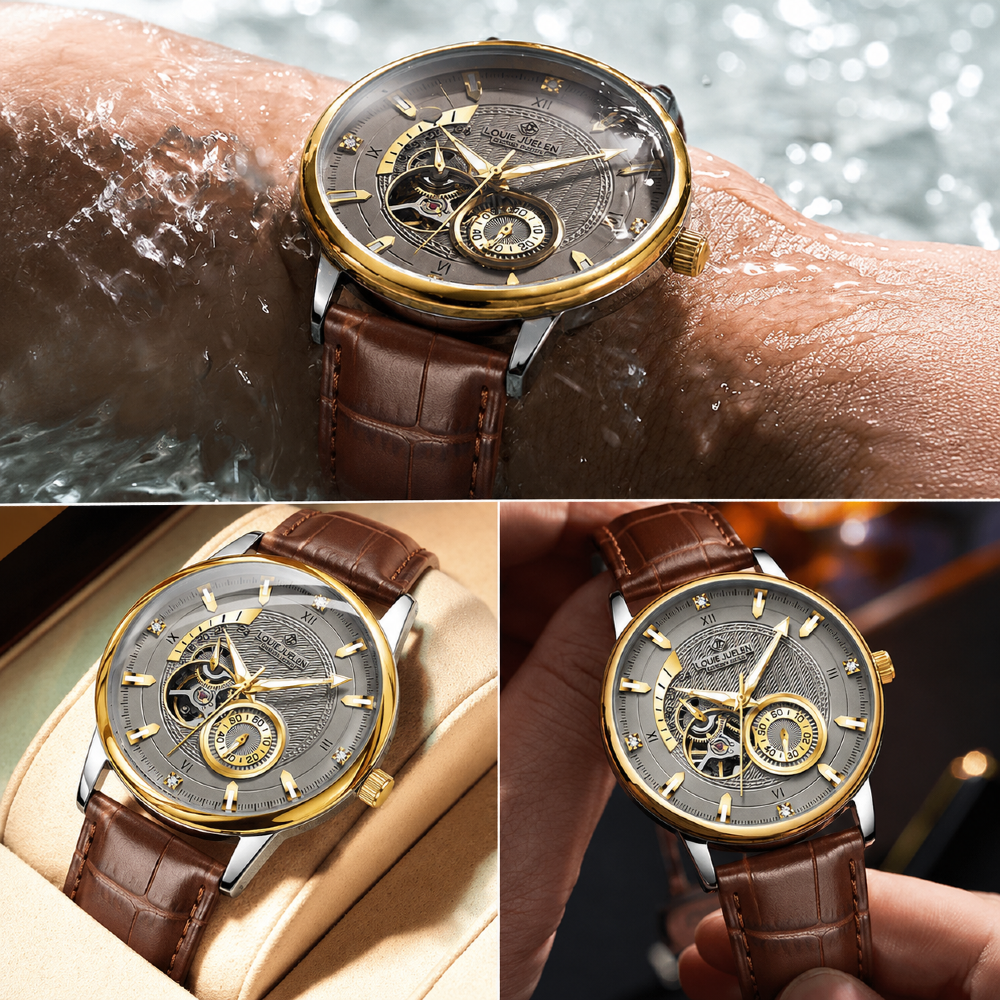
Louis Juelen Luxury Automatic(Tourbillion ) Premium Watch
Automatic Watch Winder
₦85,000
₦150,000

Poedagar Chronograph Luxury Watch
Free 24ml luxury Roll On oil perfume
₦45,000
₦65,000

Louis Juelen Automatic Chain Strap
Automatic Watch Winder
₦140,000
₦250,000