


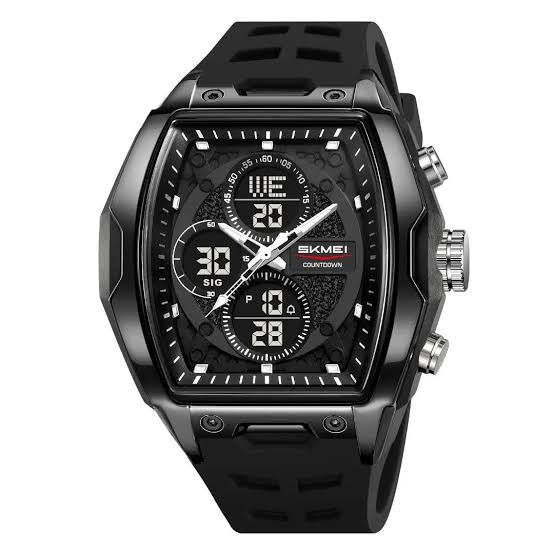


Day-Date Watch vs Date-Only Watch: Which One Is Actually More Practical?
You glance at your wrist to check the time and your eyes land on a tiny window showing "17". Helpful, but it does not tell you if today is a Monday you can still fix or a Friday you can finally relax into. That small frustration is exactly why the day-date watch exists, and it is also exactly why some of the most seasoned collectors still prefer to leave that extra window off their dial entirely.
Here is the truth about this debate. Both formats are excellent. Neither is objectively better. What matters is how you actually live, work and travel, and which small daily habit annoys you more: forgetting what day it is, or resetting a complication every time your watch sits in a drawer for a weekend. Let's settle this properly, factor by factor, so you buy the one that will still feel right on your wrist five years from now.
What Is a Day-Date Watch and How Does It Actually Work
A day-date watch is a timepiece that displays both the day of the week and the numerical date, usually through two small windows on the dial, and both indications update automatically as the hours pass. Underneath the dial sit two separate discs, one that completes a full rotation every seven days for the day of the week, and one that completes a full rotation roughly every 31 days for the date. The movement is engineered so both discs jump forward at, or very close to, midnight, giving you a complete daily snapshot without touching the crown.
This complication became famous through the Rolex Oyster Perpetual Day-Date, introduced in 1956 as the first self-winding wristwatch to spell the day fully across the dial rather than abbreviating it. It earned the nickname "the President" for its association with world leaders, and Rolex eventually offered the day disc in as many as 26 languages, from English and French to Arabic and Japanese. A date-only watch, by contrast, keeps things to a single window, almost always at the 3 o'clock position, showing just the numerical date and nothing else.
Setting and Adjusting: Where the Real Practicality Gap Shows Up
The biggest practical difference between these two formats is not on the dial, it is in your hands every time you correct the time. A date-only watch is fast to reset because you are only ever managing one disc, while a day-date watch demands more patience because two discs must land correctly and, on older or simpler calibres, one may only advance by pushing the hour hand past midnight repeatedly.
This is where "quickset" technology matters more than most buyers realise. Early day-date calibres had no shortcut at all, meaning you cycled the hands through actual midnights to bump the date forward. By the late 1970s, watchmakers introduced single quickset systems that let you jump the date independently of the time, but the day of the week still required cranking the hands around a full 24 hour cycle to change. It was not until the 1990s that double quickset movements arrived, letting you adjust day and date completely independently through the crown positions.
To fix this in practice, here is what actually happens on a modern double quickset day-date watch:
- Pull the crown to the first position to independently correct the date with quick, small crown turns.
- Pull the crown to the same or a dedicated position to cycle the day of the week without moving the hands.
- Pull to the final position to set the actual time, being careful to note whether it is AM or PM, since the date changes at midnight, not noon.
- Avoid making date corrections between roughly 9pm and 3am, because the date-change gears are already mid-cycle and forcing a manual jump here can damage the movement.
A date-only watch skips two of those four steps entirely. If you travel often, hand your watch off to be worn by someone else occasionally, or simply forget to wind an automatic over a long weekend, that difference adds up fast.
Month-End Corrections: The Complication Both Formats Share
Neither format escapes one small chore, because no mechanical date disc naturally understands that April has 30 days instead of 31, so both day-date and date-only watches need a manual nudge at the end of short months. On a standard non-perpetual calendar, you will need to push the date forward by hand after every month with fewer than 31 days, which happens seven times a year. This is not a flaw unique to the day-date complication, it is simply the nature of any calendar watch that is not a full perpetual calendar, and it is worth knowing before you assume either style is entirely "set and forget."
Legibility and Dial Symmetry
A date-only watch usually keeps its dial cleaner and easier to read at a glance, since it interrupts the hour markers in only one spot, while a day-date watch fills two windows and can crowd a smaller case. Brands typically place the day window at 12 o'clock and the date at 3 o'clock on classic day-date designs, which actually restores a kind of symmetry once you get used to reading both. Some wearers find a single date window barely registers as a design element at all, while a fully spelled out day like "WEDNESDAY" arcing across the top of the dial becomes a genuine visual signature, which is part of why the format became so associated with status and formality in the first place.
If your eyesight already struggles with a small date window, look for models with a cyclops lens, the small magnifying bubble on the crystal that Rolex introduced back in 1948 after its founder's wife complained she could not read the date on her own watch. That 2.5 times magnification helps enormously on both date-only and day-date pieces, so do not assume you must choose between legibility and a day-date function. You can usually have both.
The Comparison at a Glance
Here is how the two formats stack up across the factors that actually affect daily wear, rather than just spec-sheet bragging rights.
| Factor | Day-Date Watch | Date-Only Watch |
|---|---|---|
| Information shown | Day of week plus numerical date | Numerical date only |
| Setup complexity | Higher, two discs to align, some vintage calibres need double midnight cycling | Lower, single disc, usually one quickset correction |
| Dial appearance | Bolder, more formal, can feel busier on smaller cases | Cleaner, more minimal, easier at a glance |
| Best worn for | Business, formal events, gifting and legacy pieces | Daily rotation, active lifestyles, layering under cuffs |
| Typical price position | Usually a premium tier within a brand's range | Usually the more accessible calendar option |
| Servicing | Slightly more parts to inspect, marginally higher service attention | Simpler movement, generally quicker service turnaround |
| Month-end correction needed | Yes, on non-perpetual calendars | Yes, on non-perpetual calendars |
Cost, Status and Long-Term Value
A day-date watch almost always sits at a higher price point than its date-only sibling within the same collection, because the additional disc, jumping mechanism and often the fully spelled-out day text demand more finishing and assembly time. This is exactly why the format has carried an association with achievement and formality for decades, worn to seal boardroom deals rather than to check off a gym session. If you are buying your first serious watch and want the widest possible use across work, weekends and travel, a date-only piece stretches your budget further and gives you a timepiece you will reach for every single day without a second thought.
If, however, you are marking a genuine milestone, a promotion, a graduation, an anniversary, the day-date format carries a weight and presence that a simple date window cannot match. It reads as intentional, as an investment in a complication you value enough to learn and maintain. Explore our day-date and calendar watch collection here to compare both formats side by side before you decide.
Which Lifestyle Actually Suits Each Format
Think honestly about your week rather than the watch you wish you wore. A date-only watch suits you if you swap watches often, travel across time zones regularly, or simply want the fastest possible reset when the power reserve runs down. A day-date watch suits you if you wear one watch consistently, value the formal presence it brings to a boardroom or a wedding, and do not mind spending an extra thirty seconds on setup once in a while.
- Choose day-date if you want one statement piece for meetings, ceremonies and gifting occasions.
- Choose date-only if you rotate several watches through the week or prioritise a clean, minimal dial.
- Choose day-date if the day-of-week language options (many brands offer local scripts) matter to your personal style or heritage.
- Choose date-only if you are buying your very first proper watch and want maximum versatility per naira spent.
Whichever way you lean, quality construction matters more than the complication itself. A day-date function built on a cheap movement will drift and misalign faster than a well-made date-only piece, so prioritise a trusted, well-finished timepiece over here rather than chasing the complication alone.
Caring for Either Complication So It Lasts
Both formats reward the same basic habits, so treat the calendar mechanism with a little respect and it will serve you for decades. Wind automatics fully before setting the date, since a weak power reserve can cause discs to jump inconsistently. Never force a date or day correction during the midnight changeover window, as the internal gears are already engaged and meshing them further can bend a tooth or snap a jumper spring. Have any calendar watch serviced roughly every three to five years by someone experienced with its specific movement, since disc alignment is one of the more delicate adjustments a watchmaker makes. If you travel across time zones frequently, remember that pulling the crown all the way out to adjust hours can sometimes trigger the date to jump unexpectedly near midnight, so check the current date after any big time zone correction.
For a gift that leans on the format's prestige without straining a budget, browse our full watch collection for men and women here and look specifically at pieces described as day-date or full calendar, since retailers usually flag the complication clearly in the listing.
Frequently Asked Questions
Does a day-date watch cost more than a date-only version of the same model?
Yes, almost always. The extra disc, the jumping mechanism, and the finishing work needed to display a fully spelled day of the week add cost within nearly every brand's lineup, so expect the day-date version to sit a tier above its date-only sibling.
Can I set the day of the week without moving the time forward a full 24 hours?
On modern double quickset movements, yes, you can adjust the day independently through a dedicated crown position. Older single quickset or non-quickset calibres often require cycling the time forward through an actual midnight to advance the day disc.
Is a day-date watch harder to service than a date-only watch?
It has more moving parts to inspect and align, so servicing can take marginally longer and cost a little more, but neither format is considered high-risk or unusually fragile when maintained by someone who knows the movement.
Which is better for a daily work watch, day-date or date-only?
For most people who wear one watch every day across meetings, commutes and errands, a date-only watch is more practical because it resets faster and keeps a cleaner dial, while a day-date watch shines more as a statement piece for formal or special occasions.
Featured in our collection
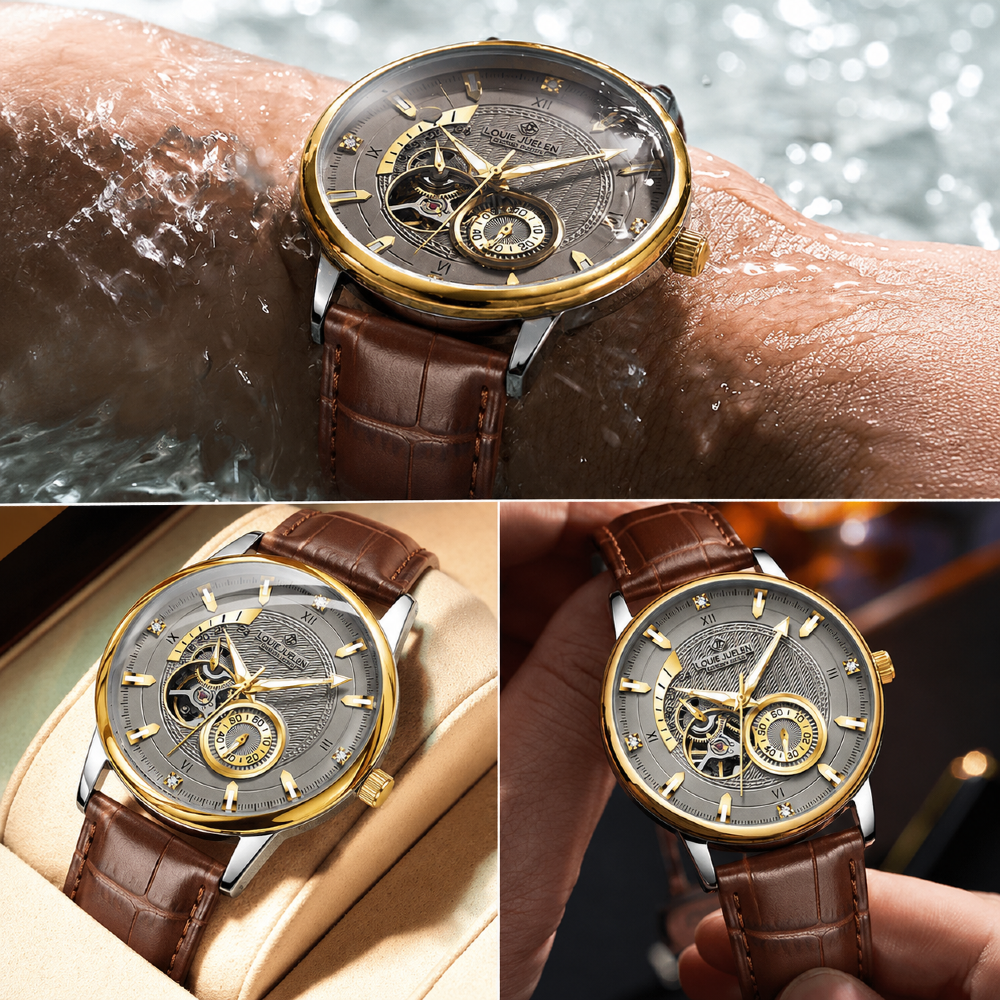
Louis Juelen Luxury Automatic(Tourbillion ) Premium Watch
Automatic Watch Winder
₦85,000
₦150,000
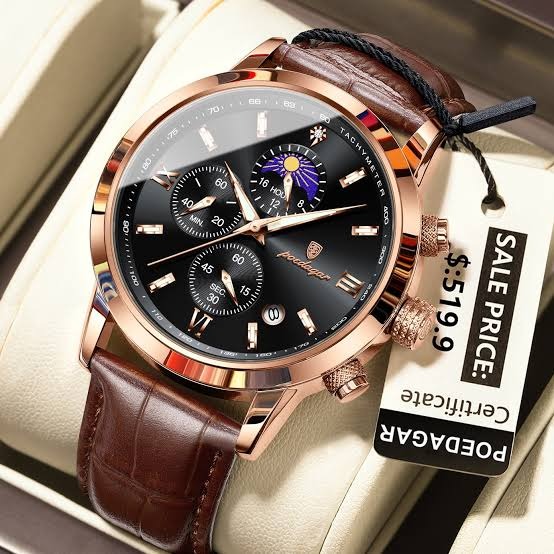
Poedagar Chronograph Luxury Watch
Free 24ml luxury Roll On oil perfume
₦45,000
₦65,000

Louis Juelen Automatic Chain Strap
Automatic Watch Winder
₦140,000
₦250,000
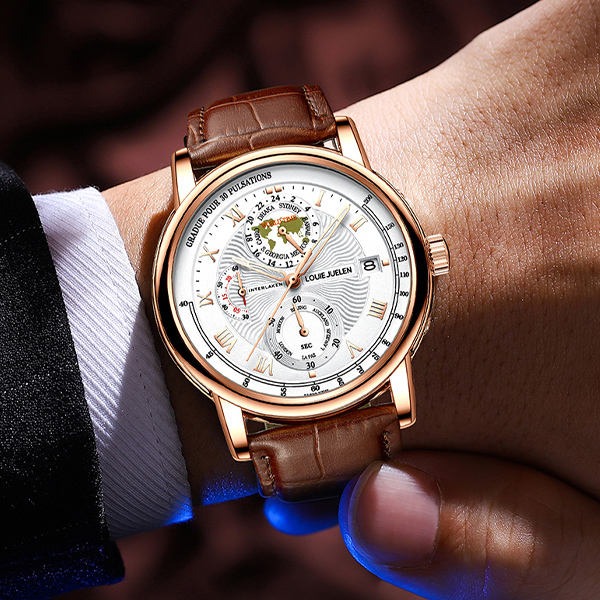
Louis Juelen Luxury Chronograph Leather Watch
Free 24ml luxury Roll On oil perfume
₦55,000
₦85,000