

What to Wear to a Nigerian Wedding: Hair, Watch and Jewellery
There are two ways to get an owambe wrong, and both sting. You either underdress and spend the whole reception feeling like the help beside a hall full of women in beaded lace and towering gele, or you overspend on the outfit and forget that the head, the wrist and the neckline are what actually finish a look. A Nigerian wedding is a fashion event first and a ceremony second. The clothes are the easy part. What you put on your head, around your neck and on your wrist is what separates "she came" from "did you see her?"
This is the honest, head-to-wrist styling guide for anyone asking what to wear to a Nigerian wedding as a guest. We will talk hair and wigs, statement jewellery, and the one accessory the men consistently underestimate: a proper dress watch.
What to wear to a Nigerian wedding as a guest: the non-negotiables
The rule for what to wear to a Nigerian wedding is simple: dress up, never down, and never wear white unless the couple asks for it. Owambe is high glamour, so floor-length gowns, rich lace, brocade, aso oke and a well-tied gele are the baseline. When in doubt, overdress. You genuinely cannot be too glamorous here.
Before you shop a single accessory, sort two things.
- Aso ebi. This is the "family cloth" the couple selects and sells to close friends and relatives. You buy the fabric, take it to your tailor, and sew your own style from it. Everyone in the same cloth reads as one family in the photos. If you have been offered aso ebi, that fabric decides your palette.
- Colour of the day. Many couples also announce a colour for guests who are not in aso ebi. It keeps the hall cohesive on camera. Always ask, because turning up off-brief is the fastest way to feel out of place.
And the one rule with no exceptions: white belongs to the bride. Cream, ivory and off-white can all read as disrespectful. Unless the dress code specifically calls for white, leave it in the wardrobe.
Wedding guest wig and gele: getting the hair right
For hair, the winning owambe formula in 2026 is a glueless frontal wig paired with a gele, or a polished standalone wig when you want to skip the headwrap. A frontal or glueless unit gives you a clean hairline, movement and volume that survives a long day, and it sits comfortably under a gele without the stress of glue in the heat.
Here is the truth about hair at a Nigerian wedding: the celebration is long, the hall is warm, and your style has to look as fresh at 8pm as it did when you walked in. That is why so many guests have moved to wigs. You install once, you look flawless all day, and you are not fighting your edges by the time the cake comes out.
Wearing a wig under a gele
A gele is practically a requirement at a traditional Nigerian wedding, tied high and sculptural. If you plan to wear one, choose your wig for what shows, not what hides.
- Length and body over a big blow-out. Only the length below the gele is on display, so a wig with beautiful ends, a straight bob, body-wave or a soft curl reads best.
- Go flatter at the crown. A wig with a lot of crown volume fights the gele. A sleeker cap or a middle-part style tucks under neatly.
- Match the tone to your jewellery, not just your outfit. A warm honey or jet-black unit next to gold beads photographs richer than a mismatched shade.
- Consider an auto-gele. A pre-tied auto-gele slips over a finished wig with no pins and no drama, which is a gift if you are not confident tying your own.
Wearing a wig on its own
Skipping the gele is completely acceptable at the reception and at more modern, "white wedding" style events. When the wig is the whole story, invest in the hairline. A glueless HD or frontal unit with a realistic parting, styled in a sleek centre part, a bouncy blow-out or Old-Hollywood waves, carries a formal gown beautifully. Lay it, style the ends, and let a statement earring do the rest.
Statement jewellery for owambe: coral, gold and knowing when to stop
For jewellery, statement gold and traditional coral beads are the heart of owambe styling. Layered coral bead necklaces accented with gold sit at the neckline of Yoruba, Igbo, Edo and Benin looks, while bold gold statement pieces suit modern gowns. The rule that keeps you elegant rather than loud: let one area shout, and keep the rest quiet.
Coral is the cultural anchor. Multi-row coral bead sets, often finished with gold-tone beads and metallic chains, are a signature of Nigerian traditional dressing and come as coordinated necklace, bracelet and earring sets. For a traditional outfit or aso oke, a layered coral choker or a cascading multi-row piece is the move.
For a lace gown or a modern silhouette, lean into statement gold: a bold collar, chandelier earrings, or stacked bangles. Gold flatters most aso ebi palettes and photographs warm under hall lighting.
The discipline is in the edit:
- Pick your hero. A dramatic collar necklace means smaller earrings. Chandelier earrings mean you drop the necklace, especially if your gele already frames the face.
- Stack with intention. Bangles look richest in a considered stack on one wrist, not scattered evenly.
- Mind the neckline. A high or beaded neck wants earrings and bangles, not a competing necklace. A clean scoop or off-shoulder is where a coral collar earns its keep.
- Metals should agree. Keep to a gold family across neck, ears and wrist so nothing clashes in photos.
The head-to-wrist styling cheat sheet
Here is the quick reference to coordinate the whole look before you leave the house.
| Element | If you're in aso ebi / traditional | If you're in a modern gown | Watch-out |
|---|---|---|---|
| Hair | Frontal wig under a high gele; sleeker crown | Glueless HD wig, centre part or waves, worn solo | Only style what shows below the gele |
| Gele | Statement, sculptural; or auto-gele over a wig | Optional; skip it at the reception | Don't pile crown volume under a gele |
| Neck | Layered coral, gold-accented | Bold gold collar on a clean neckline | One hero piece per look |
| Ears | Coral or gold studs if the gele is dramatic | Chandelier earrings if you skip the necklace | Never max out neck and ears together |
| Wrist (her) | Stacked gold bangles on one arm | A slim gold cuff or dress watch | Keep to one metal family |
| Wrist (him) | Thin dress watch on leather, gold or two-tone | 38–40mm dress watch, matched to cufflinks | Don't mix metals with the cufflinks |
What men wear to a Nigerian wedding: the watch does the talking
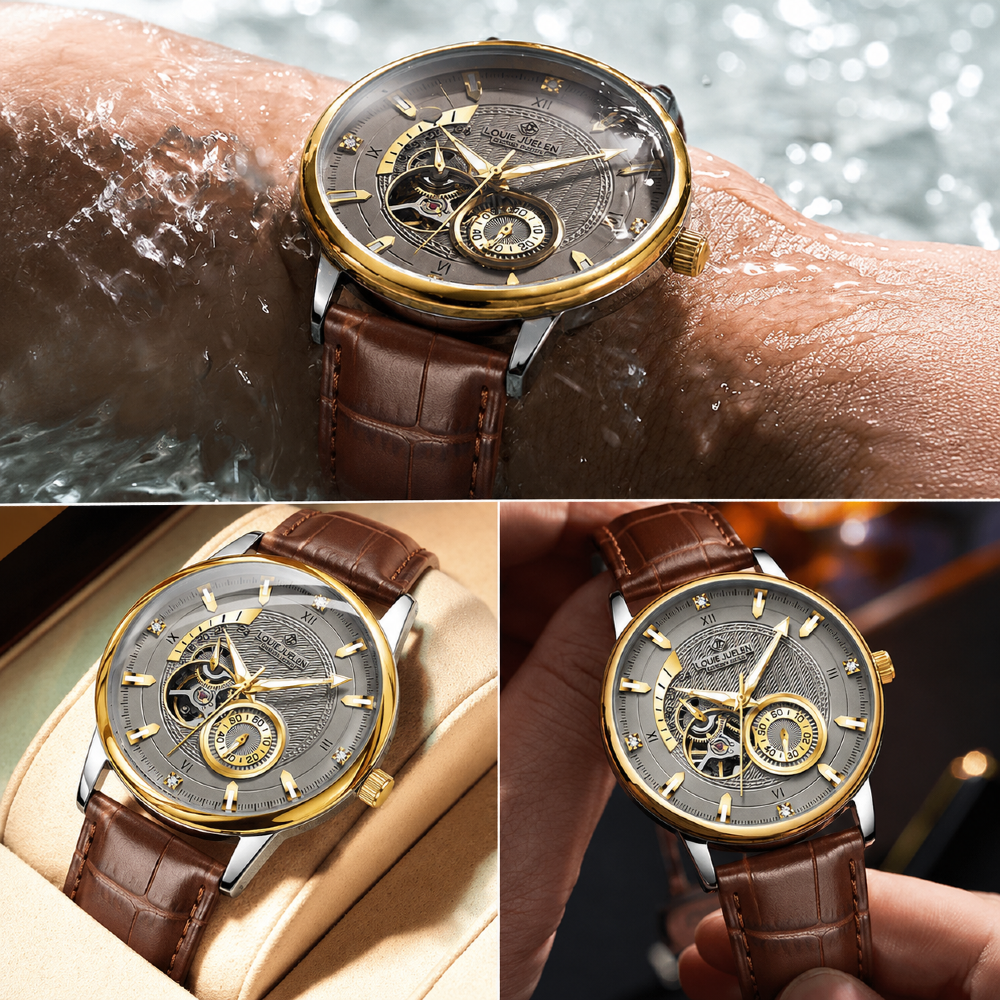
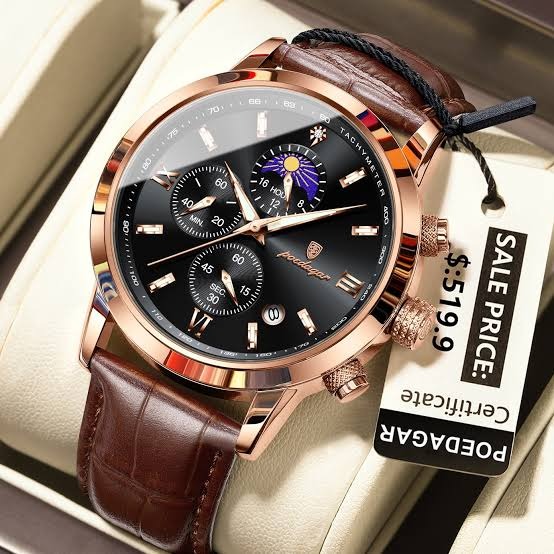
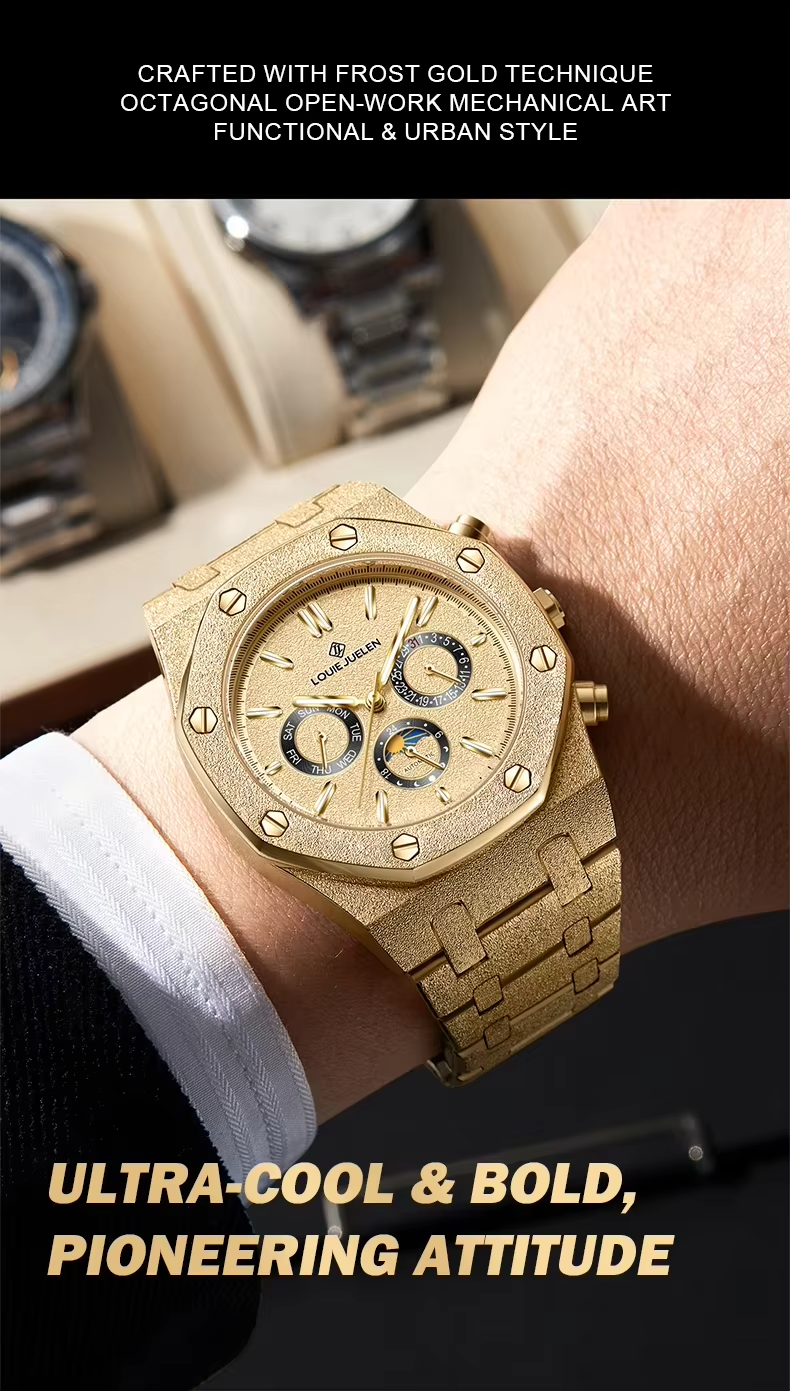
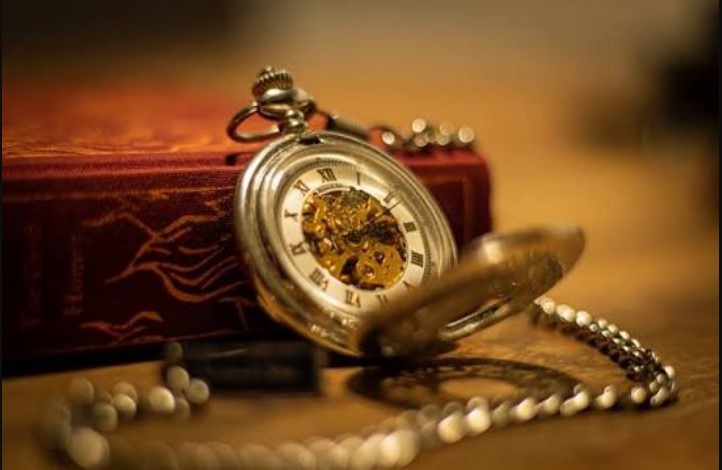
For the men, a Nigerian wedding calls for a slim dress watch, roughly 38 to 40mm, on a leather strap, in a metal that matches your cufflinks. Whether you are in agbada, a kaftan or a tailored suit, the watch is the one accessory guests actually read as a sign of taste. Keep it thin, keep it clean, keep it coordinated.
The specifics that matter:
- Case size. Classic dress watches run 34 to 38mm; modern taste sits at 36 to 40mm. Aim for around 38mm and stay under 40mm for a genuinely dressy wrist.
- Thin over chunky. A dress watch should be slim enough to slide under a cuff. Save the big diver for another day.
- Leather, usually. A clean leather strap, black calf as the safe default, reads more formal than a bracelet.
- Match your metals. Don't mix metals when you accessorise. Silver cufflinks want a steel watch; gold hardware wants a gold or two-tone case. Two-tone steel-and-gold is the flexible pick that works either way, which suits the gold-forward palette of most owambe.
Heat, hours and comfort: dressing for a long celebration
Owambe runs long and the halls run warm, so choose pieces that hold up. A pre-installed wig beats a fragile fresh style you have to baby all day. Coral and gold don't wilt. And a lightweight watch on a breathable strap keeps a man comfortable through the agbada hours. Plan for stamina, not just the entrance.
Give yourself runway, too. Aso ebi and gele styling take coordination, and stylists recommend planning attire well in advance, often months out for a wedding party. Book your hair install and lock your accessories early rather than scrambling the night before.
Frequently asked questions
What should I wear to a Nigerian wedding if I wasn't given aso ebi?
Wear a glamorous floor-length gown in rich lace, brocade or a similar elegant fabric, and check whether the couple announced a "colour of the day" to match. Finish with a gele or a polished wig and statement gold jewellery. Just avoid white, cream and ivory, which are reserved for the bride.
What wig is best for a wedding guest wearing a gele?
A glueless frontal wig with body or a soft wave is ideal under a gele, because only the length below the headwrap shows. Choose a style with a flatter crown so the gele sits neatly, and skip heavy crown volume. If you would rather not tie a gele yourself, an auto-gele slips over a finished wig with no pins.
What jewellery goes with aso ebi and traditional outfits?
Layered coral beads accented with gold are the traditional signature for Yoruba, Igbo, Edo and Benin looks, usually as a matching necklace, bracelet and earring set. For a modern gown, bold statement gold, a collar necklace or chandelier earrings, works beautifully. Let one piece lead and keep your metals in the same family.
What watch should a man wear to an owambe?
A slim dress watch around 38 to 40mm on a leather strap, in a metal that matches his cufflinks. Two-tone steel and gold is the most flexible choice for owambe's gold-heavy palette. Keep the case thin and understated so it reads as quiet confidence rather than flash.