



What Do the Jewels in a Watch Mean? Movement Basics Explained
You buy a mechanical watch, turn it over, and there it is printed on the dial or engraved on the case back: 21 jewels, or maybe 25 jewels. For years this number has confused shoppers who assume it points to real gemstones packed inside a luxury piece. It does not. Those jewels are a quiet piece of engineering, and once you understand them, you read a watch spec sheet with far more confidence. This guide walks a Nigerian buyer through what the jewels in a watch mean, where they sit, how many a good movement needs, and whether a higher number is worth paying more for.
What Are the Jewels in a Watch?
The jewels in a watch are tiny synthetic rubies or sapphires used as hard, low-friction bearings at the exact points where the movement's gears and pivots turn. They are not decorative and they hold no resale value. They are functional bearings, chosen because the material is extremely hard and wears down very slowly over decades of use.
Most people picture emeralds and diamonds glued on for show. The reality is far more practical. Inside a mechanical movement, dozens of small metal parts spin against each other thousands of times an hour. Metal rubbing on metal creates friction, and friction creates heat, wear, and lost accuracy. A watchmaker solves this by seating the fastest-moving pivots inside little polished stones instead of plain metal holes.
These stones are almost always synthetic ruby or sapphire, grown in a lab rather than mined. Lab-grown corundum is chemically identical to the natural gem and sits at 9 on the Mohs hardness scale, just below diamond. That hardness is the whole point. A ruby bearing barely wears, keeps a smooth polished surface, and lets the pivot spin with very little resistance. Because they are synthetic, they cost almost nothing, so a 25-jewel watch is not expensive because of the jewels themselves.
Watch Movement Explained: Where the Jewels Actually Sit
To understand the jewels, you first need a simple map of a mechanical movement. Power flows through four main stages: the mainspring stores energy, the gear train carries it, the escapement releases it in controlled steps, and the balance wheel counts time. The jewels sit at the busy pivot points along that path where friction would otherwise do the most damage.
Here is the chain in plain language, the way the parts pass energy from one to the next.
- The mainspring: A coiled ribbon of spring steel housed in a barrel. When you wind the crown or when an automatic rotor spins, you tighten this spring. It slowly releases stored energy, which is what powers the whole watch.
- The gear train: A series of meshing wheels that carry the mainspring's energy across the movement. The gear train also steps the speed up and down so the hands move at the right pace, and it is where several jewels reduce wear on the fastest wheels.
- The escapement: Made of the escape wheel and the pallet fork, this is the part that makes the ticking sound. It locks and releases one tooth of the escape wheel at a time, letting energy out in tiny, even portions instead of all at once. Without it the mainspring would unwind in seconds, like a wound-up toy car let go.
- The balance wheel and hairspring: The timekeeping heart. The balance wheel swings back and forth at a steady rate, held in tension by an ultra-thin coiled hairspring. Its regular oscillation is what actually measures the passing seconds. This assembly turns on jewels top and bottom because it moves constantly.
The most important jewels cluster around the balance wheel and the escapement, because those parts never stop moving while the watch runs. Jeweling the pivots of the balance staff, the pallet fork, and the escape wheel is where the friction savings matter most. That is why even a basic quality movement puts its first stones exactly there.
How Many Jewels Should a Watch Have?
A well-designed mechanical watch generally needs between 17 and 25 jewels. Seventeen jewels is the classic standard for a hand-wound movement, covering every essential pivot from the centre wheel to the balance staff. Automatic watches add a few more, usually landing at 21 to 25, to jewel the extra winding parts that a self-winding rotor brings.
The logic is simple once you see it. Each jewel earns its place by protecting a specific moving part. A hand-wound watch has a fixed set of pivots to protect, so 17 jewels historically covered all of them well. When you add automatic winding, the rotor and its reduction gears introduce new fast-moving pivots, so brands add jewels to handle that constant motion as your wrist swings through the day. That is how a typical automatic reaches 21 or 25 jewels.
Quartz watches sit at the other end. A quartz movement keeps time with a battery and a vibrating quartz crystal, so it has very few moving mechanical parts. With little friction to manage, many quartz watches carry only a handful of jewels or none at all, and they still keep excellent time. A low jewel count on a quartz piece is normal and says nothing bad about quality.
21 vs 25 Jewels: Is There a Real Difference?
For most buyers, the difference between 21 and 25 jewels is minor and comes down to specific design choices rather than one being clearly better. Both counts are well suited to an automatic watch. The extra four jewels in a 25-jewel calibre usually protect additional points in the automatic winding train or a date and calendar module, not something you feel day to day.
This table lays out the common jewel counts and what they usually signal, so you can read a spec sheet at a glance.
| Jewel count | Typical movement type | What it usually means |
|---|---|---|
| 0 to 7 jewels | Quartz | Battery-powered with few moving parts, so few or no jewels are needed. Perfectly normal. |
| 17 jewels | Hand-wound mechanical | The classic standard. Covers all essential pivots in a manual movement. |
| 21 jewels | Automatic | 17 core jewels plus extra stones for the self-winding rotor and setting works. |
| 25 jewels | Automatic, often with a date | A few more jewels for the winding train or a calendar module. Very common in quality automatics. |
| 30 and above | Complications or marketing | Real complications add function; very high counts on a simple watch are often just for the dial. |
So when two automatic watches sit side by side at 21 and 25 jewels, do not treat the higher number as proof of quality. Look instead at the movement's reputation, how well the watch is finished, whether it holds accuracy, and how easy it is to service in Nigeria. Those tell you far more than the last four stones.
Are More Jewels Better in a Watch?
More jewels are not automatically better. A jewel only helps if it reduces friction at a point that actually needs it. Once every essential pivot is jeweled, adding more stones does nothing for accuracy or durability. Beyond roughly 25 jewels on a simple three-hand watch, the extra count is often there for the marketing rather than the mechanics.
The rule of diminishing returns applies cleanly here. The first 17 jewels do real work. The next several on an automatic still earn their place. After that, unless the watch has genuine complications like a chronograph, a moon phase, or multiple time zones, adding jewels is like adding chrome trim. It reads well on a dial and nudges the price, but your wrist notices nothing.
You will occasionally see novelty pieces advertised with 40, 80, or even more jewels. In most of those cases the extra stones are non-functional, seated where no real friction happens, purely so the case back can quote a big number. A watch built around a respected 21 or 25-jewel automatic will almost always outlast and outperform a no-name piece boasting a suspiciously high count. Keep these points in mind before you pay extra for a higher number.
- Match the count to the movement: 17 for hand-wound, 21 to 25 for a standard automatic. Numbers far above that on a simple watch deserve a raised eyebrow.
- Complications justify more jewels: A real chronograph or calendar genuinely needs additional bearings. A plain time-and-date watch does not.
- Finishing beats counting: A cleanly finished, well-regulated movement is worth more than a high jewel figure on a rough one.
- Servicing matters in Nigeria: Choose a watch whose movement a local watchmaker can actually open, clean, and oil. That keeps those jewels doing their job for decades.
A Short History of Jewels in Watches
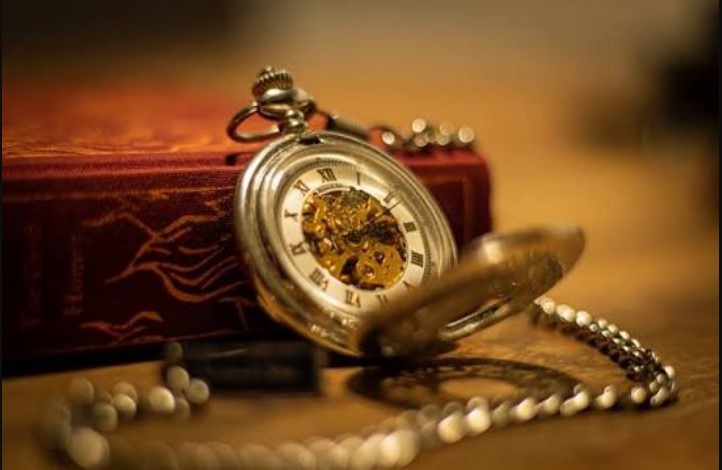
Jeweled bearings are more than three centuries old. In 1704, Nicolas Fatio de Duillier working with the brothers Peter and Jacob Debaufre received an English patent for making bearings by piercing rubies. This let watchmakers build thinner, more accurate pocket watches, and the idea has anchored fine watchmaking ever since.
What began with natural pierced rubies became far cheaper in the early twentieth century once synthetic corundum could be grown in a lab. Suddenly the material that made watches accurate cost almost nothing, so brands could jewel every pivot that mattered without inflating the price. That shift is why even affordable mechanical watches today carry a proper 17 to 25 jewels rather than the handful that early luxury pieces reserved for the wealthy.
Frequently Asked Questions
Are the jewels in a watch real gemstones worth money?
No. Almost every jewel in a modern watch is a synthetic ruby or sapphire grown in a lab, chosen for hardness rather than beauty. They cost very little and carry no resale value. A 25-jewel watch is not expensive because of the stones. It is priced on the movement's design, finishing, and brand.
Do more jewels make a watch more accurate?
Only up to a point. Jewels improve accuracy by cutting friction at busy pivots, but once every important pivot is jeweled, extra stones add nothing. A well-regulated 21-jewel automatic can easily out-time a poorly built watch quoting a much higher number. Judge accuracy by the movement's quality, not the jewel count on the dial.
Why do quartz watches have so few jewels?
A quartz watch keeps time with a battery and a vibrating quartz crystal, so it has very few moving mechanical parts and almost no friction to manage. With little for jewels to protect, most quartz movements use only a few stones or none. This is completely normal and does not mean the watch is low quality.
Is a 21-jewel or 25-jewel automatic better for everyday wear in Nigeria?
Both are excellent for daily wear. The gap between 21 and 25 jewels is small and reflects design choices such as an added date function, not a real difference in reliability. For Lagos, Abuja, or anywhere in between, focus on a trusted movement, solid water resistance, and a watchmaker nearby who can service it.
The Bottom Line on Watch Jewels
The jewels in a watch are a clever, low-cost fix for a real engineering problem: friction. Tiny synthetic rubies sit at the pivots of the gear train, escapement, and balance wheel, letting the movement run smoothly and accurately for years. A hand-wound watch is well served by 17 jewels, and a good automatic lands at 21 to 25. Above that, on a simple watch, the number is usually there to sell rather than to serve. Read the count as a sign of the movement type, then let the movement's reputation, finishing, and serviceability guide your money.
Featured in our collection
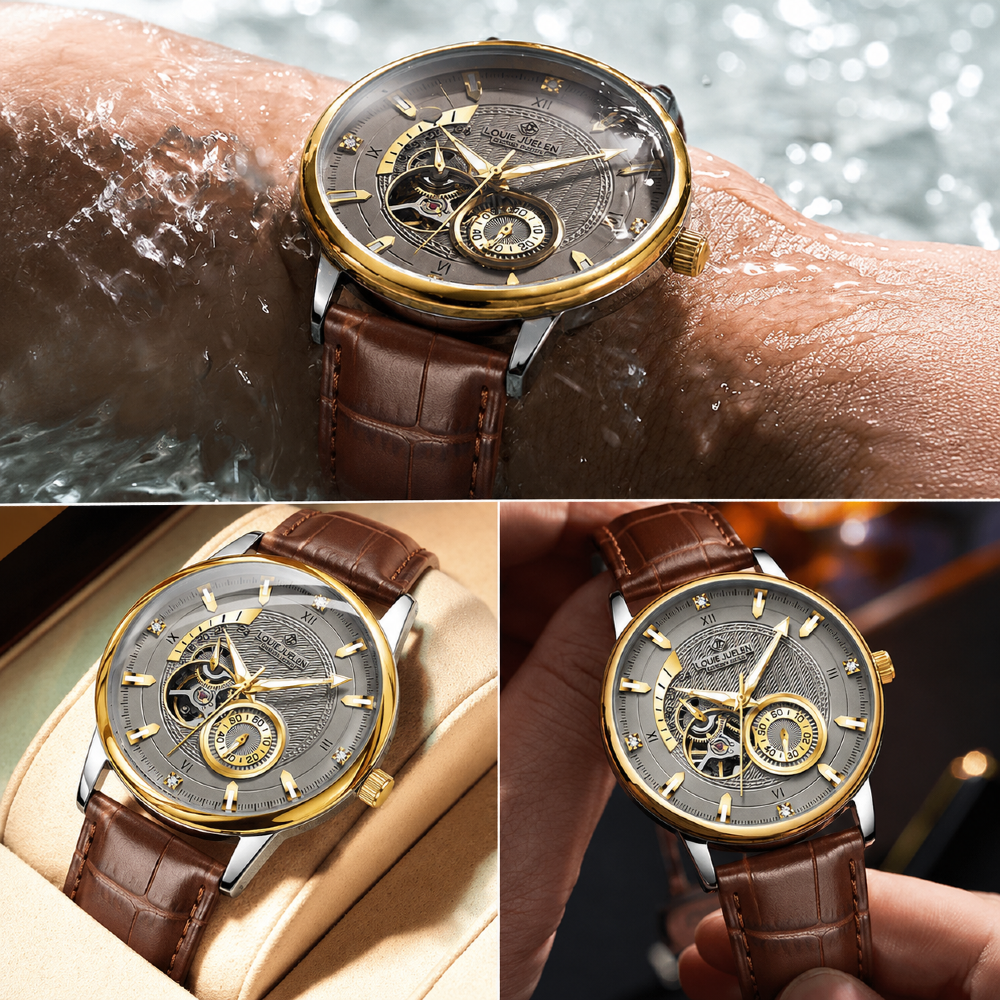
Louis Juelen Luxury Automatic(Tourbillion ) Premium Watch
Automatic Watch Winder
₦85,000
₦150,000
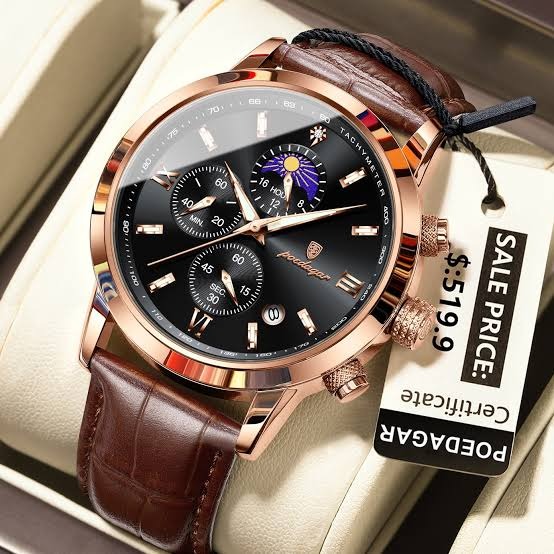
Poedagar Chronograph Luxury Watch
Free 24ml luxury Roll On oil perfume
₦45,000
₦65,000
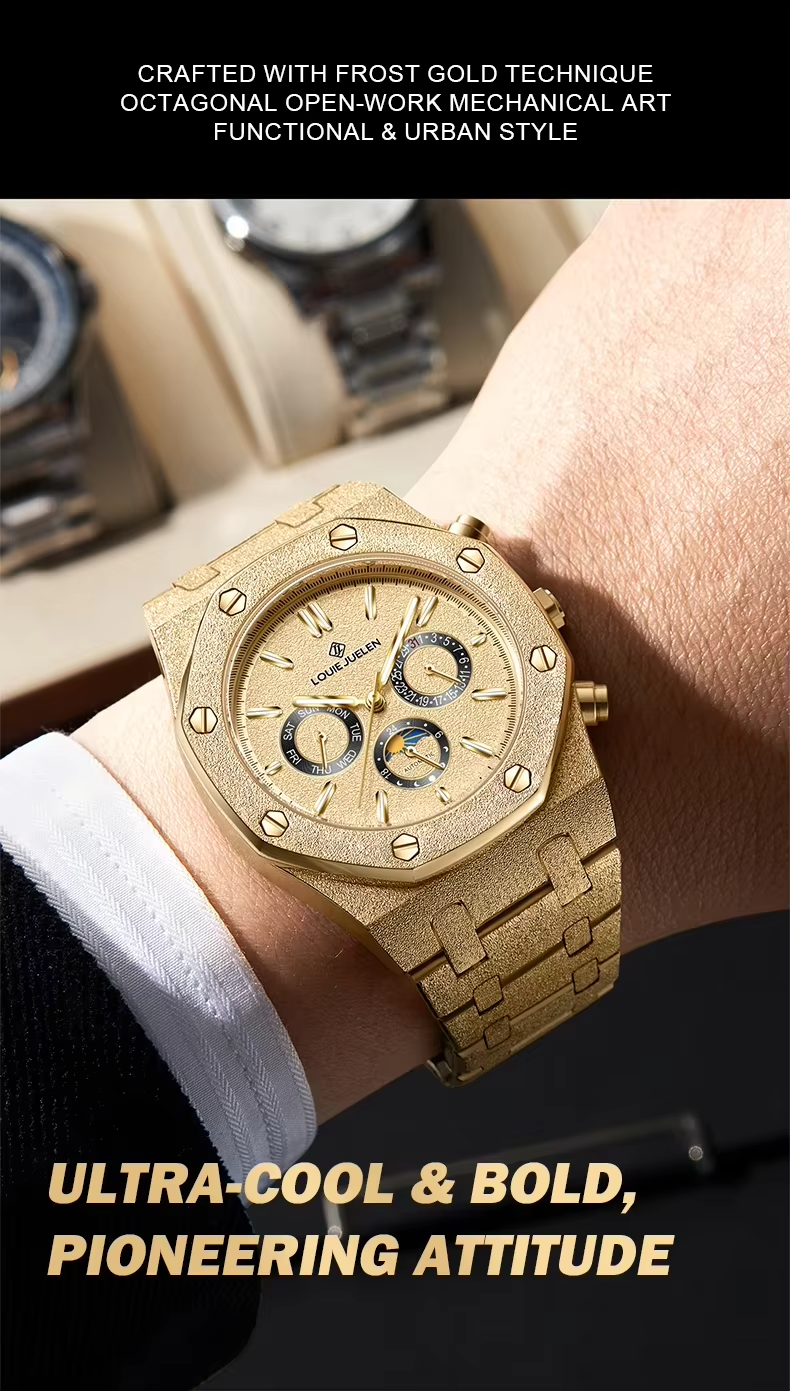
Louis Juelen Automatic Chain Strap
Automatic Watch Winder
₦140,000
₦250,000
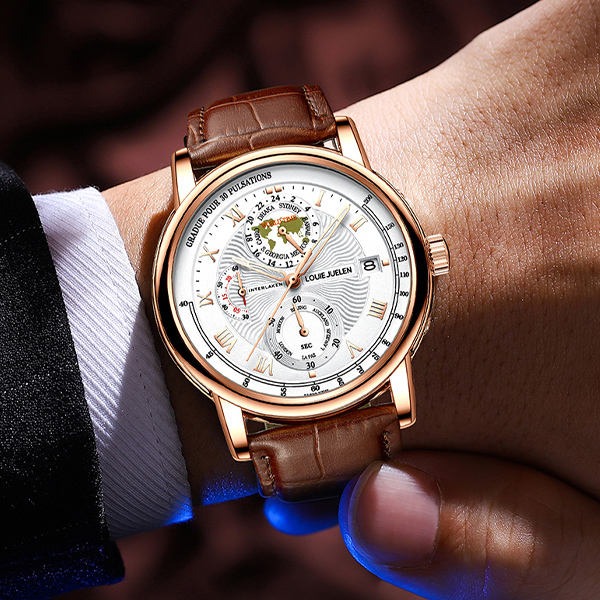
Louis Juelen Luxury Chronograph Leather Watch
Free 24ml luxury Roll On oil perfume
₦55,000
₦85,000