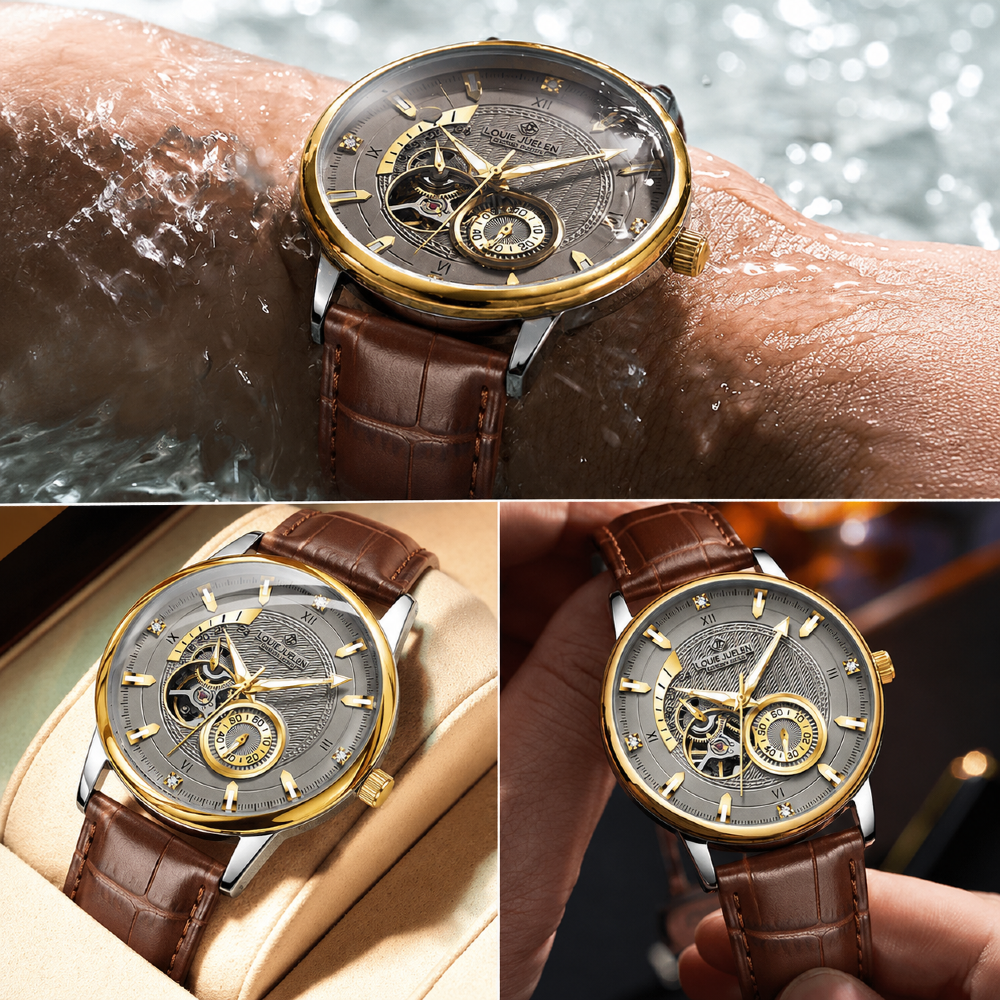


Watch Complications Explained: A Beginner's Overview
You fall for a watch across the room, then flip it over and the spec sheet reads like another language: chronograph, GMT, annual calendar, moonphase, tourbillon. Suddenly the piece you loved feels like a test you didn't study for. Here is the good news. Every one of those words describes something a watch does, and once you understand the handful that matter, you'll shop with confidence instead of guessing.
This is watch complications explained in plain, honest terms, written for buyers who want the truth about what these features do, which ones are genuinely useful, and what they cost to keep running.
What Is a Complication in a Watch?
A complication is any function a watch performs beyond telling the basic time of hours, minutes, and seconds. That is the entire definition. The date window on your everyday watch is a complication. So is a stopwatch, a second time zone, or a display that follows the phases of the moon. If it does more than show the current time, it counts.
The word sounds intimidating, and it is meant to. In traditional watchmaking, adding any function to a movement means adding gears, levers, and springs to a mechanism already small enough to sit on your wrist. Complications range from the simple and commonplace, like a date, to extraordinarily rare feats of engineering that take master watchmakers years to build. The more a watch does, the more parts live inside it, and the more skill it took to make those parts work together.
Understanding this one idea changes how you read a watch. A "complicated" watch is not a flawed one. It is a busier, cleverer one.
The Everyday Complications You'll Actually Use
Most watches you'll consider wearing daily carry complications built for real life, not for showing off. These are the functions worth knowing first because you'll interact with them every time you glance at your wrist.
Date and Day-Date
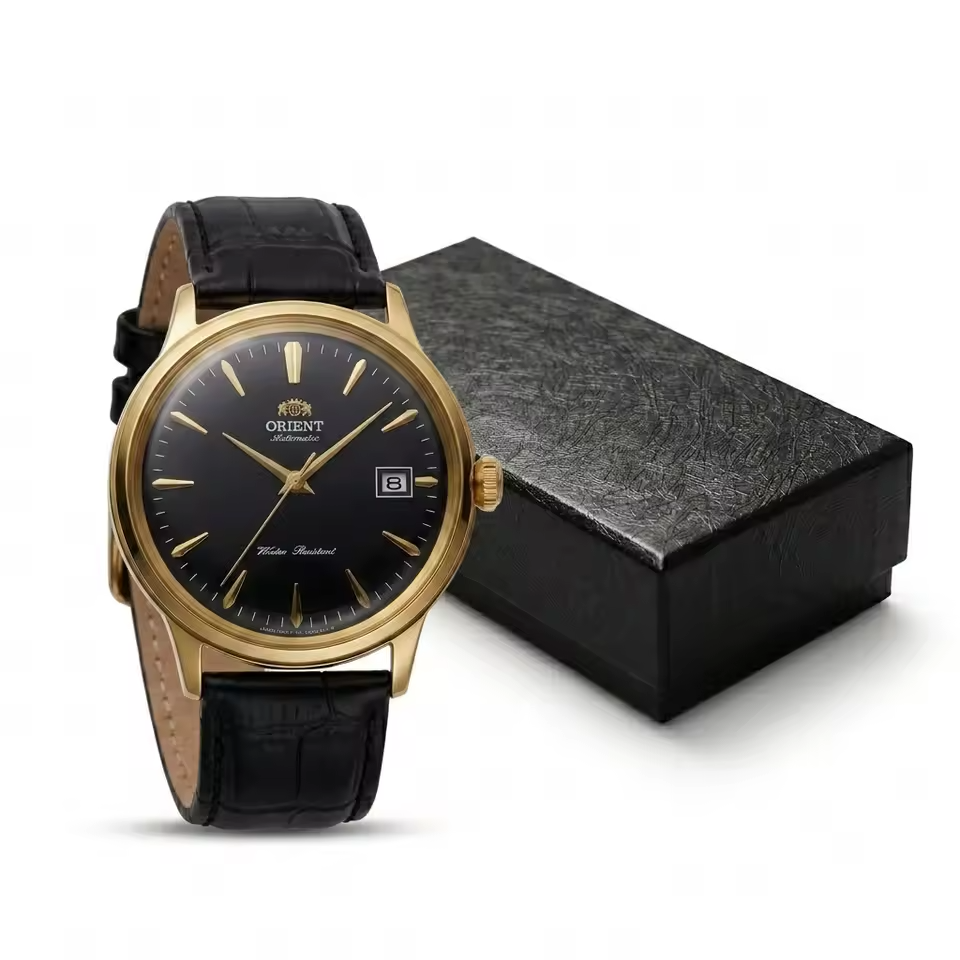
The date display is the most common complication in the world, found on everything from affordable field watches to serious luxury pieces. A small window, usually near the 3 o'clock position, shows the current date. It is quietly useful and rarely gets in the way of a clean dial.
The day-date takes it one step further by showing both the day of the week and the date, typically side by side near 12 or 3 o'clock. You get a quick, legible snapshot of where you are in the week without reaching for your phone. For many buyers, this is the sweet spot: genuinely handy, easy to read, and simple enough that it rarely causes trouble.
Chronograph
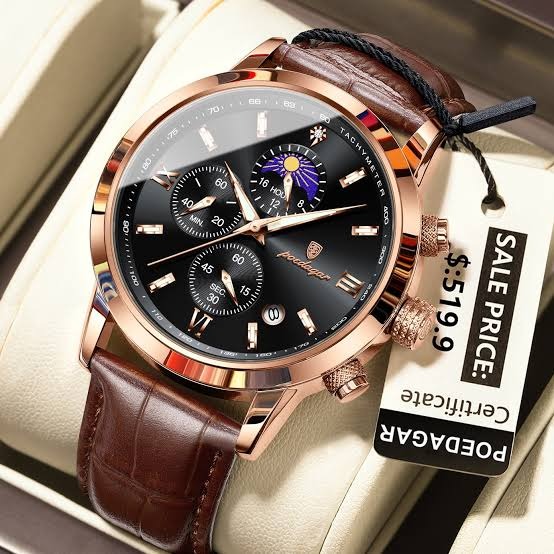
A chronograph is a stopwatch built into your watch. Using pushers on the side of the case, you start, stop, and reset a set of hands and small sub-dials that measure elapsed time, from a few seconds to hours. It grew up alongside motorsport, aviation, and athletics, and it remains one of the most beloved sporty complications for a reason: it looks purposeful and it actually works.
Worth knowing before you buy: a chronograph adds real mechanical complexity. A mechanical chronograph movement typically carries somewhere around 250 to 350 parts, which matters when service time comes around.
Power Reserve
A power reserve indicator tells you how much energy is left in the mainspring, the coiled spring that drives the entire movement. As the spring unwinds, a small arc and hand on the dial show roughly how many hours of running time remain before the watch stops. On an automatic watch you wind by wearing, or a hand-wound piece you top up yourself, it is a genuinely practical readout. You know at a glance whether your watch will make it through the weekend in a drawer.
The Traveler's and Enthusiast's Complications
Some complications earn their place through specific usefulness, and others through sheer charm. This next group sits right at the line between the two, which is exactly why collectors love them.
GMT and Dual Time
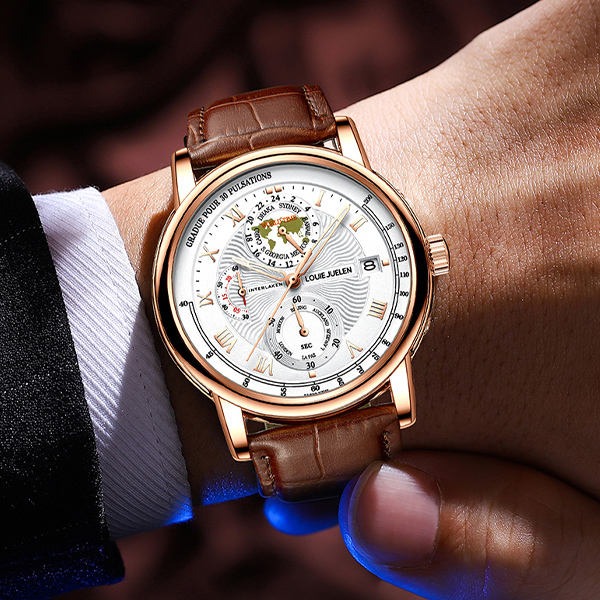
A GMT complication lets your watch show a second time zone. The most common approach adds an independent 24-hour hand that you set to your home time while the main hands track wherever you are. Because it runs on a 24-hour scale, one glance tells you whether it is noon or midnight back home. For frequent travelers and anyone coordinating across time zones, this is one of the most genuinely useful complications you can own.
Moonphase
A moonphase shows the current phase of the moon through a small aperture on the dial, where a rotating disc printed with moon images mimics the roughly 29.5-day lunar cycle. The clever bit is the mechanism: a 59-tooth gear advances once every 24 hours so the disc tracks the moon almost exactly.
Be honest with yourself about why you want it. Moonphases were once practical tools for sailors reading the tides. Today they are chosen mostly for beauty, and there is nothing wrong with that. A well-executed moonphase is one of the most romantic things a dial can do.
Annual and Perpetual Calendar
Here is where calendars get clever. A simple date needs manual correction after every month shorter than 31 days. An annual calendar automatically knows which months have 30 days and which have 31, so it only needs one adjustment a year, at the end of February.
A perpetual calendar goes further still. It accounts for leap years and every variation in month length, and if it is kept running it should require virtually no correction. Most perpetual calendars sold today will track the date accurately all the way to the year 2100 before they need a hand. It is one of the most quietly astonishing achievements in all of watchmaking, and it explains why these pieces command such respect.
Watch Complications Glossary at a Glance
Before we go further, here is a quick reference you can come back to. Keep this handy while you browse and the spec sheets will stop feeling like a foreign language.
| Complication | What It Does | Genuinely Useful For | Relative Complexity |
|---|---|---|---|
| Date | Shows the current date in a window | Almost everyone, every day | Low |
| Day-Date | Shows day of week plus date | Weekday-at-a-glance convenience | Low |
| Power Reserve | Shows remaining running time in the mainspring | Knowing when to wind | Low to moderate |
| Chronograph | Stopwatch to measure elapsed time | Timing, sport, a purposeful look | Moderate to high |
| GMT / Dual Time | Displays a second time zone | Travelers, remote work across zones | Moderate |
| Moonphase | Tracks the ~29.5-day lunar cycle | Beauty, tradition, charm | Moderate |
| Annual Calendar | Auto-adjusts for 30 and 31-day months | Set-and-mostly-forget dates | High |
| Perpetual Calendar | Handles leap years automatically to 2100 | Ultimate calendar convenience | Very high |
| Tourbillon | Rotating cage to offset gravity's effect | Craft, prestige, mechanical artistry | Very high |
| Minute Repeater | Chimes the time on demand | Telling time by sound, pure horology | Very high |
Useful Complications Versus Grand Complications
There is a real difference between a complication that helps your day and a "grand complication" built to prove what watchmaking can do. Knowing which camp a watch belongs to keeps your expectations, and your budget, grounded.
Useful complications, the dates, GMTs, chronographs, and power reserves above, exist to serve you. A grand complication exists to serve the art. While there is no single agreed definition, the term generally describes a watch combining at least three advanced functions: a timing complication like a chronograph, a chiming complication like a minute repeater, and a calendar complication like a perpetual calendar, all in one case.
Two names you'll meet at this rarefied level:
- Tourbillon: a rotating cage that holds the escapement and balance wheel, spinning continuously to counter the small positional errors gravity introduces. It is mesmerizing to watch and monumentally difficult to make.
- Minute repeater: a striking complication that chimes the hours, quarters, and minutes on demand using tiny hammers and gongs. Originally built to tell time in the dark, it is now prized as one of horology's purest expressions of craft.
To put the complexity in perspective: a chronograph runs a few hundred parts, an annual calendar can exceed 400, and high complications like tourbillons and minute repeaters can pass 1,000 parts in a single movement. In 2025 one extraordinary piece was unveiled carrying 41 complications and more than 1,500 components. That is the far horizon of the craft, and it is worlds away from what most of us will ever need.
The Best Complications for Beginners
If you are buying your first serious watch, favor complications you'll genuinely use over ones that only impress on paper. The smartest first purchase is one you reach for every day, not one that lives in a safe because you're afraid to knock it.
For most new buyers, this is the sensible order to fall in love:
- Date or day-date. Nearly effortless to live with, useful every single day, and it keeps the dial calm and legible.
- Power reserve. Practical, quietly satisfying, and it teaches you how a mechanical watch actually breathes.
- GMT. The moment you travel or work across time zones, it earns its keep. A brilliant "grows with you" complication.
- Chronograph. A rewarding step up in mechanical richness and sporty character, as long as you accept the added service considerations below.
Save the moonphase for when a specific dial captures your heart, and treat perpetual calendars, tourbillons, and repeaters as long-term aspirations rather than starting points. There is no prize for owning the most complicated watch. There is real joy in owning the right one.
Complications and Servicing Cost: The Honest Part
Every complication you add is another set of moving parts that will eventually need cleaning, lubricating, and fine-tuning, and that shows up in your service bills. This is the conversation too many shops skip, so let's have it plainly.
A mechanical watch should be serviced periodically to stay accurate and healthy, and the more it does, the more that costs. As a general guide from typical service pricing:
- A standard automatic service from a major brand often runs a few hundred dollars, with figures commonly cited around $500 to $800 for an Omega and roughly $800 to $1,200 or more for a Rolex full service.
- A mechanical chronograph service commonly falls in the range of about $570 to $855, depending on the movement and bracelet.
- Step up to a perpetual calendar chronograph and service figures around $1,340 to $1,425 are frequently reported.
- At the top, watches with tourbillons, perpetual calendars, or stacked "double" complications can run $1,500 to $2,500 and well beyond, with the most complex grand complications from the highest houses reaching into the many thousands.
The reason is simple. More complications mean more tiny, interdependent components to disassemble, clean, lubricate, and reassemble, and features like chronographs, calendars, and moonphases need careful fine-tuning afterward. That is more labor and more specialized expertise, and you pay for both.
None of this should scare you off. It should just inform you. A clean three-hander with a date is inexpensive to maintain and will likely serve you faithfully for decades. A grand complication is a lifelong commitment in the truest sense. Buy with your eyes open and you'll never resent the bill.
Frequently Asked Questions
What is the most useful watch complication for everyday wear?
For most people, the date or day-date is the most useful everyday complication, because you check the date far more often than you realize and it never gets in the way. If you travel or coordinate across time zones, a GMT quickly becomes just as valuable. Both deliver real daily convenience without dramatically raising complexity or service cost.
Do watches with more complications need servicing more often?
Watches with high complications such as chronographs, perpetual calendars, and dual-time movements can require more attentive care, and their servicing is more expensive because there are far more delicate parts to clean, lubricate, and fine-tune. A simple date watch is the cheapest and easiest to maintain, while tourbillons and repeaters sit at the costly end of the scale.
What is the difference between an annual calendar and a perpetual calendar?
An annual calendar automatically adjusts for months with 30 or 31 days and needs correcting only once a year, at the end of February. A perpetual calendar goes further by accounting for leap years and every month length automatically, so if kept running it needs virtually no correction, tracking the date accurately all the way to the year 2100.
Is a chronograph worth it for a first watch?
A chronograph can be a wonderful first watch if you love its purposeful, sporty character and you plan to actually use the stopwatch, or simply enjoy the mechanical richness. Just factor in the added service cost of its 250-plus parts. If you want maximum simplicity and value, a clean date or day-date is the easier, lower-maintenance place to start.
Bringing It All Together
Watch complications are not a secret code meant to keep you out. They are a menu of things a fine timepiece can do, from the humble date to the moon in the sky to a chime that tells time in the dark. Start with the functions you'll genuinely use, respect what each one asks of you in care and cost, and let the more exotic complications remain the stuff of dreams until one truly speaks to you.
When you shop with that clarity, you stop buying features and start buying a watch you'll love wearing.