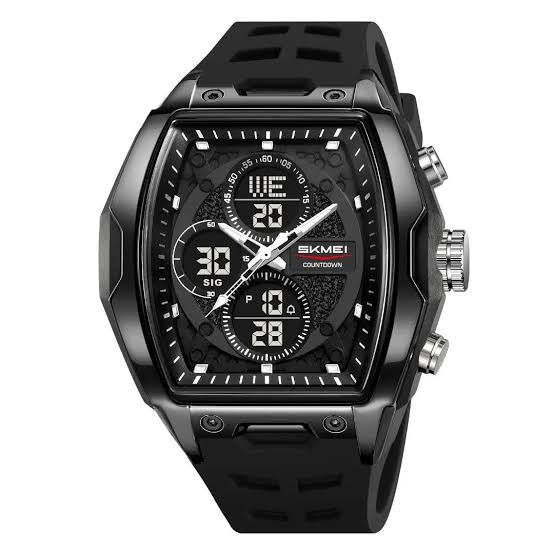


Watch Bezel Types Explained: Dive, Tachymeter, GMT
You slip on a handsome dive watch, admire it in the light, then glance at that ring of numbers circling the dial and realize you have no idea what it does or how to use it. You are not alone. The bezel is one of the most misunderstood parts of a fine watch, and yet it is often the most useful. Learn to read it, and a beautiful accessory becomes a genuine instrument on your wrist.
This guide walks through the main watch bezel types, how each one works, and when you would actually reach for it. No jargon for its own sake, just clear answers you can put to use the next time you strap on a proper timepiece.
What Is a Watch Bezel, and Why Does It Matter?
A watch bezel is the ring surrounding the dial and crystal, and depending on its design it can be purely decorative or a working tool for measuring elapsed time, speed, direction, or a second time zone. Some bezels are fixed in place, while others rotate to perform a specific job. Knowing which type you own changes how you use the watch entirely.
The bezel started as a practical fixture. During the 1950s heyday of scuba diving, long before dive computers existed, watchmakers added a rotating ring so divers could track their time underwater on a single tank of air. Blancpain patented the unidirectional external bezel for its Fifty Fathoms model in 1953, and the idea quickly spread across the industry. What began as a life-saving tool grew into a whole family of bezel functions, each solving a different problem.
Fixed vs Rotating Bezel: The First Distinction
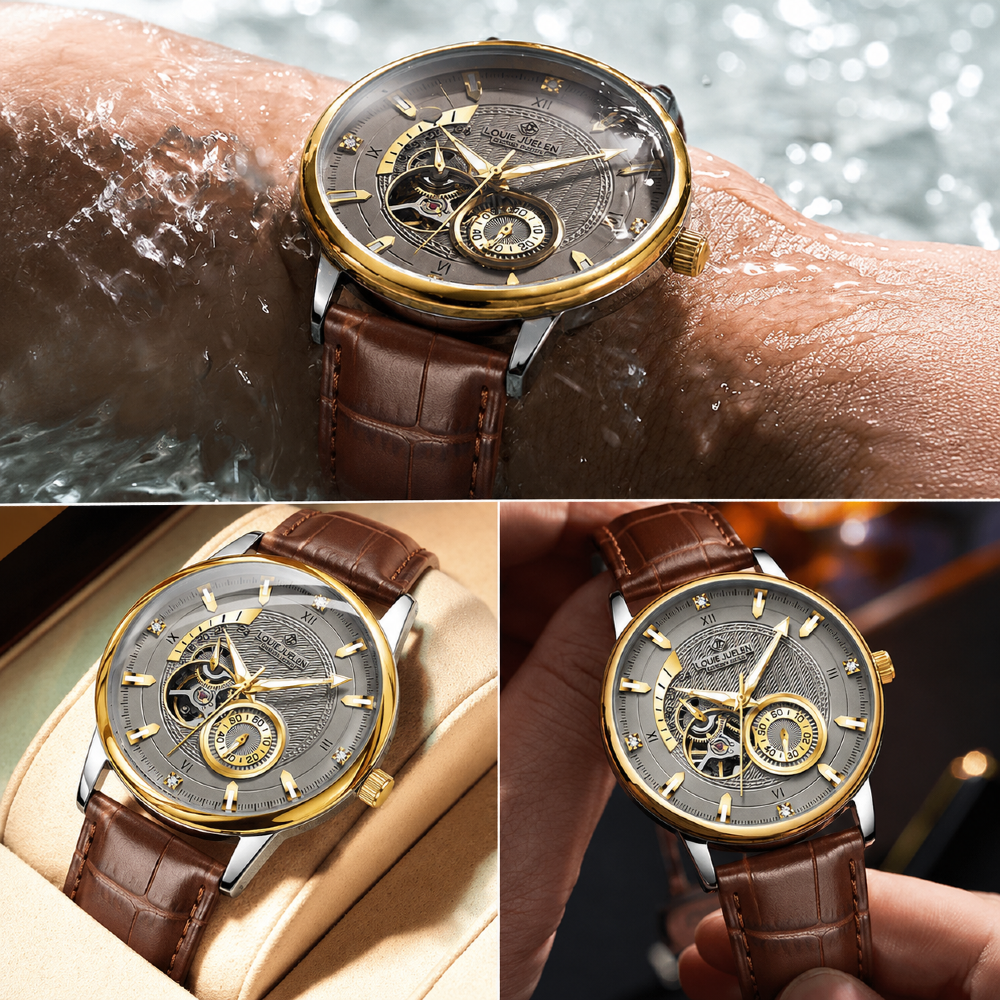
The clearest way to sort watch bezel types is by whether the ring moves. A fixed bezel stays locked in position and either holds the crystal in place, carries a decorative finish, or displays a printed scale you read against the chronograph hands. A rotating bezel turns so you can set a reference point and measure time or track information as it passes.
That single difference tells you a lot about a watch's intended purpose. A tachymeter scale, for example, has to stay put to give an accurate reading, so it lives on a fixed bezel. A dive timer needs to move so you can mark the moment you descend, so it sits on a rotating bezel. Once you know whether your bezel is fixed or rotating, you already understand half of what it does.
Rotating bezels split again into two groups. Unidirectional bezels turn in only one direction, and bidirectional bezels turn both ways. As you will see, that limitation on the dive bezel is not a flaw. It is the whole point.
The Unidirectional Dive Bezel: Count-Up Timing With a Safety Net
The unidirectional dive bezel measures elapsed time by counting up from zero, and it rotates in one direction only so an accidental knock can never make your dive look shorter than it really is. To use it, you turn the bezel so the triangle or zero marker lines up with the minute hand at the start of your dive, then read elapsed minutes off the bezel's 60-minute track as the minute hand moves.
Here is the sequence in practice. At the moment you descend, rotate the bezel until the luminous pip sits directly over the minute hand. As time passes, the minute hand advances across the numbers printed on the bezel, and those numbers tell you how many minutes have elapsed since you started. Twenty minutes in, the minute hand points to the 20 on the bezel. Simple, reliable, and readable at a glance in dark water.
The one-way rotation is the clever part. A dive bezel only turns counterclockwise, and that is a deliberate safety feature rather than a manufacturing quirk. If the bezel were knocked mid-dive and could spin either way, a clockwise nudge would make it appear you had been under for less time than you actually had, tempting you to stay down past your safe limit. Because it moves only counterclockwise, any accidental knock can only make your elapsed time read longer, so at worst you surface a little early. That margin has genuinely saved lives.
You do not need to dive to get value from a count-up bezel. It is one of the handiest everyday tools you can wear. Line up the marker with the minute hand when you put the pasta on, park the car at a meter, or start a workout, and you have an instant, glanceable timer that needs no phone and no fiddling.
The Tachymeter Bezel: Reading Speed From Your Wrist
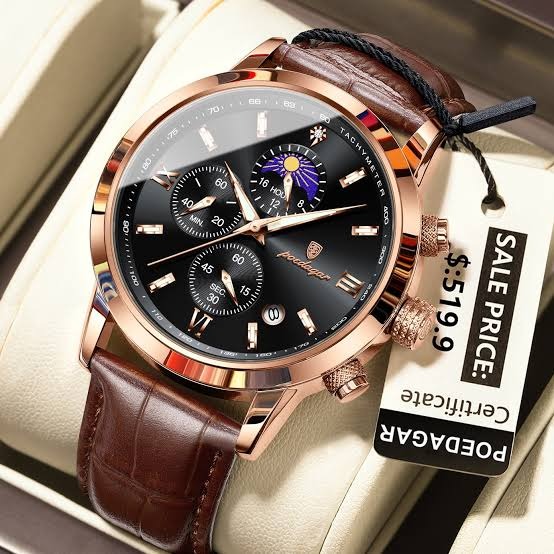
A tachymeter bezel is a fixed scale, usually running from around 500 down to 60, that lets you calculate average speed over a known distance using the chronograph seconds hand. Because it relies on the stopwatch function, a tachymeter is almost always paired with a chronograph, and the scale stays fixed so the reading is accurate.
The method is quick once you see it. Start the chronograph as your car, bike, or runner passes a known point. Stop it after exactly one mile or one kilometer. Wherever the seconds hand lands on the tachymeter scale is your average speed in miles or kilometers per hour. The math is baked into the scale: there are 3,600 seconds in an hour, so if you cover a mile in 60 seconds, the scale reads 60, meaning 60 mph.
For anything faster than a mile per minute, the scale still works. The tachymeter tops out at 60 seconds, so for quicker subjects you measure over a shorter time and scale the result, or measure a longer fixed distance and adjust accordingly. In daily life you will rarely time a mile marker, but the tachymeter remains one of the most iconic bezel types, closely tied to motorsport heritage and the classic racing chronograph.
The GMT 24-Hour Bezel: Two Time Zones at Once
A GMT bezel carries a 24-hour scale and works with a dedicated fourth hand to show a second time zone at a glance. The GMT hand circles the dial once every 24 hours, half the speed of the normal hour hand, and points to the hour on the 24-hour scale, letting you read home time while the main hands show wherever you are.
Because the scale runs across a full 24 hours rather than 12, there is no confusion between morning and evening. Many GMT bezels are split into two colors, one for daytime hours and one for night, so a single look tells you not just the time back home but whether your family there is awake or asleep. That day-night clarity is the whole appeal for frequent travelers.
If the 24-hour bezel rotates, it unlocks a third time zone. Set the GMT hand to your home time, then rotate the bezel so its 24-hour markers align to read a third city off the same hand. Pilots, international business travelers, and anyone with family overseas tend to fall hard for this complication, because it turns a watch into a compact world clock.
Watch Bezel Types at a Glance
The table below sums up the main watch bezel types, how each moves, and what it is built to do.
| Bezel Type | Fixed or Rotating | What It Measures | Best For |
|---|---|---|---|
| Unidirectional Dive | Rotating (one way) | Elapsed time, count-up | Divers, everyday timing |
| Tachymeter | Fixed | Average speed over distance | Motorsport, racing chronographs |
| GMT / 24-Hour | Fixed or rotating | Second and third time zones | Travelers, pilots |
| Countdown | Rotating (often both ways) | Time remaining to an event | Runners, cyclists, military |
| Compass | Rotating (both ways) | Cardinal direction | Hikers, backpackers |
| Yacht / Regatta | Rotating | Countdown to a race start | Sailing, regattas |
| Fixed Decorative | Fixed | Nothing functional | Dress and everyday elegance |
Count-Up vs Countdown Bezel: Same Ring, Opposite Jobs
A count-up bezel measures time passing from zero upward, while a countdown bezel tracks time remaining toward a set moment, usually with a scale running from 60 down to zero. Both use a rotating ring, but they answer different questions: how long has it been, versus how long is left.
The dive bezel is the classic count-up tool. The countdown bezel flips the logic and is popular with runners, cyclists, and military users who need to know exactly how much time remains before an event. Countdown bezels often rotate in both directions for faster setup, since the one-way safety constraint of a dive bezel does not apply. If you frequently work toward a hard deadline rather than tracking elapsed time, the countdown scale gives you the clearer readout.
Compass, Yacht, and Purely Decorative Bezels
Beyond the headline types, several specialist and dressier bezels round out the family. A rotating compass bezel is marked with the cardinal directions instead of numbers and helps hikers orient themselves by aligning the watch hands with the sun. It works only in daylight because it is neither magnetic nor electronic, and the exact technique depends on which hemisphere you are standing in.
The yacht or regatta bezel serves competitive sailors. It typically shows a countdown scale across the lower portion of the ring and helps a crew judge exactly how much time is left before a race starts, so the boat crosses the line at speed the instant the gun fires rather than jumping early. It is a niche function, most famously associated with the Rolex Yacht-Master II, but a proud one.
Finally, the fixed decorative bezel does no timing at all. It exists to frame the dial with a fluted, gem-set, or polished finish, and on a fine dress watch that quiet elegance is exactly the point. Function is not the only reason to love a bezel.
Frequently Asked Questions
How do I use a dive bezel for everyday timing instead of diving?
Rotate the bezel so the zero marker or triangle sits over the minute hand at the moment you want to start timing. The minute hand then reads elapsed minutes directly off the bezel scale, so you can track a parking meter, a workout, or a simmering pot without touching a phone. Because the bezel only turns one way, an accidental bump can only add time, never subtract it.
Why does a dive bezel only turn in one direction?
The unidirectional design is a safety measure. If the bezel could rotate both ways, a knock underwater might shift it clockwise and make your dive time appear shorter than it truly is, tempting you past a safe limit. Turning only counterclockwise means any accidental movement makes elapsed time read longer, so you err toward surfacing early. It is protection built into the hardware.
Can I use a tachymeter bezel without a chronograph?
Not really. A tachymeter relies on the chronograph seconds hand to time your run over a fixed distance, so a watch without a stopwatch function has no way to drive the scale. This is why the tachymeter scale almost always appears on a chronograph, and why the ring stays fixed rather than rotating, keeping the reading accurate.
What is the difference between a GMT bezel and a dive bezel?
A GMT bezel carries a 24-hour scale and works with a dedicated fourth hand to display a second, and sometimes a third, time zone. A dive bezel carries a 60-minute scale and measures elapsed time by counting up from zero. One is built for tracking hours across the globe, the other for timing minutes in front of you, and the scales make them easy to tell apart at a glance.
Choosing the Bezel That Fits Your Life
The right bezel is the one that matches how you actually spend your time. If you value a rugged all-rounder with a genuinely useful daily timer, a unidirectional dive bezel is hard to beat. If you cross time zones often, a GMT will earn its place on your wrist within a week. And if you simply want understated polish, a fixed decorative bezel says everything it needs to. Whatever you choose, understanding the ring around the dial turns a fine watch from an ornament into an instrument.