

Skeleton and Open-Heart Watches Explained: A Buyer's Guide
You fell for the watch first, then hesitated. That cutaway dial with its exposed gears looked like jewellery for the wrist, alive and mechanical, unlike anything else in the case. Then the doubt crept in. Can you actually read the time on it? Is all that visible machinery a genuine feat of watchmaking or just decoration? And will it hold its value once the novelty wears off?
Those are fair questions, and they deserve honest answers rather than sales copy. A skeleton watch explained properly comes down to understanding what has been removed, what remains, and why the craft behind it commands a premium. Once you see how these watches are built, the choice between a full skeleton, a semi-skeleton, and an open-heart design stops feeling like a gamble and starts feeling like a preference you can defend.
What Is a Skeleton Watch, Explained Simply
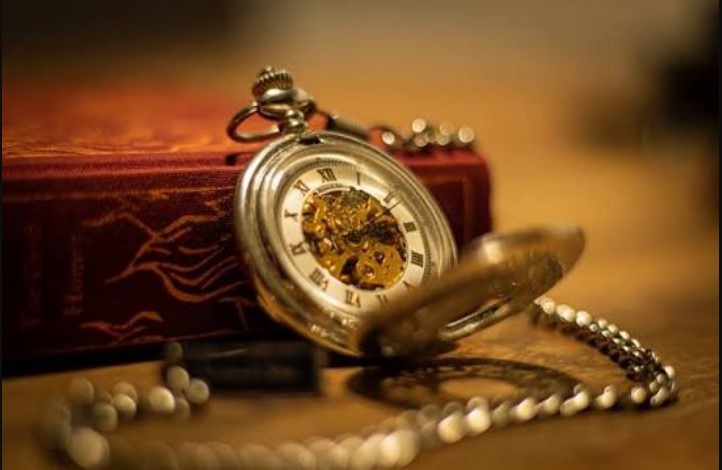
A skeleton watch is a mechanical watch in which the moving parts are visible, achieved by cutting away large portions of the plates and bridges so you can see straight through the movement. Instead of a solid dial hiding the mechanics, the gear train, springs, and escapement sit on display. The exposure can happen through the front, the back, or both.
True skeletonisation goes further than simply drilling a few holes. Watchmakers trim away every piece of non-essential metal from the bridges, mainplate, and wheel train, leaving only the bare structure required for the watch to function. What is left is a minimalist skeleton of the movement, engineered so that removing material never compromises the geometric stability that keeps the watch running accurately.
The style is not new. The skeleton watch dates to the late 18th century, when Parisian pocket-watch makers, most notably André-Charles Caron, began paring down movement plates to reveal the gear train at work. What started as a display of technical bravado became one of horology's enduring art forms.
The Craft That Justifies the Price
Here is where the money goes. A skeletonised movement has to be designed from the start to lose material without losing strength. Every interior edge exposed by cutting then has to be finished by hand: beveled at roughly 45 degrees, polished until it catches the light, and brought to sharp interior angles that no machine can produce. That hand-work is slow, skilled, and impossible to fully automate, which is why a skeleton version of a movement almost always costs more than its solid-dial sibling.
Types of Skeleton Watches You Will Actually See
Skeletonisation is a spectrum, not a single look, and knowing the three main approaches tells you exactly how much movement you will see and how easy the watch will be to read. Each represents a different balance between mechanical drama and everyday practicality.
Full Skeleton
The dial is eliminated entirely. The mainplate and bridges are cut, drilled, and milled until only the structurally necessary metal remains, and then every visible surface is hand-finished. This is the most dramatic expression of the craft and, predictably, the hardest to read at a glance. A full skeleton is a watch you wear because you love watchmaking, not because you need to check the time in a dim restaurant.
Semi-Skeleton
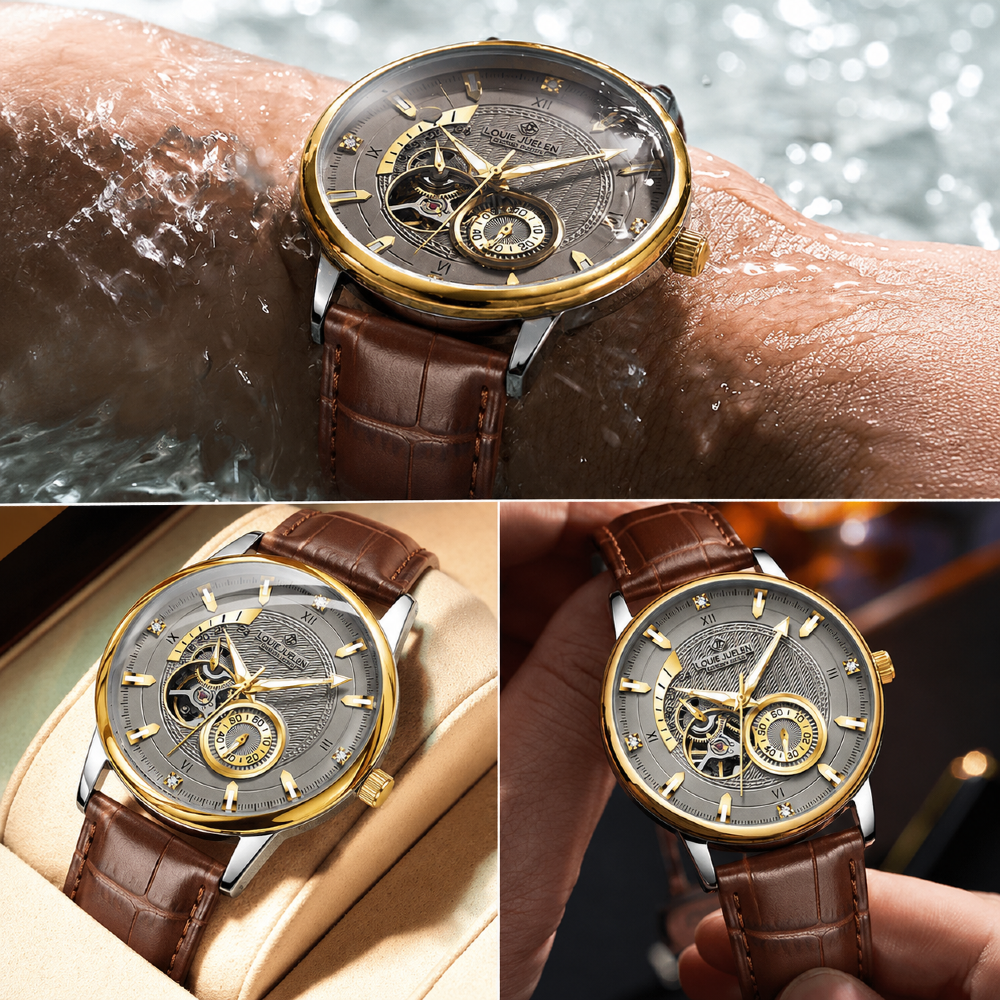
A decorative dial stays in place, but strategic cutouts reveal sections of the movement beneath. This design splits the difference intelligently. The remaining dial gives your hands and markers contrast to stand against, while the openings still showcase the mechanical action underneath. If you want the skeleton aesthetic without surrendering all legibility, this is the sensible middle ground.
Open Heart
An open-heart watch keeps a mostly intact dial with a single small window, usually circular and often near the 6 or 9 o'clock position, that exposes the balance wheel: the oscillating component watchmakers call the beating heart of the movement. You get a hypnotic glimpse of the watch's rhythm without giving up the clarity of a normal dial.
Open Heart vs Skeleton Watch: The Honest Comparison
The open heart vs skeleton watch decision is really a question of how much you value spectacle against how much you value legibility. Both let you see the movement; they simply reveal different amounts of it and ask for different compromises in return.
An open-heart watch reveals a small portion of the movement, typically the balance wheel, through a modest aperture. A skeleton watch exposes most or all of the mechanism through a cut-away dial. That single difference cascades into everything else: how the watch reads, how it is built, and what it costs.
| Feature | Open Heart Watch | Skeleton Watch |
|---|---|---|
| How much you see | Small aperture, usually the balance wheel | Most or all of the movement, front and often back |
| Legibility | Excellent; intact dial gives hands clear contrast | Often reduced; hands can blend into the movement |
| Construction | Standard movement with a modified dial | Bridges and plates cut away and hand-finished |
| Everyday practicality | High; reads like a normal watch | Lower; best in good light |
| Typical cost | More accessible | Premium for the extra finishing work |
| Best for | A subtle nod to the mechanics | A full mechanical showcase |
The practical takeaway is straightforward. Open-heart watches maintain excellent legibility because the intact dial still provides contrast for the hour markers and hands, and the aperture is positioned to stay out of the way. Skeleton watches trade some of that everyday readability for visual drama; without a solid dial behind them, the hands can disappear into the exposed movement, especially in poor lighting.
There is a construction difference worth knowing too. Open-heart watches typically use a standard movement with a window cut into the dial, so the movement itself is unchanged. True skeleton watches require the bridges and plates themselves to be cut away while preserving structural integrity, which is a far more involved and expensive undertaking.
The Exhibition Caseback: Seeing the Movement From Behind
Not every see-the-movement watch skeletonises the front. An exhibition caseback, also called a display or transparent caseback, is a case back made from clear material, almost always sapphire crystal, that lets you view the movement from the rear while the dial side stays conventional.
This is the option for anyone who loves mechanical craft but refuses to sacrifice front-dial legibility. The watch reads like any other timepiece on your wrist, yet flip it over and the entire movement is on show: the oscillating rotor, the bridges, and any decorative finishing the maker has applied, from Geneva stripes to circular perlage to hand-polished bevels.
Sapphire is the material of choice for good reason. It is highly scratch-resistant and stays crystal clear over years of wear, so the view of the movement lasts, and it can be fitted without compromising the watch's durability or water resistance. Some casebacks reveal the whole movement; others use a smaller circular window that frames only the balance wheel or rotor. Either way, you get the reward of the mechanics without touching the dial you rely on to tell the time.
Are Skeleton Watches Good? The Honest Verdict
Skeleton watches are genuinely good if you understand what you are buying, because their appeal is as much about owning a miniature piece of kinetic art as it is about telling the time. The complexity of skeletonisation means these watches are usually produced in smaller numbers, which collectors value, but that same openness brings real trade-offs you should weigh honestly.
Skeleton Dial Legibility: The Number One Complaint
Readability is the most common criticism, full stop. A busy skeleton dial can make the time harder to read, particularly in low light, and sometimes a quick glance simply is not enough. The good news is that skeleton dial legibility varies enormously by design. Look for well-contrasted hands, luminescent markers, or a subtle dial ring around the perimeter, and you solve most of the problem before it starts. This is exactly why a semi-skeleton or open-heart layout suits people who want the look but still check their watch a hundred times a day.
Care and Maintenance
Dust is the enemy of any mechanical watch, and skeleton watches are more exposed to it by design. With less dial protecting the delicate components, debris can find its way in more easily, which may mean these watches want servicing a little sooner than their solid-dial equivalents. None of this is a dealbreaker; it simply means treating the watch as the finely made object it is.
Value
Luxury skeleton watches often carry a meaningful premium over their solid-dial counterparts, and that premium reflects real work: the extra engineering and the hours of hand-finishing that machines cannot replicate. You are paying for craft, not just appearance, which is precisely why a well-made skeleton holds its appeal over time.
How to Choose the Right See-the-Movement Watch
Match the watch to your life, not the other way around. If you want maximum mechanical theatre and mostly wear your watch where the light is good, a full skeleton rewards you every time you look down. If you love the mechanics but need to read the time instantly, a semi-skeleton or an open-heart design gives you most of the drama with none of the squinting. And if you want a completely legible dial with the movement as a private pleasure, choose a classic watch with an exhibition caseback.
Whichever route you take, prioritise finishing quality and contrast over sheer openness. A thoughtfully finished movement with legible hands will bring you more satisfaction, day after day, than a watch that shows everything but tells you nothing.
Frequently Asked Questions
Are skeleton watches hard to read compared to normal watches?
They can be, and legibility is the most common complaint about full skeleton dials, especially in low light where the hands blend into the movement behind them. The fix is design: choose a model with high-contrast or luminescent hands, applied markers, or a defined dial ring. Semi-skeleton and open-heart watches are considerably easier to read because they keep more of the dial intact.
What is the difference between an open-heart watch and a full skeleton watch?
An open-heart watch keeps a mostly solid dial and reveals only a small aperture, usually showing the balance wheel, so it reads like a normal watch. A full skeleton cuts away the dial, bridges, and plates to expose most or all of the movement. The open heart uses a standard movement with a modified dial, while a true skeleton requires the movement itself to be reworked and hand-finished, which is why it costs more.
Do skeleton watches need more maintenance than solid-dial watches?
Often, yes. Their open construction means the movement is more exposed to dust and debris, the main enemy of any mechanical watch, so they can require servicing sooner than a comparable solid-dial model. Regular servicing by a qualified watchmaker keeps everything running cleanly and protects the value of the piece.
Is an exhibition caseback the same as a skeleton watch?
No. An exhibition caseback is a transparent, usually sapphire, back that lets you see the movement from the rear while the front dial stays completely normal and fully legible. A skeleton watch removes material from the dial side so you see the movement from the front. Many watches offer an exhibition caseback without being skeletonised at all, which makes it the ideal choice if you want to admire the mechanics without giving up everyday readability.