


Signet Rings: History, Meaning and How to Wear One
The signet ring is one of the oldest pieces of jewelry still worn today, and it carries more meaning per gram than almost anything else you can slide onto a finger. For thousands of years it was a working tool, a signature and a mark of who you were. Now it is a quiet flex, a heritage piece and a style statement that reads as confident without shouting. This guide walks you through where the signet ring came from, what it symbolises, what finger to wear it on, and how to pick one that actually suits your hand and your life in Nigeria.
What is a signet ring and what does it mean
A signet ring is a ring with a flat, wide top called a bezel that is engraved with a personal mark: a family crest, a set of initials or a monogram. The word comes from the Latin signum, meaning sign. For most of its history it meant identity and authority, a portable signature you wore on your hand.
The engraving was originally cut in reverse so the ring could be pressed into hot wax to seal a letter or document. That wax impression proved the message was genuine and came from the person whose mark it carried. In its day, the stamp of a signet ring was treated as more authentic than a written signature, which is why people described these rings as being almost like a fingerprint. Owning one told the world you were somebody whose word carried weight.
Today the meaning has softened but not disappeared. A signet ring now stands for three things at once:
- Heritage: a family crest, surname initial or shared motif passed between generations.
- Identity: your own initials or a symbol that means something personal to you.
- Style: a bold, classic piece that finishes an outfit whether the engraving means anything or not.
The history of the signet ring, from wax seals to status symbol
The signet ring is genuinely ancient. Seals used as marks of authenticity date back to around 3500 BC in Mesopotamia, where people used carved cylinder seals to press their mark into clay. By the time of the ancient Egyptians the seal had moved onto a ring, and Pharaohs and other powerful figures wore signet rings to show their position and to authorise official acts.
Through the Middle Ages and into the modern era, European aristocratic families used heraldry to identify themselves, and the signet ring became the way they carried it. A family coat of arms, usually a shield with a helmet and crest above it, was engraved into the bezel in reverse so it could seal documents in wax or soft clay. For centuries a nobleman's ring was pressed into every letter, contract and instruction he sent, so the ring effectively spoke on his behalf.
Two things changed the story. Adhesive envelopes and the decline of wax seals made the sealing function far less necessary, and literacy spread so written signatures became the everyday proof of identity. The signet ring could have vanished at that point. Instead it survived as an elegant jewel and a sign of belonging. The British royal family kept the tradition alive, and to this day members are seen wearing a small signet on the little finger, a custom that runs back to the sons of Queen Victoria. What was once a legal instrument is now worn for heritage, sentiment and pure style.
What finger to wear a signet ring on
The traditional finger for a signet ring is the little finger, the pinky, of the non-dominant hand. That means a right-handed person usually wears it on the left pinky. This placement is practical in origin: the pinky kept the bezel accessible and out of the way when the wearer pressed it into wax to seal a letter, turning the little finger into a literal seal of authority.
Custom does vary by region and by gender. Here is how the main options compare so you can choose with intent rather than guessing.
| Placement | Who it suits | What it signals |
|---|---|---|
| Little finger (pinky), non-dominant hand | Men and women following classic tradition | Heritage, taste, the most historically correct choice |
| Ring finger | Common in Germany and North America, popular with women | A softer, more everyday look; easy to layer |
| Left hand | Associated especially with England | Old-school British restraint |
| Index or middle finger | Modern wearers doing their own thing | A bolder, fashion-forward statement |
Men most often wear a signet on the left pinky, while women wear it more frequently on the ring finger of either hand. None of this is a strict rule anymore. Wearing a signet on the classic pinky can still stand out beautifully, particularly for women, because it is not a common finger for rings in current fashion. Pick the finger where the ring sits comfortably, does not spin, and reads the way you want it to.
Signet ring for men versus signet ring for women
A signet ring works for men and women alike, which is part of its enduring appeal. The differences come down to scale, band width and how the piece is styled rather than any hard division. Both wear the same heritage, just tuned to the hand.
Signet ring for men
Men's signet rings tend to have a wider band and a larger, more prominent bezel that carries a crest, a bold single initial or a full monogram with confidence. Worn on the pinky, it acts as a power piece that finishes a suit, a kaftan or a smart-casual look without competing with a watch. A gold signet on the little finger reads as quietly established, the sort of detail that says you are settled in yourself.
Signet ring for women
Women often choose a softer face or a slimmer band that layers easily with stacking rings and delicate chains. The signet doubles as a power piece for the office and a statement for an evening out. It coordinates well when you match the metal to the rest of your jewelry, and a slightly smaller oval or round bezel keeps it elegant rather than heavy. The same ring can feel businesslike by day and personal by night.
How to choose an engraved signet ring: metal, shape and engraving
Choosing a signet ring comes down to three decisions: the metal, the bezel shape and the engraving style. Get those right and you end up with a piece that suits your hand, holds its detail for years and means something every time you look at it.
Pick the metal
The metal decides the colour, the weight and how well the engraving survives daily wear.
- Gold is the classic and most popular choice. A harder karat gives a face that holds an engraving cleanly and wears well over time, and gold adds warmth against most Nigerian skin tones.
- Sterling silver is brighter and softer, a lighter-cost entry point with a cooler tone that suits minimalist and modern styling.
- Stainless steel is the most hard-wearing and budget-friendly, holding up to knocks and Lagos humidity without fuss, which makes it a strong everyday option.
Match your signet to the metal of your watch and other rings for a pulled-together look, or deliberately mix metals if that is your style.
Pick the bezel shape
The bezel is the flat top that carries the engraving. The oval, sometimes called the Oxford oval, is the most traditional and the most flattering on most fingers. A square or cushion shape feels more structured and modern, and a round bezel is the most versatile and easy to wear day to day. Choose a size in proportion to your finger so the ring feels balanced rather than oversized.
Pick the engraving
Engraving is where a signet ring becomes yours. There are three main approaches:
- Surface engraving is the common modern style, a lighter etching cut into the face that reads clearly on the ring itself. It is designed for show rather than for sealing wax.
- Intaglio or deep-seal engraving is the old-world method, carved in reverse so it leaves a raised impression when pressed into wax. This is the authentic route if you want a ring that can still seal a letter.
- A plain bezel left uncut is completely valid. Many people wear a polished signet with no engraving and add initials later, or keep it clean by choice.
For initials, a single letter feels bold and contemporary, while a traditional three-letter monogram is more formal. In a classic monogram the surname initial usually sits in the centre for emphasis, with the first name on the left and the middle name on the right, so the letters are not in reading order. Decide whether you want your own initials, a family surname letter, or a symbol that carries personal meaning.
How to style and care for your signet ring
A signet ring rewards restraint. Because the bezel already carries visual weight, let it lead and keep the rest of the hand simpler. Coordinate the metal with your watch and any other rings so the hand reads as one considered look rather than a mix of ideas. For layering, a slim signet pairs well with one or two stacking bands on neighbouring fingers, while a bold pinky signet is usually strong enough to stand alone.
Care is straightforward. Wipe the ring with a soft cloth to lift oils and dust, and clean it occasionally with warm water and mild soap using a soft brush to reach the engraving. Take it off before heavy manual work, harsh chemicals or swimming in chlorinated water, especially with softer silver. Store it somewhere dry so the face keeps its shine and the engraving stays crisp.
Frequently asked questions about signet rings
What does a signet ring symbolise?
A signet ring symbolises identity, heritage and authority. Historically it carried a family crest or initials used to seal documents in wax, acting as a personal signature. Today it stands for family lineage, personal identity or simply a classic, confident sense of style, whether or not the engraving holds specific meaning.
What finger do you wear a signet ring on?
The traditional finger is the little finger, or pinky, of the non-dominant hand. Men most often wear it on the left pinky and women frequently on the ring finger. Modern wearers also choose the index or middle finger. Pick the finger where the ring sits comfortably and reads the way you want.
Can a woman wear a signet ring?
Yes. Signet rings have been worn by women for centuries and remain popular today. Women often choose a slimmer band or smaller bezel that layers easily with other jewelry, and wear it on the pinky for a standout look or the ring finger for everyday ease. It works as both an office power piece and an evening statement.
Should a signet ring be engraved?
Engraving is optional. Many people engrave initials, a monogram or a family crest to make the ring personal, using either light surface engraving for show or deep intaglio if they want it to seal wax. A plain polished bezel is equally valid, and you can always add engraving later.
Bringing it home
The signet ring has carried identity for more than five thousand years, from clay seals in Mesopotamia to the pinky finger of the British royal family, and it still does the same quiet work today. Choose your metal, settle on a bezel shape that flatters your hand, and decide whether you want initials, a crest or a clean polished face. Worn on the pinky in the classic way or on the finger that simply feels right, a well-chosen signet is a piece you can wear every day and pass on for years.
Featured in our collection
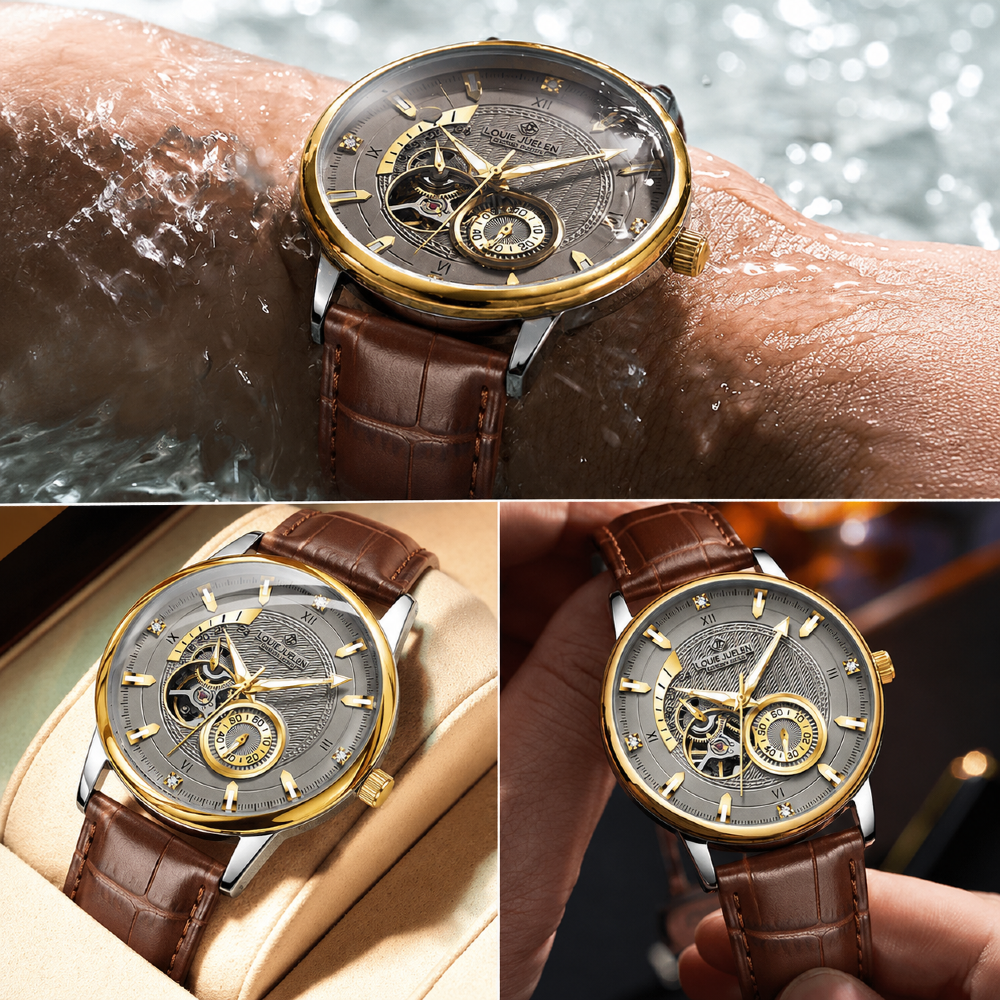
Louis Juelen Luxury Automatic(Tourbillion ) Premium Watch
Automatic Watch Winder
₦85,000
₦150,000

Poedagar Chronograph Luxury Watch
Free 24ml luxury Roll On oil perfume
₦45,000
₦65,000

Louis Juelen Automatic Chain Strap
Automatic Watch Winder
₦140,000
₦250,000