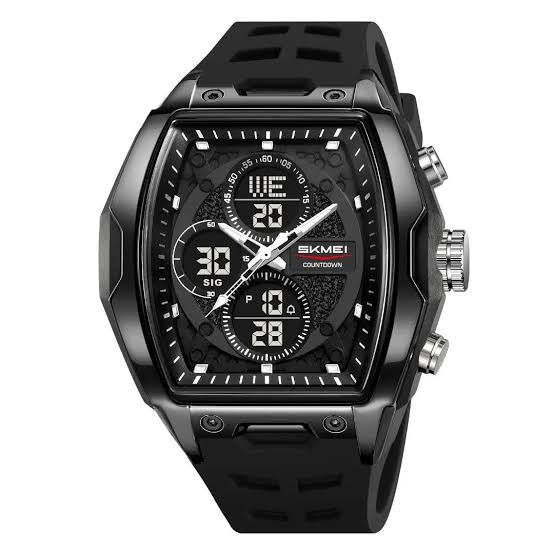


Minimalist vs Sporty Watches: Which Suits Your Lifestyle
You reach for your watch on the way out the door, and it fights you. Too dressy for the trail run, too delicate for the pool, or too chunky to slide under a cuffed dress shirt. A watch that doesn't fit your daily life stops being a pleasure and becomes a small, recurring compromise you feel every morning.
The choice between a minimalist and a sporty watch is really a choice about how you actually live. One prizes quiet elegance and versatility. The other prizes toughness and function. Neither is better in the abstract, but one is almost certainly better for you. This guide breaks down the honest differences so you can buy once and wear it happily for years.
Minimalist vs Sports Watch: The Core Difference
A minimalist watch is a clean, thin, versatile timepiece built around elegance and readability, while a sports watch is a robust, highly water-resistant tool built around durability and function. Minimalist styles slip under a cuff and dress up easily; sporty models handle water, impact, and low light with confidence.
That single distinction, refinement versus ruggedness, drives every other difference in materials, size, water resistance, and where each watch belongs. Understanding it upfront makes the rest of your decision straightforward.
What Defines Minimalist Watch Style
A minimalist watch is defined by a clean, uncluttered dial, a slim case, and refined proportions that prioritize timeless looks and easy readability over decorative detail. These watches usually fall into the dress-watch category and focus on doing what a watch was designed to do: tell the time beautifully.
The hallmarks are consistent. Expect a pared-back dial with simple markers or slim numerals, sometimes with no numerals at all, and a balanced layout free of busy subdials. Popular case sizes sit in the compact 34mm to 38mm range, and a thin profile of roughly 8mm to 10mm is what lets the watch slide neatly under a shirt cuff instead of catching on it. Common materials include sapphire crystal, matte or sunburst dials, and quick-release leather or mesh straps that swap in seconds.
Why Minimalist Watches Are So Versatile
The strength of a minimalist watch is that it never fights your outfit. A clean dial, slim case, and absence of clutter means the same watch looks right with a T-shirt, a blazer, or a dress shirt. It reads as understated, not attention-seeking, which is exactly why it flatters both jeans on a Saturday and tailoring on a Monday.
That versatility is durable in a second sense too: minimalist design ages slowly. A restrained watch bought this year looks as considered in ten years as it does today, because it was never chasing a trend to begin with.
What Defines Sporty Watch Features
A sports watch is defined by a rugged build, genuine water resistance, strong low-light legibility, and functional features like rotating bezels and shock resistance. These are often called tool watches because they prioritize performance over polish, and they fall mainly into two families: field watches and dive watches.
The functional details are the point. Sporty watches use tough materials such as stainless steel or titanium cases, ceramic bezels, sapphire crystals, and screw-down crowns, paired with comfortable, hard-wearing rubber, silicone, or nylon straps. Lume, the luminous material on the hands, markers, and bezel, lets you read the time in darkness. A unidirectional rotating bezel and a highly legible dial round out the classic sporty toolkit.
Sporty Watch Water Resistance and Durability
Water resistance is where the gap is widest. Dress and minimalist watches typically carry just enough resistance for everyday splashes, while sport watches, especially dive models, offer 100 meters or more. A true diver's watch requires at least 100m of water resistance, and many offer 200m (20 bar) along with a rotating bezel and strong lume for genuine underwater use.
Durability extends beyond water. Sporty builds are engineered to survive drops, knocks, sweat, and grit, with shock-resistant movements and cases that shrug off the kind of daily abuse that would scuff a delicate dress watch.
Minimalist vs Sporty Watch: Side-by-Side Comparison
Here is the honest comparison at a glance. Use it to see which column sounds more like your week.
| Feature | Minimalist Watch | Sporty Watch |
|---|---|---|
| Design goal | Clean elegance, readability | Rugged function, toughness |
| Typical case size | 34mm to 38mm, slim | Larger, thicker, bolder |
| Case thickness | Around 8mm to 10mm | Chunkier for durability |
| Water resistance | Everyday splashes only | 100m to 200m or more |
| Dial | Uncluttered, minimal markers | Bold, high-contrast, lumed |
| Bezel | Usually none | Often a rotating dive bezel |
| Straps | Leather, mesh | Rubber, silicone, nylon, steel |
| Best for | Office, tailoring, evenings | Water, sport, outdoors, travel |
| Under a cuff | Slides under easily | Can sit high and catch |
| Ages | Timeless, trend-proof | Purposeful, tool-driven |
The pattern is clear. If your days are spent in meetings, restaurants, and smart-casual clothes, the left column serves you. If they involve water, workouts, travel, and the outdoors, the right column earns its keep.
Dress vs Sport Watch Lifestyle: Matching the Watch to Your Days
The guiding rule is simple: match the formality of the watch to the formality of your life. A minimalist dress watch suits professional and business-casual routines, while a sporty watch suits active, water-adjacent, and outdoor routines. Be honest about how you actually spend your hours, not how you imagine you might.
If you live in slacks, a shirt, and a smart sweater, a minimalist watch finishes the look with a put-together, professional edge. If your week includes the gym, the pool, trails, or unpredictable weather, a sporty watch is built to take a beating, with materials that withstand sweat, moisture, and light impact. Chronographs, field watches, and dive watches all sit comfortably on an active wrist.
The Everyday Watch Choice: One Watch That Does More
If you want a single everyday watch that bridges both worlds, look for a stainless steel case, a legible neutral dial, sapphire or mineral glass, and an interchangeable strap. This combination handles a workday that includes a gym bag and a rainstorm, and it moves from casual to the lower end of business casual without complaint.
Field watches and dive watches are the classic one-watch answers because they pair genuine durability with clean, readable dials. Neutral dial colors, restrained designs, and quick-release straps let one watch adapt to your plans instead of dictating them. Comfort matters here too: a daily watch should feel balanced, never heavy or tight across a long day.
The Two-Watch Strategy for Active and Professional Lives
For anyone torn between the two, the cleanest solution is to stop choosing. Own one minimalist watch for professional and formal settings and one sporty watch for water and activity, and you never have to compromise again. Each watch does its job well, and the leather-strap versus rubber-strap decision is made for you every morning by what you are actually doing that day.
This is the most sustainable path for a watch for active versus professional demands. Rather than asking a single timepiece to be brilliant at everything, you give each side of your life the right tool.
How to Decide: A Quick Framework
Ask yourself three questions. First, where do I spend most of my week, at a desk and dinners, or in motion and outdoors? Second, will this watch get wet or knocked around regularly? Third, does it need to slip under a dress cuff? Your answers point clearly to one column.
If you answered desk, dry, and yes, choose minimalist. If you answered active, wet, and no, choose sporty. If your honest answer is a mix, either buy the versatile everyday watch described above or commit to the two-watch strategy. There is no wrong answer, only the answer that fits your life.
Frequently Asked Questions
Can a minimalist watch work as an everyday watch if I'm fairly active?
It can, within limits. A minimalist watch handles desk work, errands, and light activity well, but most offer only enough water resistance for splashes and lack the shock resistance of a tool watch. If your active days involve swimming, hard workouts, or the outdoors, choose a sporty watch or a durable field-style everyday watch instead of a slim dress piece.
Is a sports watch too casual to wear to the office?
Not necessarily. A restrained sports watch on a steel bracelet or subtle strap reads as smart-casual and works comfortably in most modern offices and the lower end of business casual. For formal tailoring, black-tie, or the most traditional professional settings, a slim minimalist watch that slides under a cuff remains the more appropriate choice.
What water resistance do I actually need for a sporty watch?
For everyday wear including rain and hand-washing, 100m is comfortably safe. For swimming and recreational water activity, 100m to 200m is the practical range. If you genuinely dive, look for a dedicated dive watch with at least 100m of resistance, a rotating bezel, strong lume, and a screw-down crown, with 200m being the common benchmark for real underwater use.
Should I buy one versatile watch or two specialized watches?
If your life leans clearly toward either professional or active, buy one watch matched to that. If you split your time between both worlds, you have two good options: a single durable everyday watch with a neutral dial and interchangeable straps, or the two-watch strategy of one minimalist and one sporty piece. The two-watch route removes compromise entirely and gives each setting the right tool.