

Leather vs Metal vs Silicone Watch Straps: Which Should You Choose?
You bought a watch you love. Then you wore a leather strap to the gym, and three weeks later it smelled sour and the edges had gone stiff and dark. Or you clasped on a heavy steel bracelet for a summer wedding and spent the reception feeling it slide and pinch as your wrist swelled in the heat. The watch was never the problem. The strap was.
Choosing between leather vs metal vs silicone watch straps is really a decision about your life: where you go, how you sweat, what you wear, and how much upkeep you actually want to do. Get it right and the same watch can feel like three different pieces. Get it wrong and even a beautiful timepiece becomes something you stop reaching for. Here is the honest, material-by-material breakdown to help you choose the best watch strap material for your wrist, your climate, and your calendar.
What Is the Best Watch Strap Material for Your Lifestyle?
The best watch strap material depends on how you live: leather flatters formal and everyday dress but hates water and sweat, metal bracelets deliver the most durability and versatility at the cost of weight, and silicone wins for sweat, water, and hot weather but reads too casual for the boardroom. Match the strap to your routine, not the other way around.
There is no single winner, and anyone who tells you otherwise is selling one thing. What actually matters is the trade-off between three qualities: comfort, formality, and resilience (how well it survives water, sweat, and time). Each material is strong in two of those areas and compromises on the third. Once you see it that way, the choice gets easy.
Most serious watch lovers eventually own two or three straps for the same watch and swap them by occasion. If you buy a watch with quick-release spring bars, changing straps takes about ten seconds and no tools, so you are never locked into one look.
Leather Watch Straps: Timeless, Dressy, and Demanding
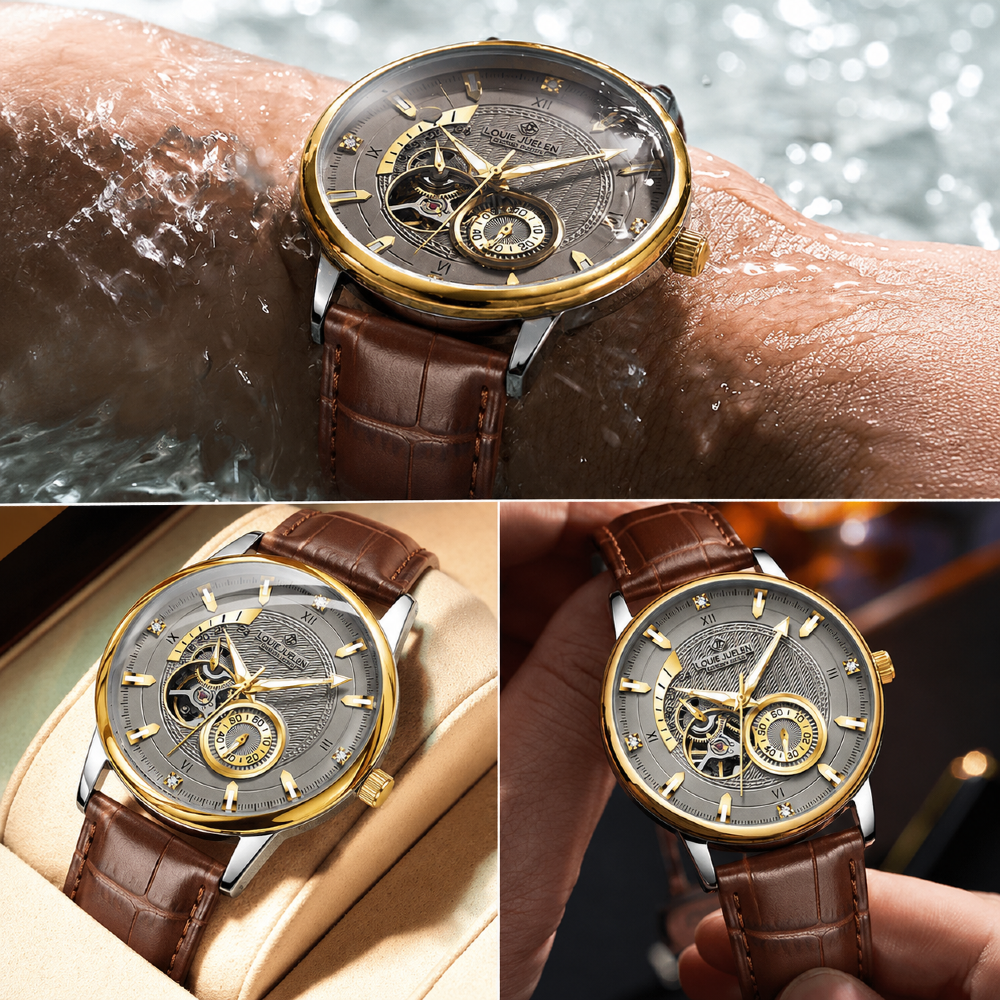
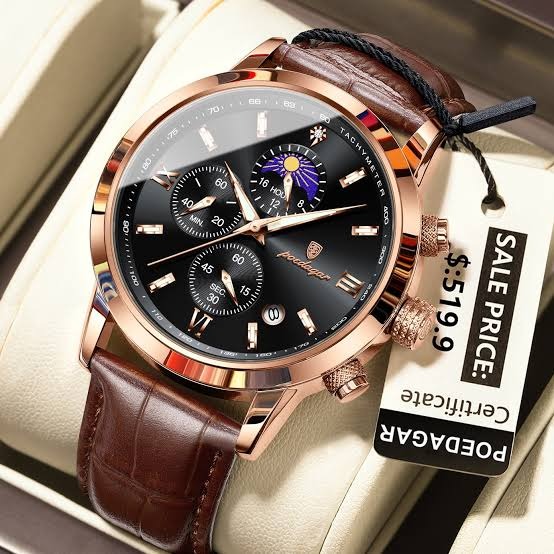
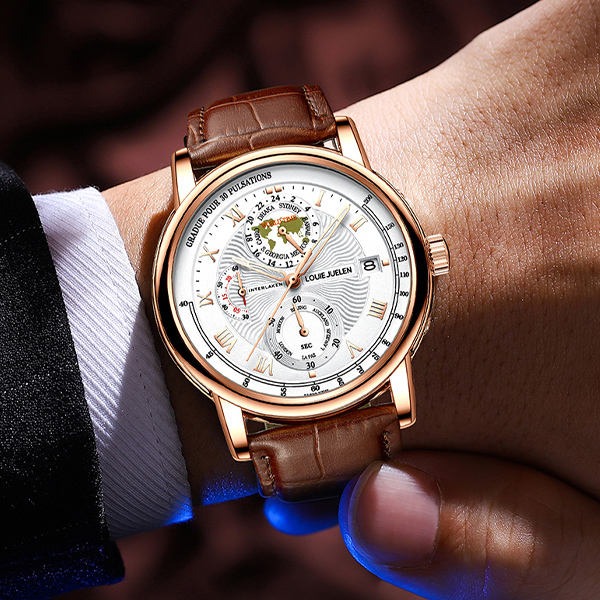
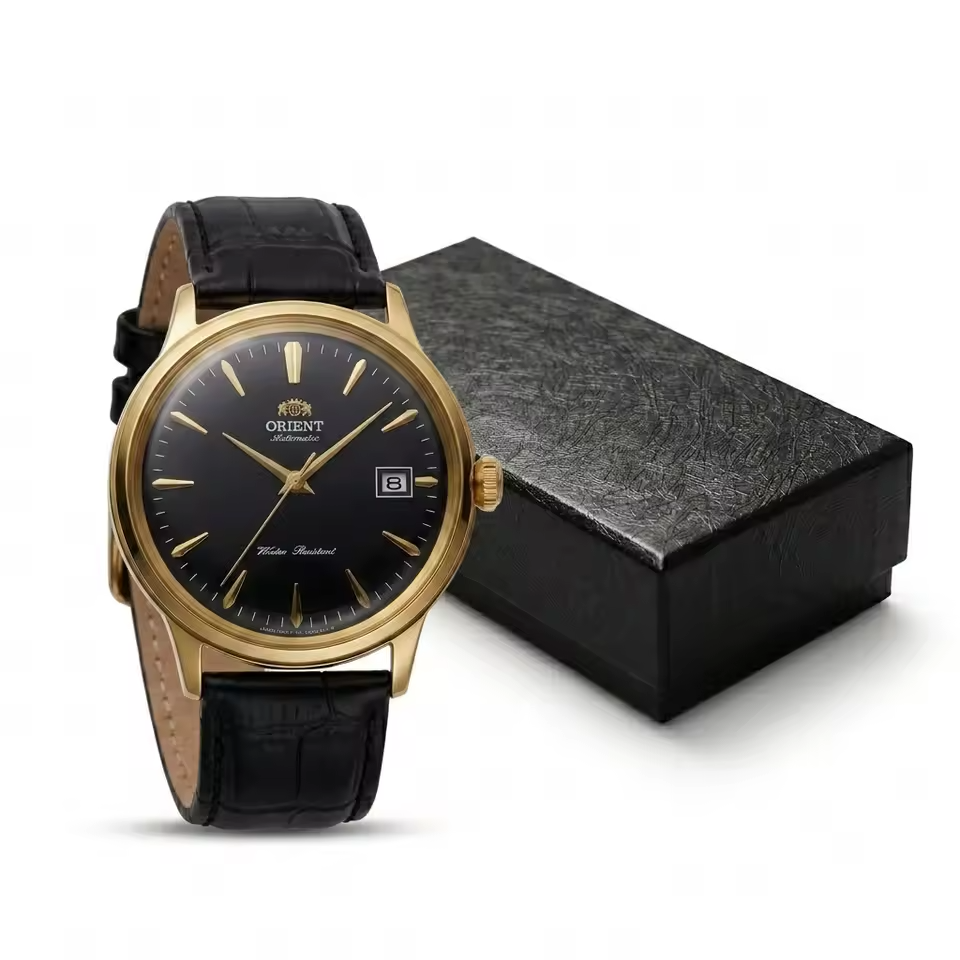
Leather is the classic choice for dress watches and office wear because it is soft, breathable, and grows more beautiful with age, but it is the least water-resistant of the three and needs regular care to avoid cracking. Choose leather when your days are dry, indoor, and dressed up.
Here is why people fall for leather. It conforms to your wrist over the first week or two of wear, so it ends up feeling custom-molded to you. The natural material breathes well, which reduces the sweaty, clammy feeling you can get from synthetics, and it comes in a huge range of colors, grains, and finishes, from smooth black calf to rich cognac to textured suede. Quality leather also develops a patina over time, a soft sheen and deepening tone that makes a well-loved strap look better at year three than it did on day one.
Now the real problem with leather: water and sweat are its enemies. Leather is not water-resistant, and repeated exposure to sweat, rain, or humidity breaks down the fibers, warps the shape, and leaves that stubborn sour smell. This is exactly why a leather strap is the wrong call for workouts, swimming, or a sweaty commute in July.
Leather Strap Care That Actually Prevents Cracking
Cracking happens when leather loses its natural oils and dries out, so the fix is simple conditioning on a schedule. For daily wear, condition the strap every two to three months, or any time it feels dry or slightly stiff; for occasional wear, every 6 to 12 months is plenty.
Keep it simple and your strap can last for years:
- Clean first, condition second. Wipe the strap with a barely damp cloth, let it fully dry, then apply a pea-sized amount of leather conditioner with a soft cloth in small circles. Let it absorb for about an hour, then buff off the excess.
- Choose the right product. Look for conditioners based on natural waxes and oils like beeswax. Avoid conditioners that contain silicone, which can seal the leather's pores and eventually dry it out.
- Never force-dry it. If your strap gets wet, let it air-dry away from heat. A hairdryer, radiator, or direct sun will shrink the leather and cause the exact cracking you are trying to prevent.
- Rotate your straps. Giving leather a day off between wears lets accumulated moisture evaporate and dramatically extends its life.
Metal Bracelets: The Most Durable, Adjustable, All-Rounder
A metal bracelet, usually stainless steel, is the most durable and versatile option, handling water and daily abuse with ease while looking sharp from the gym to the boardroom. The trade-offs are weight and a slightly fussier initial sizing, but for one-strap-does-everything wearers, metal is hard to beat.
Steel simply outlasts the alternatives. It shrugs off water, resists scratches and wear far better than leather, and needs none of the conditioning rituals leather demands. Cleaning is a rinse and a wipe. That toughness, plus a polished, grown-up look that works with a suit or a T-shirt, is why metal is the default for so many everyday watches.
Metal bracelet comfort is better than its reputation suggests, and it comes down to design more than raw weight. Weight distribution matters more than total grams: a bracelet spreads the load across your whole wrist, so a heavier watch on a well-made bracelet can feel lighter than a small watch on a stiff strap. The style of bracelet changes the feel completely:
- Oyster — a sturdy three-link design, sporty and secure.
- Jubilee — five smaller links that flex and contour to the wrist, dressier and famously comfortable.
- Milanese / mesh — a fine woven weave with no pinch points and no gaps, light and breathable despite the tough look.
- Beads-of-rice — small rounded links that drape softly, a refined, vintage-leaning option.
The one honest drawback: sizing takes a little work. A metal bracelet has to be adjusted to your wrist by adding or removing links, and you generally want it about half an inch over your wrist measurement so it sits with a touch of slack rather than pinching. Look for a clasp with micro-adjustment, which lets you fine-tune the fit as your wrist swells in heat or shrinks in cold. Keep your spare links somewhere safe.
Silicone and Rubber Straps: Built for Sweat, Water, and Hot Weather
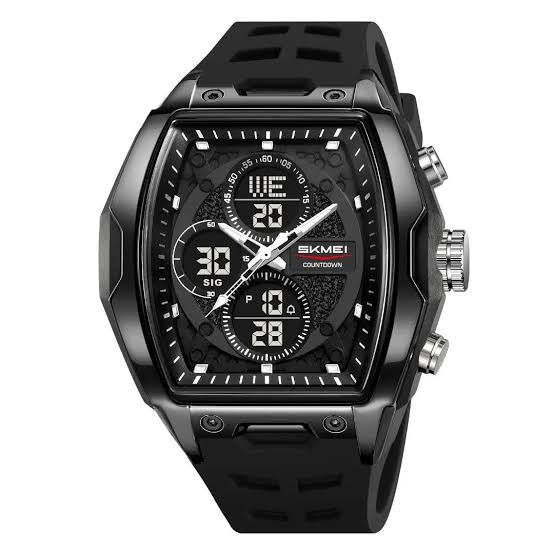
Silicone is the best watch strap for hot weather, workouts, and water because it is lightweight, flexible, and does not absorb sweat or moisture, so it wipes clean in seconds. The catch is that it reads casual and sporty, so it is the wrong choice for formal dress and long-term daily formality.
If your problem is silicone strap sweat performance, this is the material that solves it. Silicone does not soak up perspiration the way leather does, it repels water and dries almost instantly, and it stays flexible and comfortable through the most intense activity. Swimmers, runners, and anyone living in a humid climate gravitate to it for exactly these reasons. It is also the easiest of all three to maintain: soap, water, a quick wipe, done.
A few honest caveats keep this realistic. Because silicone resists water so well, it can also trap moisture and sweat against your skin during long wet wear, which can lead to irritation or bacterial buildup if you never let your wrist breathe, so rinse the strap and dry your skin after heavy sweating. Silicone also performs best in moderate temperatures; it can soften in extreme heat and stiffen in real cold. For genuinely harsh climates or serious dive use, FKM rubber is the premium upgrade, staying flexible and stable across a much wider temperature range than standard silicone. And no matter how good the rubber, it will always look more sport than suit.
Leather vs Metal vs Silicone Watch Straps: Quick Comparison Table
Here is the fast, scannable version to compare the best watch strap material for each priority at a glance.
| Factor | Leather | Metal Bracelet | Silicone / Rubber |
|---|---|---|---|
| Best for | Office, formal, everyday dress | All-rounder, gym to boardroom | Sports, swimming, hot weather |
| Comfort | Soft, breathable, molds to wrist | Good; depends on link style | Lightweight, flexible, barely there |
| Formality | Highest | High and versatile | Casual and sporty |
| Water & sweat | Poor — avoid getting it wet | Excellent | Excellent |
| Durability | Moderate; wears out fastest | Highest | High for sport, softer long-term |
| Maintenance | Regular conditioning needed | Rinse and wipe | Rinse and wipe |
| Weight | Light | Heaviest | Lightest |
| Hot-weather rating | Weak | Fair | Best (FKM rubber for extremes) |
How to Choose the Right Watch Strap for You
Choose your strap by your dominant activity, not your aspiration. Pick the material that survives what you actually do most days, then add a second strap for the exceptions. The wrong strap is simply one built for a life you do not live.
Run yourself through these quick scenarios:
- Desk job, dinners, dry indoor days. Leather is your everyday hero. Keep a conditioner on hand and rotate two straps to double their lifespan.
- One watch, everything, minimal fuss. A steel bracelet is the safest single choice. It handles rain, sweat, meetings, and weekends without complaint.
- Workouts, swimming, humid or tropical climate. Silicone, or FKM rubber if you want the temperature-proof upgrade. Your leather will thank you for staying home.
- You want it all. Buy a watch with quick-release spring bars and keep one of each. Ten seconds and you have transformed the watch for the occasion.
Formality is the tiebreaker most people forget. Leather and metal can both dress up; silicone almost never does. So if a strap has to cross from a boardroom to a black-tie dinner, keep silicone out of that rotation and let it own your active life instead.
Frequently Asked Questions
Can you wear a leather watch strap in the shower or while swimming?
No. Leather is not water-resistant, and repeated exposure to water and sweat breaks down the fibers, warps the shape, and causes cracking and odor. Take a leather strap off before showering, swimming, or heavy exercise, and switch to silicone or metal for anything wet.
Is a silicone or metal strap better for sweaty, hot weather?
For pure sweat and heat performance, silicone wins because it does not absorb moisture, dries instantly, and weighs almost nothing. Metal is fully water-safe too but heavier and can feel hot against the skin. For extreme climates, FKM rubber outperforms standard silicone by staying flexible in both high heat and cold.
Why does my metal watch bracelet feel heavy or pinch my wrist?
Usually it is sizing, not weight. A metal bracelet should be adjusted with link removal to sit about half an inch over your wrist measurement, with a little slack rather than a tight grip. A clasp with micro-adjustment lets you loosen it as your wrist swells in heat, which eliminates most pinching and pressure.
How often should I replace a silicone watch strap?
Silicone is durable for active use but is the least long-lived of the three under daily wear, so many people replace it every year or two as it picks up dust, minor tears, or a permanent set. Rinsing it after sweaty use and keeping it out of prolonged extreme heat noticeably extends its life.
The bottom line is refreshingly simple. Leather for the dressed-up, dry days. Metal for the do-everything wrist. Silicone for sweat, water, and heat. Choose the strap that matches how you actually live, keep a spare for the exceptions, and the watch you love will finally feel right every time you put it on.