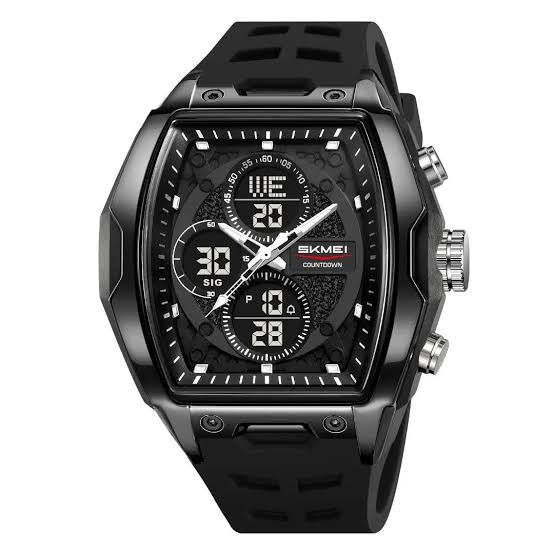


How to Wear a Watch Correctly: Fit and Etiquette
You clasp a watch to your wrist and something feels off. It slides toward your hand when you reach for a door. It bunches under your shirt cuff, or peeks out where you suspect it shouldn't. You catch a glance in the mirror and wonder whether it sits too high, too low, too loose. That flicker of doubt is more common than most people admit, and it has almost nothing to do with the price of the watch. It has to do with fit and etiquette, two things nobody formally teaches yet everyone quietly judges.
Learning how to wear a watch correctly is less about obeying a rulebook and more about understanding a handful of practical principles that generations of wearers have arrived at through comfort, protection, and good taste. Get them right and the watch stops being an accessory you think about. It becomes part of how you carry yourself.
How to Wear a Watch Correctly: The Short Answer
Wear your watch on your non-dominant wrist, positioned just above the wrist bone so it rests on the flatter part of your forearm. Fit it snugly enough that it stays put but allows one finger underneath the band. Match its formality to your outfit, and for dress occasions, let it tuck at least halfway under your shirt cuff.
Everything else is refinement. The sections below unpack each of those decisions so you understand not just what to do, but why it works, and where personal preference is genuinely yours to claim.
Which Wrist to Wear a Watch On
Traditionally you wear a watch on your non-dominant wrist, which for most people means the left. This is a convention rooted in comfort and protection, not a hard rule. Your dominant hand handles writing, gripping, and daily wear and tear, so keeping the watch on the quieter wrist shields it from knocks and keeps it out of the way.
The habit has practical roots. Most of the world is right-handed, so the left wrist became the default. Watch design followed suit: the crown, that little knob you use to set the time, usually sits at the 3 o'clock position on the right side of the case. When the watch rides on your left wrist, your right hand reaches across and adjusts the crown easily without unstrapping anything. Historically, the wristwatch itself owes its popularity to soldiers who needed to check the time with both hands occupied, and that need for quick, unobtrusive glancing shaped the left-wrist norm we inherited.
Does the Dominant Hand Rule Ever Bend?
Yes, and freely. The dominant hand watch question has no wrong answer once you strip away the ceremony. Left-handed wearers often flip to the right wrist for the same comfort logic, and many left-handed enthusiasts choose "destro" watches with the crown on the left to suit that setup. Some right-handed people simply prefer the feel of a watch on the right, or wear it there to keep it clear of a keyboard. If it feels natural and stays out of your way, you are wearing it correctly.
Where a Watch Should Sit and Proper Watch Fit
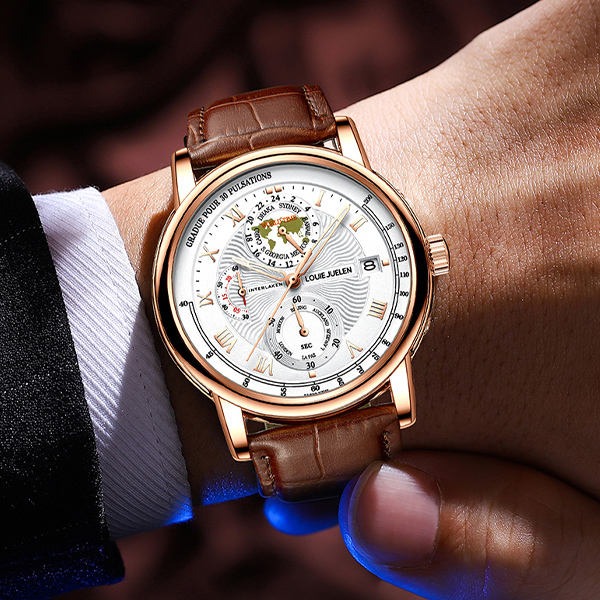
A watch should rest just above your wrist bone, roughly a finger's width up from the bony prominence on the outside of your wrist, on the slightly flatter stretch of your forearm. Fit it so one finger slides comfortably beneath the band. That balance, secure but not strangling, is the foundation of proper watch fit and the detail people notice most.
Placement and tightness work together. Sit the case too far down and it drifts onto the back of your hand, catching on cuffs and looking careless. Sit it in the right spot and it lies flat, stays centered, and reads cleanly at a glance. The case should track with your wrist as you move rather than swinging like a bracelet.
The One-Finger Rule for How Tight a Watch Should Be
The simplest test for proper watch fit is the one-finger rule. Slide your index finger under the strap. It should slip in with a little resistance and no more. If you cannot fit a finger, the band is too tight and will leave marks and pinch through the day. If two fingers fit with room to spare, it is too loose and the watch will spin and slide toward your hand. Metal bracelets can be sized at a jeweler by removing links; leather and rubber straps should be buckled to the hole that holds the case steady without biting.
A well-fitted watch stays in one place when you gesture, lies flat against the skin, and never slides free onto the hand. Some gentle movement is normal and even comfortable. Total stillness usually means it is too tight.
Watch Under or Over Cuff: Sleeve Etiquette
For formal and business dress, the watch traditionally goes under the cuff, tucking at least halfway beneath your shirt sleeve when your arms hang at your sides. A slim dress watch is built for exactly this, sitting close enough to the wrist to disappear under a cuff and reappear with a small movement of the arm.
The reasoning is proportion. Dress watches are made thin so they slide under a cuff without a fight, which is why a bulky sports watch fights a tailored shirt and a dress watch does not. When you stand naturally, the cuff should cover most but not all of the case, revealing the watch as you extend your hand rather than crowding your sleeve open all day.
The Over-the-Cuff Exception
Wearing a watch over the cuff is uncommon and reads as a deliberate style choice rather than a default. It has a pedigree: the look is named the Agnelli style after Gianni Agnelli, the Italian industrialist who wore his watch atop his shirt cuff for easy time-checking and unmistakable flair. In practice it suits casual and cold-weather outfits, where heavy sleeves make pushing a cuff back inconvenient. With a suit, keep the watch under the cuff. Save the over-cuff move for knitwear, outerwear, and moments when you genuinely want to make a statement.
Watch Etiquette Do's and Don'ts
Matching the formality of your watch to the formality of your clothing is the single principle that ties everything together. A clean dress watch with a plain dial and a leather strap belongs with suits and formalwear; a sturdier sports or metal-bracelet watch belongs with casual and business-casual looks. The table below distills the etiquette that quietly signals a considered wearer.
| Do | Don't |
|---|---|
| Wear it on your non-dominant wrist for comfort and protection | Force it onto a wrist where it snags your writing or work |
| Position the case just above the wrist bone | Let it slide down onto the back of your hand |
| Fit it snug with one finger of room under the band | Wear it so tight it marks your skin or so loose it spins |
| Match a slim dress watch to formalwear | Pair a chunky dive watch with a black-tie suit |
| Tuck the watch under the cuff for formal dress | Let a bulky case bulge and gape your shirt sleeve |
| Coordinate strap color with your shoes and belt | Clash a black strap against an all-brown leather rig |
| Keep formal dials simple: hours, minutes, seconds | Overload a dress look with loud complications and bright bezels |
| Let personal comfort guide the finer choices | Treat flexible conventions as unbreakable laws |
Two habits reward a little extra attention. Coordinate materials and color, pairing a black band with black shoes and belt, a brown band with brown leather, and treating silver or gold cases as flexible with either. And keep formal watches understated: the most formal dress watches show little more than the time, while complications and colored bezels read as casual energy.
Small Details That Separate Correct From Careless
Fit and etiquette get you most of the way; a few finishing details do the rest. Keep the strap trimmed or sized so the tail does not flap loose past the keeper. Wipe the case and crystal so it looks cared for rather than forgotten. And wear one watch at a time on a given wrist, letting the piece breathe instead of competing with a stack of bracelets crowding the case.
Comfort deserves the final word. Every convention here traces back to living with a watch all day: protecting it on the quieter wrist, seating it where it stays put, sizing it so you forget it is there, and dressing it to suit the room. Follow the reasoning rather than memorizing the rules and you will wear a watch correctly without a second thought.
Frequently Asked Questions
Which wrist should a woman wear a watch on?
The same principle applies regardless of gender: the non-dominant wrist, usually the left, for comfort and protection. This keeps the watch clear of the busy hand and lets it sit undisturbed. That said, many women wear a watch on whichever wrist feels balanced with other jewelry or simply looks best, and that choice is entirely valid.
Is it wrong to wear a watch on your dominant hand?
No. The non-dominant hand tradition exists for practical comfort, not correctness. Left-handed wearers commonly use the right wrist, and some choose watches with a left-side crown to suit it. Right-handed people can wear a watch on the right too if it feels more natural or stays clear of daily tasks. Comfort and personal preference win here.
How tight should a watch be on your wrist?
Snug enough to stay in place, loose enough to breathe. Use the one-finger rule: your index finger should slide under the band with slight resistance. If no finger fits, it is too tight; if two slip in easily, it is too loose. The watch should lie flat, move with your wrist, and never slide onto your hand.
Should a watch fit under a shirt cuff?
For formal and business dress, yes. A slim dress watch should tuck at least halfway under your shirt cuff when your arm hangs down, with the cuff covering most of the case. Bulkier sports watches are harder to conceal and pair better with casual outfits, where wearing the watch over the cuff is also an acceptable, deliberately stylish option.