

How to Buy Pearls: Akoya vs Freshwater vs South Sea
Pearls carry a quiet kind of power. A single strand can turn an ordinary Sunday outfit into something worth a second glance, and a well-chosen pair of pearl studs can outlast every trend that comes and goes. Yet many first-time buyers in Nigeria feel unsure the moment a seller starts talking about Akoya, freshwater and South Sea. The names sound expensive and the prices swing wildly, so it helps to understand exactly what you are paying for before you part with your money.
This guide walks you through the three pearl types most Nigerian shoppers will meet, how to grade what you are looking at, and the simple at-home checks that separate a real gem from a plastic bead. By the time you finish reading, you will know how to buy pearls that hold their beauty and their value for decades.
How to Buy Pearls: The Three Types You Need to Know
Start by learning the three main cultured pearl families: freshwater, Akoya and South Sea. Freshwater pearls are the most affordable and come in the widest range of shapes and colours. Akoya pearls are the classic round saltwater pearl with sharp, bright shine. South Sea pearls are the largest and most luxurious of all.
Almost every pearl sold today is cultured, meaning a pearl farmer places a small nucleus or piece of tissue inside a live oyster or mussel and allows nature to coat it in layer after layer of nacre, the milky substance that gives a pearl its glow. Natural wild pearls exist, but they are rare and priced for museums and auctions. For everyday buying, your real choice is between the three cultured families below.
Freshwater Pearls: Everyday Elegance on a Budget
Freshwater pearls are grown in mussels farmed in lakes and ponds, with the vast majority coming from China. A single mussel can produce many pearls at once, which is why they are the most affordable option and the easiest place to start.
- Colour and shape: They come in many natural colours including white, cream, pink, peach and lavender, and in shapes from near-round to oval, potato, teardrop and baroque.
- Lustre: Expect a softer, satiny glow rather than a hard mirror shine.
- Size: Commonly 4mm to 11mm and sometimes larger.
- Best for: First pearls, gifts for a young bride or graduate, and building a versatile collection without overspending.
Akoya Pearls: The Classic Round Pearl
Akoya pearls are the pearls most people picture when they hear the word. They are cultured in saltwater oysters, largely off the coast of Japan, and they are prized for being remarkably round and brilliantly shiny.
- Lustre: A sharp, reflective, almost mirror-like shine that reads as crisp and formal.
- Shape: Famously round. Jewellers call top Akoya "eight-way rollers" because they roll evenly in every direction on a flat surface.
- Size: Usually 2mm to 10.5mm, with the largest sizes rare and priced accordingly.
- Best for: A timeless bridal strand, a serious anniversary gift, or the one classic necklace you will wear for life.
South Sea Pearls: The Luxury Statement
South Sea pearls sit at the top of the market. They are cultured in large oysters in the warm tropical waters of Australia, Indonesia and the Philippines, and they take longer to grow, which builds thick nacre and a deep satiny glow.
- Colour: White with silvery overtones or a rich golden shade. The deeper the gold, the more valuable the pearl.
- Size: The largest of all, commonly 9mm to 16mm and occasionally beyond 20mm.
- Lustre: A soft, satiny depth rather than the hard mirror shine of Akoya.
- Best for: Heirloom pieces, milestone anniversaries and once-in-a-lifetime gifts.
Akoya vs Freshwater vs South Sea: A Side-by-Side Comparison
The quickest way to choose is to compare the three pearl types across the factors that matter most: price, shape, shine, size and the occasion each one suits. Freshwater wins on value and variety, Akoya wins on classic round shine, and South Sea wins on size and pure luxury. The table below lays it out clearly.
| Factor | Freshwater | Akoya | South Sea |
|---|---|---|---|
| Source | Freshwater mussels (lakes, ponds) | Saltwater oysters (mainly Japan) | Large saltwater oysters (Australia, Philippines, Indonesia) |
| Typical size | 4mm to 11mm | 2mm to 10.5mm | 9mm to 16mm and above |
| Shape | Round to baroque, many shapes | Very round | Round to drop and baroque |
| Lustre | Soft, satiny | Sharp, mirror-like | Deep, satiny |
| Colours | White, pink, peach, lavender | White, cream, rose overtones | White with silver, or golden |
| Price level | Most affordable | Mid to high | Highest, luxury |
| Best for | Everyday, first pearls, gifts | Bridal, timeless classics | Heirlooms, milestone gifts |
How to Grade Pearls Before You Buy
Grade every pearl you consider across six factors: lustre, surface cleanliness, shape, size, colour and nacre thickness. Lustre is the single most important quality, because it controls how alive a pearl looks. When your budget forces a compromise, always protect lustre first and let the smaller factors give a little.
Unlike diamonds, pearls have no single global grading law, so different sellers use slightly different labels. Many use an A to AAA scale adapted from the Japanese system, where AAA is the top tier. Because the labels vary, judge the pearl itself rather than the letter on the tag, and ask any honest seller to explain what their grade actually means.
The Six Quality Factors Explained
- Lustre: Hold the pearl under light and look at the reflection. High lustre gives a sharp, clear reflection where you can almost see your own features. A dull, chalky look means weak nacre and lower value.
- Surface cleanliness: Genuine pearls carry tiny natural marks. Fewer visible spots, bumps or pits means a cleaner surface and a higher grade. Do not expect flawless perfection, because a few small marks confirm the pearl is real.
- Shape: Perfectly round pearls are the rarest and most valued. Drop, oval and baroque shapes cost less and can be beautifully distinctive.
- Size: Larger pearls are harder to grow, so price climbs with each millimetre, especially past 10mm.
- Colour: Choose a body colour and overtone that flatter your skin. This is personal, though rare colours such as deep golden South Sea command a premium.
- Nacre thickness: Thick nacre gives deeper glow and lasts longer. Thin nacre can peel or dull over years, so it matters for durability as much as beauty.
Real vs Fake Pearls: Simple Tests You Can Do Anywhere
You can screen most pearls in seconds with two quick checks: the tooth test and the touch test. A real pearl feels slightly gritty when rubbed against your teeth and cool on first touch, while a fake feels smooth, slick and plastic. These home tests are a strong first filter, though only a professional can confirm authenticity fully.
The Tooth Test
Rub the pearl gently along the biting edge of your front teeth. A real pearl feels faintly gritty or sandy, like very fine sandpaper, because its nacre is built from microscopic crystal layers. A glass or plastic imitation glides smoothly with no texture at all. Wipe the pearl after testing.
The Touch and Weight Test
Pick the pearls up. Real pearls feel cool against your skin for a moment before they warm up, and a genuine strand carries a little weight. Plastic fakes feel warm right away and often feel suspiciously light in the hand.
The Look Test
Examine the strand closely, ideally with a small magnifier. Real pearls show slight differences from one bead to the next, tiny surface marks and nacre that continues smoothly into the drill hole. Fakes tend to look identical, unnaturally perfect, with sharp clean drill holes and sometimes flaking coating around the edges.
Choosing and Caring for Pearls in Nigeria
Match the pearl to the moment and to your budget. For a bride or a formal wedding guest look, round Akoya or a clean white strand reads elegant and timeless. For everyday wear and gifting on a modest budget, freshwater pearls give the most beauty for your naira. Save South Sea for the biggest milestones.
Pearls are organic, so they need gentle handling to stay lovely in Lagos heat and humidity. A few habits keep them glowing for generations, whether you are dressing for a traditional wedding, a naming ceremony or a corporate event.
- Put pearls on last when dressing, after perfume, hairspray and body cream, since those chemicals dull nacre over time.
- Wipe them with a soft, slightly damp cloth after wearing to remove sweat and oils.
- Store them flat in a soft pouch, away from harder jewellery that can scratch the surface.
- Wear them often. Pearls actually benefit from contact with your skin, so they are not made to sit locked away forever.
- Buy from a seller who explains the type, grade and origin plainly and lets you inspect before you pay.
When you are ready, choose a piece that fits both your style and the occasion in front of you. A thoughtful strand or a pair of pearl earrings makes a gift that feels personal and enduring, which is exactly why pearls have stayed in style across every generation.
Frequently Asked Questions About Buying Pearls
Which pearl type is best for a first-time buyer?
Freshwater pearls are the best starting point for most first-time buyers. They are the most affordable, come in many shapes and colours, and let you build confidence without a large outlay. Once you know the look you love, you can step up to Akoya or South Sea for special pieces.
Are Akoya pearls worth the extra cost over freshwater?
For a formal or bridal piece, many buyers feel Akoya is worth it. You are paying for that sharp, mirror-like shine and the near-perfect round shape that freshwater rarely matches. For casual, everyday wear, high-quality freshwater pearls offer excellent beauty at a friendlier price.
How can I be sure a pearl is real before I pay?
Use the tooth test and the touch test on the spot. Real pearls feel gritty against your teeth and cool at first touch, while fakes feel smooth and warm. Also look for tiny natural marks and nacre inside the drill hole. For a valuable purchase, ask for a professional inspection.
Do pearls hold their value over time?
Good pearls with thick nacre and strong lustre keep their beauty for decades and are often passed down as heirlooms. Value holds best when you buy genuine cultured pearls, care for them properly and keep any receipts or certificates from the seller.
Featured in our collection
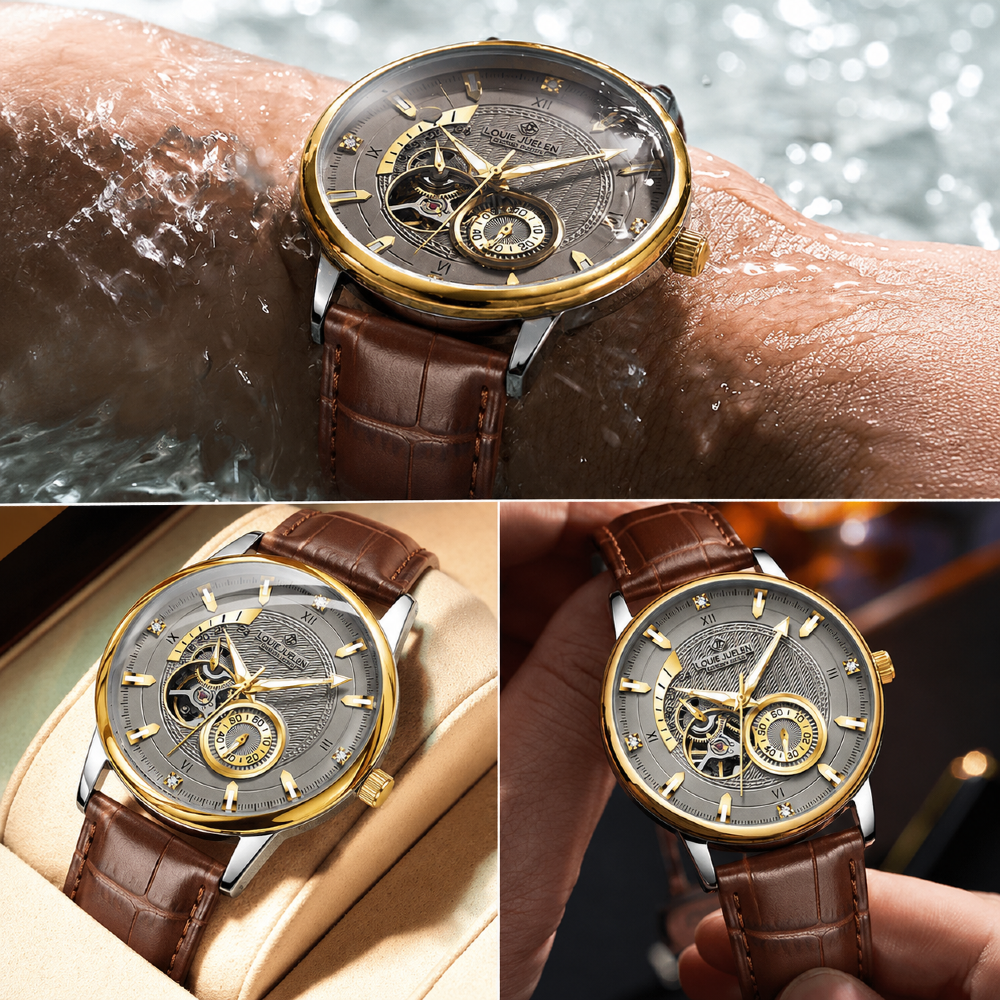
Louis Juelen Luxury Automatic(Tourbillion ) Premium Watch
Automatic Watch Winder
₦85,000
₦150,000
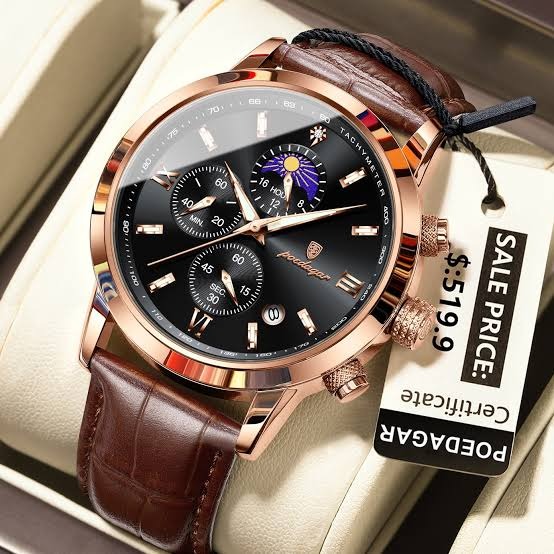
Poedagar Chronograph Luxury Watch
Free 24ml luxury Roll On oil perfume
₦45,000
₦65,000

Louis Juelen Automatic Chain Strap
Automatic Watch Winder
₦140,000
₦250,000