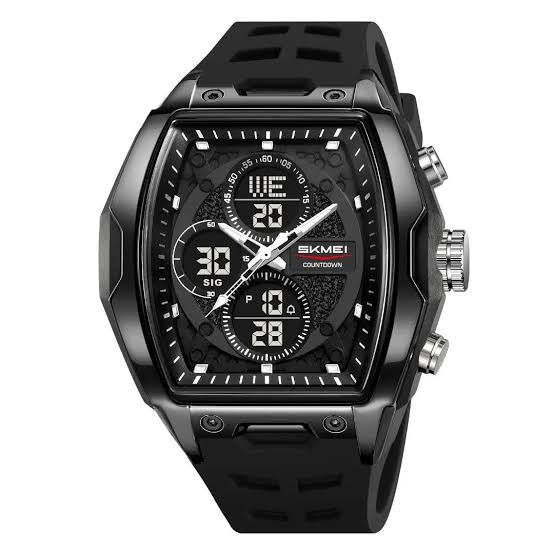


How Often Should You Service a Mechanical Watch? An Expert Guide
Your mechanical watch keeps perfect time, so servicing feels like paying to fix something that isn't broken. That instinct is exactly how good movements quietly destroy themselves. The oils inside are drying out right now, whether the watch is on your wrist or resting in a drawer, and by the time you notice a problem, the friction has often already done its damage. Understanding the rhythm of proper care is the difference between a watch that lasts one lifetime and one that lasts several.
How Often to Service a Mechanical Watch
Most mechanical watches should be serviced every 3 to 7 years, with the industry consensus landing around 5 years for the average automatic. The exact interval depends on your specific brand, the movement inside, and how hard you wear it. Waiting much longer risks dried lubricants and internal wear.
That range exists because a mechanical movement is a closed system of tiny metal parts riding on specialized synthetic oils. Those oils are the whole story. They keep hundreds of components gliding against each other instead of grinding. Over time they thicken, migrate away from where they belong, and eventually dry out completely. Once metal runs on metal, the damage accelerates fast, and what would have been a routine service becomes an expensive parts replacement.
Here is the part that surprises most owners: the clock on your service interval runs even when the watch doesn't. Lubricants degrade with time, not just use. A watch that sits unworn in a safe for six years still needs attention, because the oils have dried out regardless of whether the balance wheel ever swung.
Automatic Watch Service Interval by Brand
Service intervals vary significantly by manufacturer, because escapement design and lubricant technology differ from one house to the next. Traditional Swiss and Japanese movements generally want attention every 3 to 6 years, while brands using advanced low-friction escapements can safely stretch to 8 or even 10 years between full services.
The manufacturers themselves publish guidance, and it is worth knowing where your watch falls. Rolex now recommends servicing roughly every 10 years, citing modern lubricants and improved seal technology. Omega suggests a full service every 5 to 8 years, but strongly advises an annual water-resistance check, especially for dive models like the Seamaster. Seiko leans toward 3 to 5 years for its mechanical calibres, and TAG Heuer typically recommends a full service every 5 to 6 years.
Newer engineering has genuinely moved the needle. Omega's Co-Axial escapement and the Oris Calibre 400 reduce friction so effectively that they extend recommended intervals well beyond the old standard. If your watch uses one of these movements, you have more breathing room than a vintage piece with a traditional lever escapement.
A Reference Table for Common Service Intervals
Use the guide below as a starting point. When in doubt, the manufacturer's own recommendation for your specific reference always wins.
| Brand / Movement Type | Recommended Full Service | Extra Water-Resistance Check |
|---|---|---|
| Rolex (modern) | ~10 years | With each service |
| Omega (Co-Axial) | 5 to 8 years | Annually, especially dive models |
| TAG Heuer | 5 to 6 years | Every 2 years for water-exposed models |
| Seiko (mechanical) | 3 to 5 years | As needed |
| Oris (Calibre 400) | Up to 10 years | Per manufacturer guidance |
| Traditional lever escapement | 3 to 5 years | Every 1 to 2 years |
What a Full Watch Service Actually Includes
A proper service is a complete overhaul of the movement, not a quick polish. The watchmaker fully disassembles the movement into its individual parts, cleans each one, reassembles everything with fresh lubrication, regulates the timing, and reseals the case before pressure-testing its water resistance. It is meticulous, hands-on work performed by a trained specialist.
Here is what happens on the bench, step by step:
- Complete disassembly. The movement is taken apart down to its hundreds of individual components. Nothing is skipped, because a single worn wheel or dry pivot can throw off the entire system.
- Ultrasonic cleaning. Every part is cleaned in an ultrasonic machine using specialized chemical solutions that strip away old, hardened oils and accumulated debris.
- Reassembly and lubrication. The watchmaker rebuilds the movement, applying tiny, precise amounts of several different synthetic oils to specific friction points. Different jewels and gears require different lubricants, and the placement has to be exact.
- Regulation. The reassembled movement goes onto a timing machine that measures accuracy in multiple physical positions. The watchmaker fine-tunes the balance wheel until the watch keeps time reliably whether it sits flat, crown-up, or crown-down.
- New gaskets and pressure testing. Once the movement is back in the case, fresh gaskets and seals are fitted, and the watch is pressure-tested to confirm it meets its stated water-resistance rating.
- Case and bracelet care. The case and bracelet are typically cleaned ultrasonically, and many services offer optional refinishing, polishing or brushing, to remove the scratches of daily wear.
The result is a watch that runs as its maker intended, sealed against moisture and lubricated for years of reliable service.
Signs a Watch Needs Servicing
Watch for changes in accuracy, power reserve, and moisture. If your watch suddenly gains or loses more than about 30 seconds a day, stops well before its rated power reserve runs out, or shows fogging under the crystal, those are clear signals that the movement needs professional attention sooner rather than later.
Pay close attention to these warning signs:
- Timekeeping drifts noticeably. A mechanical watch that consistently gains or loses more than roughly 30 seconds per day is telling you something is wrong inside, often dried oils, magnetization, or a worn escapement.
- The power reserve collapses. If a watch rated for 40 hours now stops after 12, the movement is struggling. Dried lubricants or a fatigued mainspring are common culprits.
- Moisture appears inside the case. Fogging under the glass or visible droplets means the seals have failed. Moisture is the single biggest enemy of a movement and can cause rust and permanent damage quickly. Treat this as urgent.
- You hear grinding or unusual sounds. Grinding, rattling, or irregular ticking suggests parts are worn or misaligned.
- Winding feels rough. If turning the crown feels gritty instead of smooth, the winding mechanism has likely dried out and needs fresh lubrication.
Any one of these deserves a trip to a watchmaker. Moisture in particular should never wait, because the cost of delay is measured in rusted components rather than a simple oil change.
Watch Service Cost: What to Expect
A full mechanical watch service generally costs between $150 and over $1,000, depending on the brand, movement complexity, and who performs the work. A standard three-hand automatic serviced by a skilled independent watchmaker typically falls in the $150 to $350 range, while complex or luxury pieces climb well beyond that.
Several factors drive the final number:
- Brand and parts. Luxury Swiss brands cost more to service than Japanese or fashion pieces, because official parts are pricier and movements are more intricate.
- Movement type. Mechanical movements, both manual-wind and automatic, cost more than quartz simply because hundreds of parts must each be cleaned, inspected, and reassembled by hand.
- Complications. A chronograph adds levers, cams, springs, and pushers, all of which add labor. A basic clean-and-oil on a chronograph often runs $200 to $600, and a full overhaul with worn parts replaced can reach $300 to $800 for standard movements.
- Who does the work. An independent watchmaker is usually more affordable than sending the watch back to the manufacturer, though brand service centers may be necessary for certain in-house movements and warranty considerations.
Weighed against the cost of a seized movement or a rust-damaged mainplate, timely servicing is the far cheaper path.
Is Watch Servicing Necessary?
Yes, regular servicing is genuinely necessary for a mechanical watch you intend to keep. The synthetic oils that let the movement run degrade with time whether or not you wear the watch, and once they dry out, unlubricated metal parts begin to wear against each other. Servicing on schedule prevents small, cheap problems from becoming large, expensive ones.
Think of it the way you would think of oil changes for a fine car. Skipping them doesn't cause immediate failure, which is exactly what makes neglect so tempting and so costly. A well-maintained mechanical watch can be passed down for generations. A neglected one becomes a repair project, or worse, a paperweight with sentimental value and no working movement.
For a watch you love, servicing isn't an expense. It is the price of keeping something beautiful alive and accurate.
Frequently Asked Questions
How often should you service an automatic watch if you rarely wear it?
Even a rarely worn automatic watch should be serviced roughly every 5 years. The special lubricants inside degrade and dry out over time regardless of use, so a watch sitting in a drawer still needs periodic attention. Time, not just wrist time, determines when the oils give out.
Can I damage my mechanical watch by delaying a service?
Yes. Once the lubricants dry out, metal parts run directly against each other, accelerating wear on pivots, wheels, and the mainspring. What would have been a routine clean-and-oil can turn into a costly parts replacement. Delaying also raises the risk of moisture intrusion if seals have quietly failed.
How do I know if my specific watch needs servicing right now?
Watch for three things: accuracy that drifts beyond about 30 seconds a day, a power reserve that ends far short of its rating, and any fogging or moisture under the crystal. Rough winding and grinding sounds are also red flags. Any of these means it is time to see a watchmaker.
Is it worth servicing an inexpensive mechanical watch?
It depends on sentimental and monetary value. If the service cost approaches the replacement price of the watch, many owners choose to replace it. For a piece you love, plan to keep, or intend to pass down, servicing is almost always worthwhile, because a maintained movement can run reliably for decades.