

Harmattan Season Survival: Caring for Hair, Skin and Watches
You feel it before you see it. The lips crack first, then the knuckles. Your favourite wig that fell in soft, glossy waves last month now frizzes and lifts with static the second you touch it. The gold chain you wear every day looks cloudy under a film of fine dust, and the leather strap on your watch has gone stiff and pale at the edges. That is harmattan doing what it does best: pulling moisture out of everything you own, including you.
The harmattan wind blows down from the Sahara across West Africa roughly between November and March, carrying dry, dusty air and pushing humidity down to as low as 15 percent. That single fact explains almost everything that goes wrong with your hair, your skin and your accessories during this stretch of the year. Once you understand that harmattan is a moisture thief, the care routine writes itself. This guide walks you through all three: harmattan hair care, protecting your skin, and keeping your watches and jewellery looking new.
Why Harmattan Wrecks Your Hair, Skin and Accessories
Harmattan damage comes down to two forces working together: extremely low humidity that pulls water out of anything porous, and fine Saharan dust that settles into every surface and strips away natural oils. The drier the air, the faster moisture escapes from your hair shaft, your skin barrier and even the fibres of a leather strap.
Think of the air during harmattan as a sponge that is nowhere near full. Because the air holds so little water, it draws moisture from wherever it can find it, and that includes the water inside your hair and skin. Dermatologists describe this as a moisture gradient: the bigger the gap between the water in the air and the water in your body, the faster that water evaporates. Add the dust, which physically abrades surfaces and lodges in cuticles and clasps, and you have the recipe for brittle hair, flaky skin and dull, gritty jewellery.
The fix for all three is the same in principle. Add moisture, seal it in, and create a barrier between your things and the dry, dusty wind. The methods differ by material, so let us take them one at a time.
Harmattan Hair Care: Keeping Natural Hair and Wigs Soft
The core rule of harmattan hair care is to flood the hair with moisture and then seal it with an oil or butter so the dry wind cannot pull it back out. Wash gently, deep condition often, moisturise daily with a leave-in, and cover your hair with satin whenever you can. This applies to relaxed hair, natural kinky hair, and human hair wigs alike.
Harmattan strips hair of its moisture, leaving it brittle, frizzy and prone to breakage, and the effect is even harsher on natural hair, which can lose its shine and elasticity fast. The dust itself is part of the problem. Those fine particles penetrate the hair shaft, roughening the cuticle and leaving strands porous and thirsty.
Deep condition and seal in moisture
Start with hydration and lock it down. Deep condition regularly to restore what the dry air takes, then seal with an oil or butter, local shea butter being a classic and effective choice, to trap that hydration against the strand. An oil-based pomade worked through washed hair, whether relaxed or kinky, noticeably reduces damage through the dry season. The order matters: water or a water-based product first, then oil or butter on top to hold it.
Wash less, and never with anything harsh
Over-washing is a quiet harmattan mistake. Excessive washing strips the natural oils your hair desperately needs right now, so move to a gentler, less frequent cleansing routine and lean on co-washing or moisturising cleansers instead of stripping shampoos. Every wash you skip is moisture you keep.
Protect with satin and protective styles
Covering your hair is one of the highest-return habits of the season. A satin scarf over your hair outdoors keeps dust from settling into the cuticle, and swapping cotton for a satin bonnet or satin pillowcase at night stops the friction that snaps dry, fragile strands. Protective styles help too: braids, plaits and low-manipulation styles shield the hair from the wind and cut down on daily breakage.
Wig care in dry season: fighting static and dryness
Dry season wig care follows the same logic, with a few wig-specific moves. A dry, alcohol-free leave-in conditioner keeps a human hair wig soft between washes, detangles it and reduces the friction breakage that dryness causes. Spritz a moisturising leave-in every day or every few days depending on how dry the air feels and how often you wear the piece. To moisturise human hair in harmattan, look for nourishing ingredients like argan oil, coconut oil or aloe vera, and choose sulfate- and paraben-free formulas so you avoid buildup.
Static hair in dry weather is a wig hazard all its own. That lift and cling comes straight from the lack of humidity, and a light mist of leave-in conditioner tames the frizz and flyaways on both human and synthetic hair. When you take the wig off, store it on a mannequin or inside a satin or silk bag so it does not dry out on the shelf. If you must sleep in it, braid it down and cover with a satin bonnet.
Harmattan and Skin: Building a Barrier Against Dry, Dusty Air
Winning the harmattan and skin battle means switching from light, water-based products to rich, emollient ones and locking in moisture before the dry air can steal it. Cleanse gently, moisturise on damp skin, protect with sunscreen, and shield your body from the dust. Your summer routine will not survive this season unchanged.
The dry, dusty wind strips the skin's natural moisture barrier, which is what leaves you with flakiness, tightness, chapped lips and sometimes cracked heels. The dust also sits on the skin surface and irritates it, worsening sensitivity and inflammation for anyone already prone to it.
Cleanse gently, moisturise while damp
Retire the harsh, foaming cleansers for now. Switch to cream-based, oil-based or gentle hydrating cleansers with a low pH so you clean without tearing down the barrier you are trying to protect. Then time your moisturiser well: the best window is within about three minutes of bathing, while the skin is still damp and can trap that surface water before the dry air pulls it away. Reach for richer, more emollient formulas than you would use in the rainy season, and go thickest on the body, hands and feet, which suffer most. A thick body butter straight after a shower does more than any lightweight lotion in December.
Do not over-exfoliate, and never skip sunscreen
Frequent exfoliation makes harmattan dryness worse, so ease off the scrubs and acids and let barrier protection take priority. Keep your sunscreen, though. UV rays reach your skin year-round, harmattan haze included, so daily SPF stays non-negotiable. Drink water steadily through the day, and if you can, run a humidifier in your bedroom at night to put some moisture back into the air while you sleep.
Your Harmattan Care Cheat Sheet
Here is the whole season at a glance. Keep this table handy and you will not have to think twice about what each thing needs.
| What you are protecting | The harmattan threat | Your move | How often |
|---|---|---|---|
| Natural / relaxed hair | Brittleness, breakage, dust in the cuticle | Deep condition, seal with shea butter or oil, satin at night | Moisturise daily; deep condition weekly |
| Human hair wig | Dryness, static, tangling | Alcohol-free leave-in spray; store in satin bag | Every 1 to few days |
| Face | Flaking, tightness, chapped lips | Gentle cleanser, rich moisturiser on damp skin, SPF | Twice daily |
| Body, hands, feet | Cracking, ashy skin | Thick body butter within 3 minutes of bathing | After every shower |
| Leather watch strap | Drying, stiffening, cracking | Wipe daily, condition with leather balm | Wipe daily; condition every few weeks in harmattan |
| Gold jewellery | Dust film, dullness | Warm soapy soak, dry storage | Every 1 to 2 weeks |
| Silver jewellery | Tarnish, dust buildup | Soapy soak or foil-and-baking-soda bath, anti-tarnish pouch | Every 2 to 4 weeks |
Protect Leather Straps From Dry Dust: Watch Care in Harmattan
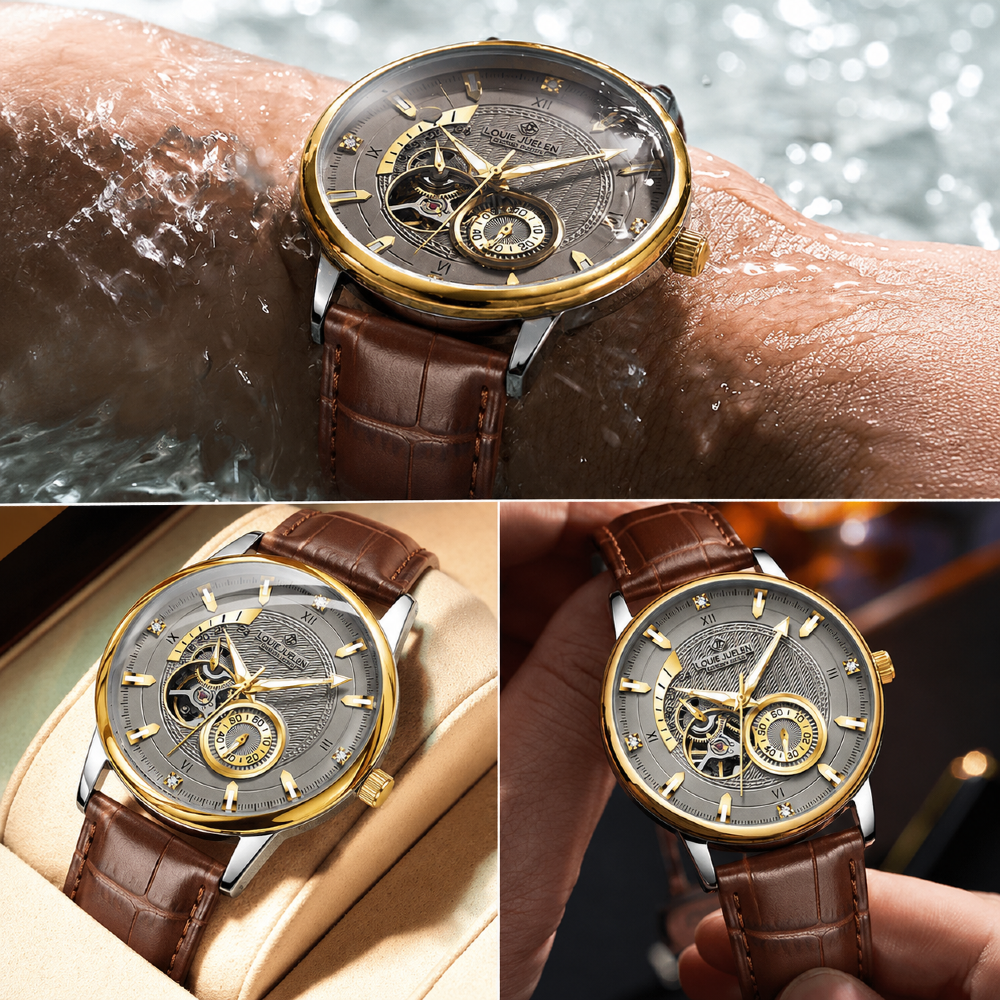
To protect leather straps from dry dust, wipe them clean every day and condition the leather regularly so it never dries out and cracks. Harmattan does to a leather strap exactly what it does to your skin, pulling out the natural oils until the leather stiffens, pales and eventually splits.
When leather sits in dry, arid air it loses those natural oils and begins to crack, so conditioning is the whole game. A leather strap conditioner or balm replenishes the fats and oils inside the leather fibres and keeps the strap soft, flexible and crack-resistant. Once every 6 to 12 months is enough in normal weather, but harmattan is not normal weather, so condition more often through these months, the same way you would with heavy sun exposure.
The routine is simple. Make sure the strap is clean and completely dry, put a pea-sized amount of conditioner on a soft cloth or your finger, massage it into the leather in small circles across the whole surface, let it absorb for about an hour, then buff off any excess with a clean cloth. Between conditioning, wipe the strap daily with a dry, soft cloth to lift off dust, and use a barely damp cloth only when it genuinely needs it. Store your watch away from direct sun and heat sources like a car dashboard or a radiator, and never seal leather in plastic, which traps moisture and invites mould.
Keeping Gold and Silver Jewellery Bright Through the Dust
Harmattan dust settles into every link and clasp and leaves gold and silver looking cloudy, so a gentle regular clean keeps your jewellery bright. A warm soak in water and a little dish soap lifts the everyday film of dust, oil and lotion from most fine metals and durable stones without harming them.
For frequently worn pieces, clean gold every one to two weeks and silver every two to four weeks, or the moment tarnish shows. Silver that has already dulled responds well to an old trick: line a bowl with aluminium foil shiny side up, add a tablespoon of baking soda per cup of hot water, and rest the silver on the foil so the tarnish transfers off the metal. A little white vinegar also dissolves light tarnish and residue in a pinch.
Prevention beats cleaning. Store everything in a dry place, since moisture speeds up tarnish, and keep silver in airtight or anti-tarnish pouches. Put your jewellery on after your perfume, lotion and hairspray, never before, because those products damage silver and dull gold over time. Skip bleach and chlorine entirely, and never scrub with anything abrasive that could scratch the finish.
Frequently Asked Questions About Harmattan Care
How do I stop my hair breaking during harmattan?
Breakage during harmattan comes from dryness and friction, so the fix is moisture plus protection. Deep condition weekly, moisturise daily with a water-based product sealed by shea butter or oil, wash less often with a gentle cleanser, and cover your hair with satin at night and a scarf outdoors. Protective styles like braids cut down daily breakage further.
How often should I condition a leather watch strap in the dry season?
More often than the usual once or twice a year. Because harmattan pulls oils out of leather quickly, treat it like heavy sun exposure and condition every few weeks through the season instead of every several months. Between conditioning sessions, wipe the strap daily with a soft dry cloth and keep it out of direct sun and heat.
What is the best way to moisturise a human hair wig in harmattan?
Use a dry, alcohol-free leave-in conditioner spray with nourishing oils like argan, coconut or aloe, and mist it every day or every few days depending on how dry the air is. It softens the hair, controls static and reduces tangling. Store the wig in a satin or silk bag between wears so it does not dry out on the shelf.
Why does my jewellery look dull during harmattan, and how do I fix it?
That dullness is a film of fine Saharan dust plus everyday oils settling on the metal. A warm soak in water with a drop of dish soap lifts it from gold and silver safely. Clean gold every one to two weeks and silver every two to four, store everything dry, and put jewellery on after perfume and lotion to keep it bright.