

Chronograph Watches Explained: Do You Actually Need One?
There is a specific kind of buyer's remorse that lives on the wrist. You fall for a watch with two or three little dials tucked inside the main face and a pair of pushers flanking the crown. It looks purposeful, mechanical, serious. Then it arrives, and over the next year you press those buttons exactly twice, both times to see if they work. That is the honest tension at the heart of chronograph watches. They are among the most beautiful and desirable timepieces you can own, and most people who buy one never once use the function they paid extra for.
So this is a straight answer to a fair question. What is a chronograph, what do those dials and buttons actually do, and do you genuinely need one, or do you just want the way it looks? Both answers are valid. You simply deserve to know which one you are acting on before you spend.
Chronograph Watches Explained: What a Chronograph Actually Is
A chronograph is a watch with a built-in stopwatch. That is the whole idea in one sentence. The word describes a complication, meaning any function a watch performs beyond simply telling the time, and this particular complication lets you start, stop, and reset a timer without disturbing the hands that keep your regular time. Think of two independent instruments sharing one dial.
The everyday hands continue their normal job of showing the hour and minute. Layered on top sits a separate timing mechanism that you control by hand. Press to begin, press to pause, press to zero it out. When the chronograph rests, most of its hands sit frozen at twelve, which is precisely why so many owners glance down and forget the feature is even there. It only comes alive when you ask it to.
Worth clearing up early: chronograph and chronometer sound almost identical and mean completely different things. A chronograph is a stopwatch function. A chronometer is a precision rating. We will untangle that fully further down, because the mix-up costs people money.
The Subdials and Pushers, Decoded
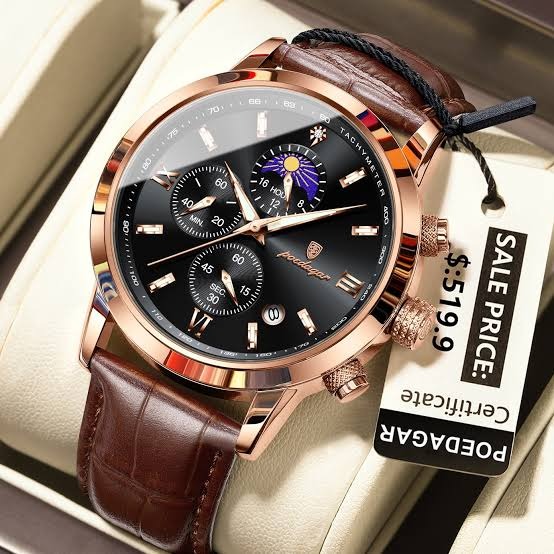
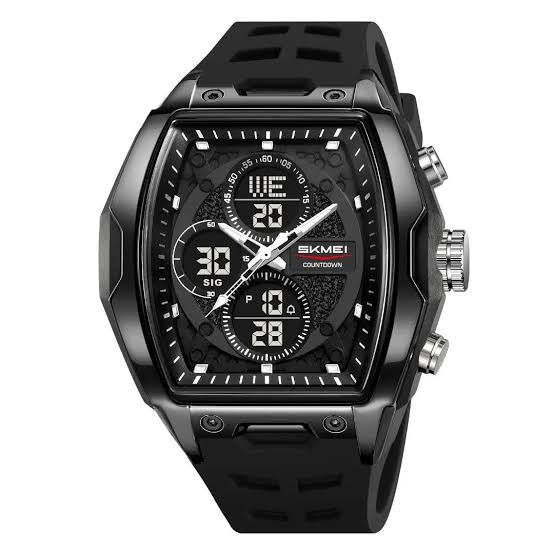
The small dials inside the main face are called subdials or totalizers, and they exist to hold your elapsed time so the reading does not get lost. On a typical layout you will find them near the 3, 6, and 9 o'clock positions, tracking elapsed minutes and hours, while a large central hand sweeps around the outer edge counting the elapsed seconds. That central sweeping hand is the giveaway: on most chronographs it stays perfectly still until you start timing.
The two buttons on the side of the case are the pushers, and they do all the work. The upper pusher, usually at 2 o'clock, is your start and stop control. One press and the timing begins; press it again and everything freezes so you can read the result. The lower pusher, usually at 4 o'clock, is the reset. After you have stopped, a press snaps every chronograph hand cleanly back to zero, ready for the next go.
One caution owners learn the hard way. On a purely mechanical chronograph, you generally reset only after stopping, never while the timer is still running, because forcing the reset mid-count strains the mechanism. Treat the sequence as start, stop, reset, in that order, and the complication will serve you for decades.
How to Use a Chronograph in Real Life
Using a chronograph takes about three seconds to learn. Press the top pusher to start timing, press it again to stop, then press the bottom pusher to send the hands back to zero. Read your elapsed time by combining the central seconds hand with whatever the minute and hour subdials show. That is the entire skill.
The interesting part is what you point it at. A chronograph is genuinely useful for anything you would otherwise time with a phone, only without breaking eye contact or fishing a device out of your pocket. Steeping tea or coffee to the exact minute. Timing intervals at the gym. Tracking how long a work call actually ran. Parking meters, laps, cooking, a child's swimming heat. None of these are glamorous, and that is the point: the everyday usefulness is real, even if it is modest.
Reading a Tachymeter Scale
If your chronograph has numbers printed around the outer bezel or rim descending from something like 500 down toward 60, that is a tachymeter, and it converts elapsed time into speed. It sounds arcane but the mechanics are simple. Start the chronograph as an object begins traveling a known distance of one mile or one kilometer, stop it when the object finishes, and read the number the seconds hand points to on the tachymeter scale. That number is the average speed in units per hour.
Here is the classic example. A car covers one mile and it takes 45 seconds; when you stop the chronograph, the seconds hand lands on 80, telling you the car averaged 80 miles per hour. The scale is built on a fixed piece of arithmetic, dividing 3,600 seconds in an hour by your elapsed time, so it does the division for you. Cover more than one unit of distance and you multiply: 1.2 miles in that same 45 seconds works out to 80 times 1.2, or 96 miles per hour.
The honest limitation: a tachymeter only reads cleanly for events lasting between roughly 7 and 60 seconds, because past a minute the seconds hand has looped the dial and the scale runs out. It is a wonderful piece of analog cleverness. It is also something the overwhelming majority of owners will admire and never once use in earnest.
Chronograph vs Chronometer: The Difference That Costs People Money
These two words get swapped constantly, and confusing them can lead you to overpay or to expect something your watch does not offer. A chronograph is a function, the stopwatch we have been describing. A chronometer is a certification of accuracy, awarded to a movement that has passed rigorous precision testing. One is about doing; the other is about keeping time correctly.
To earn the chronometer title, a movement is submitted to an independent body, most commonly Switzerland's COSC or the newer METAS standard, and it must keep time within a tight tolerance, generally around minus 4 to plus 6 seconds per day. That rating says nothing about whether the watch can time anything. It only certifies that the watch is exceptionally accurate at its core job.
A single watch can be both. A chronograph that has also passed chronometer testing is a certified-accurate stopwatch watch, and that dual pedigree is part of what commands premium prices on the most storied racing and pilot models. So when you see the two terms together, you are not reading marketing fluff. You are reading two separate, verifiable claims: it can time events, and it keeps superb time.
Chronograph Pros and Cons: The Honest Ledger
Before the table, the one-line verdict: a chronograph gives you versatility, presence, and mechanical soul, at the cost of extra thickness, higher price, and pricier servicing. Whether that trade lands in your favor depends entirely on how much you value the character versus how much the practical downsides will nag at you.
| Consideration | The Upside | The Trade-Off |
|---|---|---|
| Function | A genuine on-wrist stopwatch, always ready, no phone required | Most owners rarely use it in daily life |
| Design | Busy, purposeful dials with real visual depth and presence | The extra subdials can read as cluttered to some eyes |
| Cost | Strong resale and desirability on iconic models | More expensive than a comparable time-only watch |
| Thickness | Substantial, confident wrist presence | The added gearing makes the case notably thicker and heavier |
| Servicing | Rewards proper care with decades of use | More moving parts mean costlier service, often advised every 3 to 5 years |
| Movement choice | Quartz and meca-quartz keep cost and bulk down | In-house mechanical versions can be dear to buy and to maintain |
A note on that last row, because it decides more than people realize. Quartz chronographs are the most affordable and accurate, and they stay slim. Meca-quartz movements are widely regarded as the sweet spot, combining a satisfying mechanical pusher feel with lower cost and easier upkeep. Fully mechanical chronographs are the romantic choice, foregoing batteries for traditional watchmaking, but they are the thickest, priciest, and most demanding to service. There is no wrong answer here, only the one that fits your wrist and your budget.
So Do You Actually Need One?
You do not need a chronograph. Almost nobody does, in the strict sense, because a phone times things perfectly well. What matters is a more useful question: will you enjoy owning one, and will the trade-offs bother you? For a great many buyers the answer to both is a happy yes, and that is reason enough.
Reach for a chronograph if you love the layered, instrument-panel look, if the tactile click of a pusher genuinely pleases you, or if you belong to the small group with real timing needs. Historically, pilots, racing drivers, divers, and medical staff relied on this complication daily, and if your work or hobby involves timing intervals, the convenience is honest and immediate. Buy it for the look and the mechanical pleasure, buy it for the function, or buy it for both. Just do not buy it because you think you are supposed to.
Steer toward a simpler time-only watch if you want the slimmest possible profile under a shirt cuff, if you would rather put your budget toward a cleaner dial or a nicer movement, or if you know yourself well enough to admit those pushers will gather dust. A beautifully made three-hand watch is not a lesser choice. For many people it is the wiser one.
Frequently Asked Questions
Is a chronograph watch worth it if I will never use the stopwatch?
It can absolutely be worth it, as long as you are honest that you are buying the design and the mechanical character rather than the function. Plenty of the most admired watches ever made are chronographs, and many owners treasure them purely for their looks and presence. The only genuine mistake is paying the chronograph premium while expecting to need the timer, then feeling shortchanged when you do not.
What is the difference between a chronograph and a chronometer again?
A chronograph is a watch with a built-in stopwatch you operate using the side pushers. A chronometer is any watch, with or without a stopwatch, whose movement has passed independent precision testing for accuracy, typically within about minus 4 to plus 6 seconds per day. One describes what the watch can do; the other certifies how accurately it keeps time. A watch can be one, the other, or both.
Do I really have to service a chronograph more often than a normal watch?
A mechanical chronograph has more moving parts than a simple three-hand watch, so servicing tends to cost more and is commonly recommended every 3 to 5 years depending on the brand and how hard you use it. If that upkeep gives you pause, a quartz or meca-quartz chronograph sidesteps much of the expense and complexity while still giving you the pushers and subdials you came for.
Can I press the reset button while the chronograph is still timing?
On most mechanical chronographs, no. You should stop the timer with the top pusher first, then press the lower pusher to reset the hands to zero. Forcing a reset while the mechanism is running strains the movement over time. Follow the simple order of start, stop, then reset, and the complication will run happily for years.
Owning a chronograph should feel like a decision you made with your eyes open, not a default you drifted into. Know what the subdials do, know that chronograph and chronometer are not the same word, and be clear about whether you are buying the function, the beauty, or both. Get that right and there is no remorse waiting on the other side, only a watch you understand and enjoy.