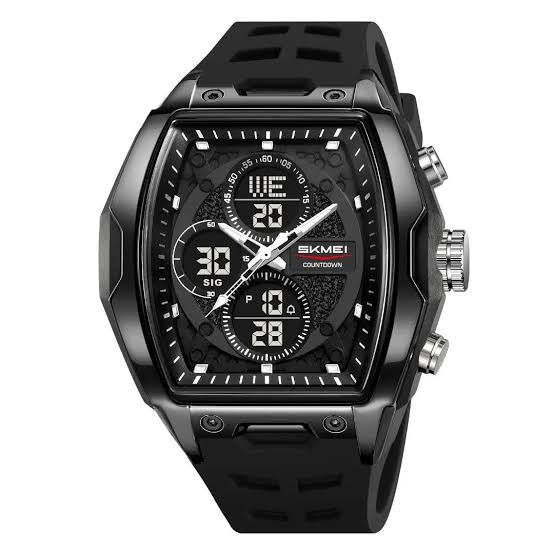


Best Watch Size for a Small Wrist: The Expert Fit Guide
You slide a watch over your hand, fasten the clasp, and something feels off. The case slumps to one side. The lugs jut past the edges of your wrist and hover in the air. What should have looked refined instead looks borrowed, as if you reached for someone else's watch by mistake. If that scene sounds familiar, you have a small wrist and a sizing problem, not a style problem. The right watch exists, and it will look like it was made for you.
Choosing the best watch size for a small wrist comes down to a handful of measurements most shoppers never check. Case diameter gets all the attention, yet it is only part of the story. Once you understand how diameter, lug-to-lug length, and case thickness work together, you can spot a flattering watch in seconds and stop guessing at the counter.
What Is the Best Watch Size for a Small Wrist?
For most small wrists under about 6.5 inches, the best watch size sits between 34mm and 38mm in case diameter, with a lug-to-lug length under roughly 47mm and a case under 10mm thick. Very petite wrists often look best in the 28mm to 34mm range. Those three numbers, read together, decide the fit.
Think of it as a proportion problem rather than a rule. A watch flatters a small wrist when the case looks balanced against the width of your arm and the lugs stop before the edges. Go too large and the watch dominates. Go too small and it can read as an afterthought. The sweet spot is the size where the watch looks intentional, sits flat, and follows the natural curve of your wrist.
Diameter is the headline number, but it behaves like a blunt instrument. Two watches listed at 40mm can wear completely differently depending on their lugs and thickness. That is why seasoned buyers rarely stop at the diameter on the spec sheet.
Why Lug-to-Lug Length Matters More Than Diameter
Lug-to-lug is the distance from the tip of the top lugs to the tip of the bottom lugs, and it is the single measurement that predicts fit on a small wrist. If this length runs longer than the flat span of your wrist, the lugs overhang the edges and the watch looks and feels like it is floating. Comfort and appearance both suffer.
Here is the trap. Two watches with identical 40mm cases can measure 44mm and 50mm lug-to-lug. On a slim wrist, the 44mm version sits flush and disappears into your arm, while the 50mm version hangs over the sides. The case diameters match, yet only one fits. A slightly larger case with short lugs can genuinely wear smaller than a compact case with long, straight lugs.
For wrists in the 6 to 6.75 inch range, watch experts generally treat 47mm as the upper limit for lug-to-lug length, and many find 42mm to 45mm wears best. Below 6.5 inches, staying under 47mm keeps the case anchored on top of the wrist rather than spilling over it.
How to Avoid Overhang on a Small Wrist
Overhang happens when the lugs extend past the sides of your wrist, and the fix is to measure before you buy. Lay a soft tape across the flat top of your wrist, from one edge to the other, and note that width in millimeters. Any watch with a lug-to-lug length at or below that number will sit cleanly, with no lugs poking into open air.
Curved or downturned lugs help enormously here. Lugs that bend toward the wrist grip the curve of your arm and shorten the effective span, so a watch with sculpted lugs can wear smaller than its spec sheet suggests. Straight, flat lugs do the opposite and push the limits of your wrist width. When you can, try the watch on and look at it from the side. If the lugs hug the wrist, it fits. If they bridge across a gap, it does not.
Case Thickness and the Thin-Case Advantage
Thickness is the quiet factor that decides comfort, and on a small wrist it matters as much as diameter. A tall case perched on a slim wrist feels top-heavy and unstable, and it tends to catch on cuffs and sleeves. A thin case sits low, tracks the curve of your wrist, and reads as elegant rather than bulky.
For slender wrists, aim for a case around 6mm to 8mm thick, and treat anything under 10mm as the comfortable ceiling. A thin case slips under a shirt cuff without a fight, which is one reason dress watches, built slim by design, look so natural on smaller wrists. A watch that sits low and follows your wrist looks deliberate. A watch that stands tall looks oversized, even when the diameter is correct.
Small Wrist Watch Size Chart by Wrist Circumference
The table below translates wrist measurements into watch specs so you can shop with confidence. Wrap a tape measure around the widest part of your wrist for circumference, then match it to the ranges here. These are guidance ranges drawn from widely cited watch sizing recommendations, not rigid rules, so treat the edges as flexible.
| Wrist circumference | Case diameter (mm) | Lug-to-lug (mm) | Case thickness (mm) | Best suited to |
|---|---|---|---|---|
| Under 5.5 in (under 14 cm) | 28–34 | Under 42 | 6–8 | Very petite wrists, dress and delicate styles |
| 5.5–6 in (14–15 cm) | 32–36 | Under 44 | 6–9 | Small wrists, women's dress and everyday watches |
| 6–6.5 in (15–16.5 cm) | 34–38 | Under 46 | 7–10 | Small-to-average wrists, versatile everyday wear |
| 6.5–6.75 in (16.5–17 cm) | 36–40 | Under 47 | 8–11 | Upper end of small, larger cases if lugs stay short |
Use the chart as a starting point, then let lug-to-lug break any ties. If a watch you love sits slightly outside your diameter range but has short, curved lugs and a slim case, it may still wear beautifully. The reverse is also true. A watch inside your range with long straight lugs can disappoint.
Women's Watch Sizes and the Small Wrist
Women's watches span a wide range, and the smaller categories map neatly onto petite wrists. Mini styles run roughly 23mm to 25mm, small styles sit around 26mm to 29mm, and midsize pieces land near 34mm to 36mm. Since the average women's wrist measures about 6 to 6.5 inches, many women land in that 34mm to 36mm midsize zone for everyday wear.
Size is a matter of intent, not gender. A 34mm watch reads as crisp and classic on a small wrist, while a 26mm to 30mm piece leans delicate and jewelry-like. Neither is more correct. If you want a watch that draws the eye, size up within your range. If you want quiet elegance that layers with bracelets, size down. What matters is that the lugs stay within your wrist width and the case sits flat.
The modern move toward smaller cases works in your favor. Compact watches with clean proportions are having a genuine moment, which means more choice than ever for wrists that need something under 38mm.
Strap Width and the Finishing Details
Strap width sets the frame around the case, and narrower straps flatter small wrists. A slim strap keeps the proportions delicate and draws the eye to the watch rather than to a wide band swamping your arm. Wide, chunky straps do the opposite and can make even a well-sized case feel heavy.
A few finishing choices tip a watch toward looking custom-made:
- Material matters. Leather and thin mesh straps wrap the wrist closely and wear more compactly than a thick, multi-link steel bracelet.
- Taper helps. A strap that narrows from the lugs to the clasp keeps the silhouette elegant.
- Dial layout counts. A clean, uncluttered dial makes a smaller case feel considered rather than cramped.
- Colour plays a role. Lighter dials can make a case feel a touch larger, while darker dials read more compact, a useful lever if you are between sizes.
Small refinements like these are the difference between a watch that merely fits and one that looks like it was chosen with real care.
Shop Watches for Small Wrists →
Frequently Asked Questions
What is the best watch size in mm for a 6-inch wrist?
For a 6-inch wrist, a case diameter of about 34mm to 38mm hits the sweet spot, paired with a lug-to-lug length under roughly 46mm. That combination keeps the case balanced and stops the lugs from overhanging the edges. If you prefer a bolder look, you can push toward 38mm, provided the lugs stay short and the case stays slim.
Can I wear a 40mm watch on a small wrist?
Yes, a 40mm watch can work on a small wrist when the other measurements cooperate. Look for a lug-to-lug length under about 47mm and a controlled case thickness so the watch sits low and follows the curve of your wrist. Curved lugs and a thin profile let a 40mm case wear smaller than the number suggests, so the diameter alone should not rule it out.
Is lug-to-lug or case diameter more important for a small wrist?
Lug-to-lug length is the more reliable predictor of fit. Case diameter tells you how large the dial looks, but lug-to-lug tells you whether the watch will overhang your wrist. Two watches with the same diameter can wear entirely differently based on their lug span, so once diameter is in range, let lug-to-lug make the final call.
How thick should a watch be for a slim wrist?
Aim for a case around 6mm to 8mm thick for a slim wrist, and treat 10mm as the comfortable upper limit. A thinner case sits flat, slides under a cuff, and looks elegant rather than top-heavy. Taller cases tend to feel unstable and bulky on a smaller wrist, even when the diameter is otherwise correct.
The Bottom Line on Sizing a Watch for a Small Wrist
The best watch size for a small wrist is the one that balances three numbers rather than obsessing over one. Keep the diameter in the 34mm to 38mm range for most small wrists, hold lug-to-lug under about 47mm so nothing overhangs, and choose a case under 10mm thick so it sits low and sits flat. Measure your wrist once, shop with those figures in mind, and a whole world of watches that actually fit opens up.
A watch that fits your wrist does more than tell the time. It looks intentional, feels comfortable through a full day, and reads as an extension of you rather than a piece you are wrestling to wear. That is the standard worth holding out for.